Retail Construction Articles
Retail Construction in a Conservation Area: What Changes
October 2, 2026
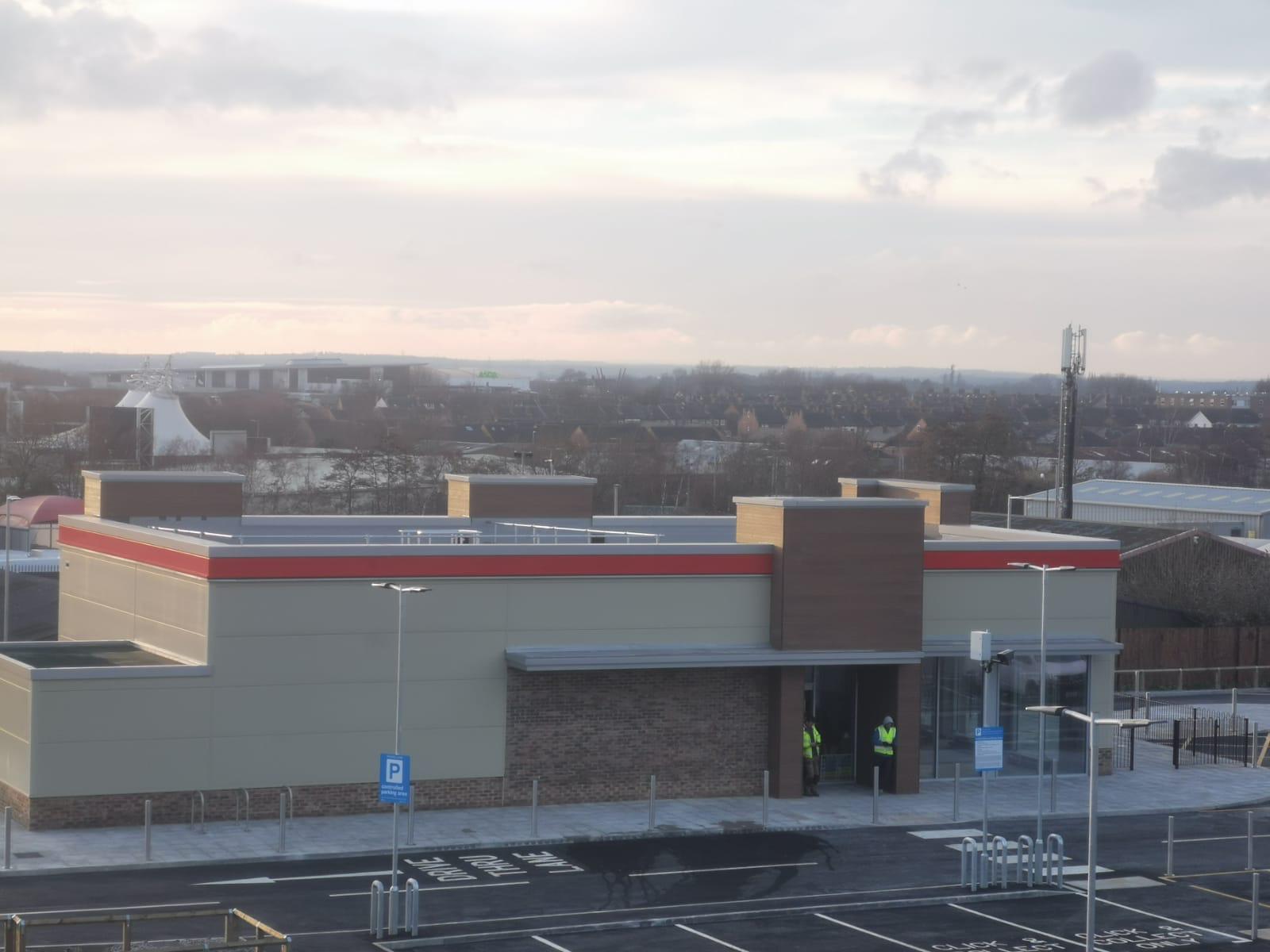
Conservation areas cover a significant proportion of UK high streets. If you are fitting out, refurbishing, or developing a retail unit in one, the rules are different in ways that affect your planning application, your design, your programme, and your contractor selection.
None of this means a retail project in a conservation area cannot be delivered well or on programme. It means the consents, the design process, and the coordination with the local authority need to start earlier and be managed more carefully than on an unconstrained site.
This post covers what changes when your retail project is in a conservation area and what you need to know before you start.
What a Conservation Area Is and How It Affects Your Project
Conservation areas are designated by local planning authorities under the Planning (Listed Buildings and Conservation Areas) Act 1990. Designation is made when an area has special architectural or historic interest worth preserving and enhancing. Most UK town and city centres include conservation areas. Many historic high streets are entirely within one.
The designation does not freeze a conservation area in time. Development and change of use is possible. What it does is require that changes preserve or enhance the character and appearance of the area, and that certain works which would be permitted development elsewhere require consent before they can proceed.
The key changes to your project are:
- Shopfront alterations, including new shopfronts, fascias, and security shutters, require planning permission in most conservation areas rather than being permitted development.
- Advertisement consent requirements are stricter. Illuminated signage is more tightly controlled and may be refused where it would harm the character of the conservation area.
- Demolition of unlisted buildings within a conservation area requires prior approval, sometimes called conservation area consent.
- The local planning authority applies design policies that go beyond the standard requirements, governing materials, proportions, window designs, and the relationship between the proposed works and the historic context of the street.
- If the building is also listed, separate listed building consent is required for both internal and external works that affect its character.
Shopfront Design: The Most Common Point of Conflict
The shopfront is the most frequent source of disagreement between retailers and local planning authorities in conservation areas. National retailers with a standard shopfront format often find that the format does not comply with the local conservation area's design policies, and that the local authority is not prepared to approve it without modifications.
Most conservation area design policies for shopfronts cover:
- Materials. Timber shopfronts are often preferred over aluminium in historic settings. Powder-coated aluminium may be acceptable in some conservation areas but not others. Upvc is rarely approved in conservation areas.
- Proportions. The relationship between the fascia height, the stall riser below the glazing, and the width of the opening is assessed against the historic proportions of the building and the street. A standard national brand format with a deep fascia and full-height glazing may not be appropriate in a building with traditionally proportioned shopfront openings.
- Colour. Some conservation area design guides specify approved colours or exclude certain finishes. Bright or reflective colours are often restricted.
- Security shutters. Internal security shutters are generally preferred over external roller shutters in conservation areas. Perforated external shutters may be acceptable. Solid steel shutters that cover the shopfront entirely are usually refused.
- Signage. Projecting signs, backlit lettering, and large format illuminated fascias are more tightly controlled. Externally illuminated signs with a heritage-appropriate design are more likely to be approved than internally illuminated lightbox signs.
The practical implication for a national retailer is that the standard shopfront specification may need to be adapted for a conservation area unit. This is a design and approval process that takes time, and it needs to start before the fit out programme is set, not after it has begun.
Pre-Application Engagement With the Local Authority
On any retail project in a conservation area where planning permission is required, pre-application engagement with the local planning authority is strongly recommended. Most councils have a conservation officer whose role is to advise on applications affecting conservation areas and listed buildings. Getting informal feedback from the conservation officer before a formal application is submitted can identify objections early and allow the design to be adjusted before it becomes a formal refusal.
Conservation officers vary significantly in how they interpret their local design policies and how much flexibility they are prepared to show on specific design elements. Some will engage constructively on materials and design alternatives. Others have fixed positions on certain elements that are not going to move.
Finding out which situation you are dealing with before submitting is far more efficient than submitting, receiving a refusal, appealing, and losing months of programme while the dispute is resolved.
The Programme Implications
Conservation area projects typically have longer planning timelines than comparable projects outside conservation areas. Applications are assessed against a wider set of material considerations, may be referred to the council's design review panel, and are more likely to generate local objections that the planning officer has to address in their report to committee.
The statutory determination period for a planning application is eight weeks for most applications and 13 weeks for major applications. Conservation area applications are not automatically extended beyond the standard period, but they are more likely to require extensions of time while heritage impact issues are resolved.
Pre-commencement conditions on conservation area applications often include requirements that affect the construction programme directly. Approval of materials before external works start, approval of shopfront details before installation, and archaeological investigation before groundworks are all common. Each of these requires a formal application and an eight-week response period from the local authority. They need to be submitted and progressed in parallel with pre-contract design work, not left until planning permission is issued.
The Construction Method: What Changes on Site
Beyond the planning requirements, working in a conservation area often means working in a historic building with construction characteristics that differ from modern stock.
Older buildings in conservation areas are more likely to have:
- Solid masonry walls rather than cavity construction, which affects how services are routed and how thermal performance improvements are made
- Timber floors and structural elements rather than concrete, which affects floor loading capacity and the routing of below-floor services
- Lime plaster rather than gypsum plaster, which requires different repair techniques and compatible materials to avoid damage to the historic fabric
- Original joinery and architectural features that the planning consent or listed building consent requires to be retained and repaired rather than replaced
- Asbestos in older materials, particularly in artex coatings, floor tiles, pipe insulation, and roofing materials from the mid-twentieth century
A contractor working in a historic building needs to understand how these characteristics affect the method of working. Drilling through a solid masonry wall to route a conduit is not the same operation as drilling through a cavity wall. Cutting into a lime plaster ceiling to access a void above requires more care and different materials than cutting into a modern plasterboard system. Getting this wrong damages historic fabric that may be a material consideration in the planning consent, and which is harder and more expensive to restore than modern materials.
The Party Wall Act in Historic Streets
Conservation area high streets typically have terraced buildings sharing party walls. Any works that affect a party structure, including works within three to six metres of the boundary with a neighbouring building where excavation is planned, trigger the Party Wall etc. Act 1996.
The party wall process requires serving formal notice on the neighbouring property owner. The neighbour has 14 days to respond. If they dissent or do not respond, both parties appoint surveyors and a party wall award is agreed before the work can start. This process takes a minimum of six to eight weeks from notice to award if everything runs smoothly, and longer where the neighbouring party is difficult to engage or disputes the scope of the works.
On a conservation area high street, neighbouring buildings are often occupied by businesses or residents who may have concerns about noise, access, and disruption. The party wall process is a formal legal mechanism, not a consultation. But managing the relationship alongside the formal process tends to produce better outcomes than treating it as purely procedural.
What to Look for in a Contractor
Not all retail contractors have experience working in conservation areas and historic buildings. The skills required are genuinely different from those needed on a new build or a modern retail unit fit out.
Before appointing a contractor on a conservation area project, ask:
- Have you worked in conservation areas before, and can you show projects where listed building or conservation area consent was required?
- How do you manage the materials approval conditions during the works, and who is responsible for submitting condition discharge applications?
- Do you have experience working with lime plaster, traditional masonry, and original historic joinery?
- How do you coordinate the Party Wall Act process alongside the construction programme?
- Who manages the relationship with the conservation officer during the build, and how are material substitutions handled if a specified product is not available?
A contractor without conservation area experience is not necessarily unsuitable for your project. But they will encounter situations during the works that they have not dealt with before, and the time and cost of working through those situations for the first time falls on your programme and your budget.
We have delivered retail construction and refurbishment in conservation areas and historic buildings across the UK. If you are planning a retail project in a conservation area and want to understand the consent requirements and programme implications before you commit to a start date, get in touch with our team. We will give you a straight view on what your specific building and location actually requires.
Planning Permission for Retail Construction: A Practical Guide for Developers
September 30, 2026
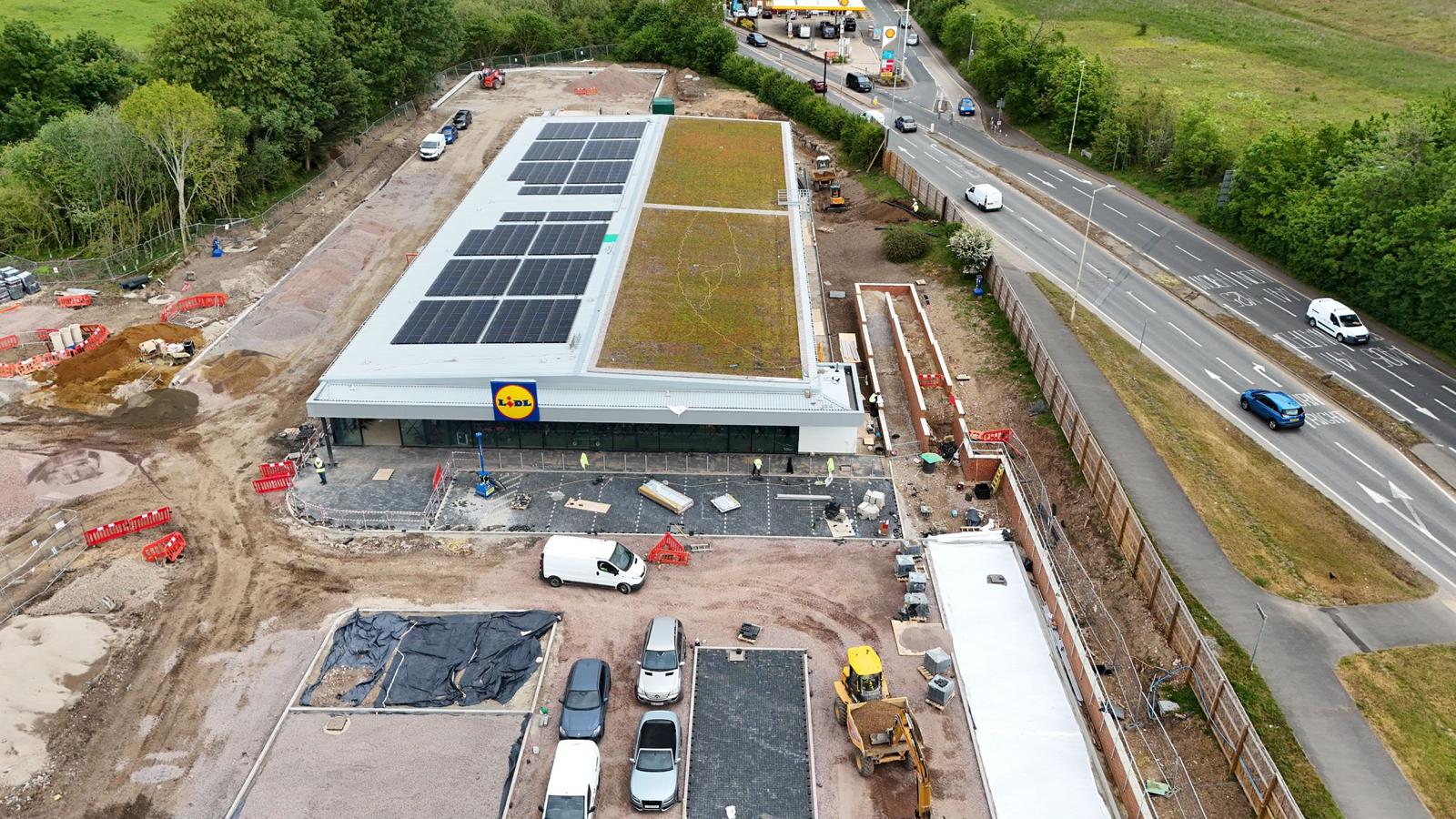
One of the most common questions at the start of a retail construction project is whether planning permission is needed. The answer depends on what you are building, where it is, and what the building is currently used for. Getting this wrong costs time and money in either direction. Applying when you do not need to wastes months. Not applying when you do need to creates enforcement risk that can stop work and require demolition.
This guide covers the main scenarios a retail developer or retailer is likely to encounter, and what the planning requirements actually are for each.
The Use Class System and Why It Matters
The starting point for any retail planning question is the use class system. The Town and Country Planning (Use Classes) Order 1987, as amended, groups land uses into categories. Changing from one use to another within the same class does not require planning permission. Changing from one class to another typically does.
Class E is the most relevant use class for retail. Introduced in September 2020, it brought together a broad range of commercial uses under one category including retail shops, restaurants and cafes, offices, gyms, creches, and health centres. The practical effect is that a former clothing shop can become a cafe, or a former bank branch can become a gym, without needing planning permission for the change of use.
This is a significant change from the previous system and one that many developers and retailers are still not fully aware of. A retailer looking to open in a unit with a former office or restaurant use does not need to apply for a change of use. They need building regulations approval for any construction work, but the planning position on use is already clear.
Class E does not cover everything. Drinking establishments, hot food takeaways, and drive thru restaurants are not Class E uses. They fall into sui generis or other use classes where planning permission for a change of use is required. And Class E use does not override other planning controls such as listed building consent or conservation area consent, which are separate requirements that apply regardless of use class.
When Planning Permission Is Required for Retail Construction
Planning permission is required for retail construction in the following main scenarios:
- New build retail on any site where there is no existing building. This includes supermarkets, retail parks, drive thru restaurants, and standalone retail units on greenfield or cleared sites.
- Change of use from one use class to another. For example, converting a former warehouse in a sui generis use to retail use, or converting a Class F community use to Class E.
- Extensions to existing buildings that exceed permitted development limits. Permitted development rights for commercial extensions are restricted and depend on the original building size and the local planning authority's permitted development conditions.
- External alterations that materially change the appearance of a building. New shopfronts, external cladding changes, new external plant or equipment, and alterations to listed buildings all require consent.
- Advertisements and signage above certain sizes or in certain locations. Illuminated signs, projecting signs, and large fascia boards require advertisement consent separately from any planning permission for the building works.
New Build Retail: The Sequential Test
For new build retail outside a defined town centre, planning policy under the National Planning Policy Framework requires the applicant to demonstrate that no suitable town centre or edge of centre site was available. This is the sequential test.
The sequential test applies to what the NPPF calls main town centre uses. These include retail development, restaurants and leisure uses, and drive thru restaurants. It does not apply to all commercial development.
For a supermarket or large format retail unit on a retail park or out of centre site, the sequential test is a formal part of the planning application. The applicant prepares a sequential assessment identifying town centre and edge of centre sites that were considered and explaining why they were rejected as unsuitable. Suitable alternatives are assessed against the proposed use's locational and operational requirements. The full guidance is on GOV.UK.
Above a locally set floorspace threshold, which in many areas defaults to 2,500 square metres gross but can be lower where a local plan sets a tighter figure, a Retail Impact Assessment is also required. This examines the effect of the proposed retail floorspace on the vitality and viability of existing town centres.
Pre-Application Engagement
For any retail planning application of significant scale, pre-application engagement with the local planning authority is strongly recommended. Most councils offer a formal pre-application service where the applicant can present a scheme and receive officer feedback before submitting.
Pre-application engagement does several useful things. It surfaces objections early, when the design can still be changed without cost. It signals what information the council will expect in the application, which prevents delays caused by requests for further information after submission. It allows the applicant to understand the council's position on sensitive issues such as design, sequential test, or highways impact before committing to a full application.
For a supermarket or retail park application, pre-application engagement with the highways authority is equally important. Highways objections are one of the most common reasons retail planning applications are delayed or refused, and early engagement with the highways team allows junction capacity issues, access design, and servicing arrangements to be resolved before submission.
Planning Conditions and What They Mean for the Programme
Almost all significant retail planning permissions come with conditions attached. Some conditions are informational, meaning they set out requirements for how the building must be used or maintained. Others are pre-commencement conditions, which must be discharged, meaning formally approved by the local authority, before any work on site can start.
Pre-commencement conditions are the ones that affect the construction programme most directly. Common examples include:
- Approval of materials and external finishes before cladding can start
- Submission and approval of a construction management plan before any vehicle movements begin on site
- Archaeological investigation before any groundworks
- Ecology mitigation measures before vegetation clearance
- Drainage strategy approval before groundworks
Discharging a condition requires a formal application to the local planning authority. The statutory period for the authority to respond is eight weeks. In practice, some authorities take longer. Responses sometimes require additional information before approval is granted.
The programme implication is straightforward. If you start on site before pre-commencement conditions are discharged, you are in breach of your planning permission. If you wait for conditions to be discharged before planning the programme, you can lose months. The correct approach is to prepare condition discharge submissions during the planning period and submit them as soon as permission is granted, so the approval runs in parallel with pre-contract work rather than delaying mobilisation.
Section 106 Agreements
Many retail planning permissions, particularly for supermarkets and retail parks, are granted subject to a Section 106 agreement. This is a legal contract between the developer and the local authority, made under Section 106 of the Town and Country Planning Act 1990, that secures planning obligations as part of the permission.
Common Section 106 obligations for retail development include financial contributions to highways improvements, public transport infrastructure, affordable housing on mixed use schemes, community facilities, and local employment commitments.
The Section 106 agreement is negotiated between the developer's solicitors and the local authority after the planning committee has resolved to grant permission. The planning permission itself is not issued until the agreement is signed. This negotiation routinely adds two to four months to the planning period after committee resolution. It is a step that developers sometimes forget to build into their programme, treating the committee decision as the end of the planning process when it is not.
Listed Buildings and Conservation Areas
If your retail unit is in a listed building or a conservation area, additional consent requirements apply on top of the standard planning position.
Listed building consent is required for any works, internal or external, that would affect the character of a listed building. The listing applies to the whole building, not just the exterior. A fit out of a retail unit in a listed building may require listed building consent for works that would not require planning permission in an unlisted building, including internal partitions, new service penetrations, and alterations to the shopfront.
Conservation area consent requirements apply to the demolition of unlisted buildings within a conservation area. Alterations to the external appearance of buildings within a conservation area, including new shopfronts and signage, are assessed against local design policies for the conservation area and may require planning permission even where Class E use rights mean the use itself is unregulated.
Applications for listed building consent and conservation area consent are assessed on heritage impact. The applicant needs to demonstrate that the proposed works preserve or enhance the character of the listed building or conservation area. Appointing a heritage consultant to prepare the heritage impact assessment is usually necessary on significant listed building schemes.
Building Regulations: Separate From Planning
Building regulations approval is a separate requirement from planning permission. Planning permission controls whether you can build. Building regulations control how you build, meaning the technical standards your construction must meet for structural stability, fire safety, energy efficiency, ventilation, drainage, and accessibility.
Most retail construction work requires building regulations approval even when it does not require planning permission. A fit out within a Class E unit that involves structural works, alterations to fire compartmentation, new services, or changes to means of escape requires a building regulations application regardless of whether the use class change triggered planning permission.
Building regulations applications are submitted to the local authority's building control team or to an approved inspector. The two routes have different processes and different fee structures. For retail fit outs and new builds, many developers use approved inspectors because they can engage earlier in the design process and their response times are generally more predictable than local authority building control.
The Most Common Planning Mistakes on Retail Projects
- Starting work before pre-commencement conditions are discharged, because the planning permission was treated as the start line when it is not.
- Failing to submit a sequential assessment for out-of-center retail development is, in itself, a reason for refusal, regardless of the merits of the scheme.
- Not building the Section 106 negotiation period into the program means the planning period is underestimated by two to four months.
- Overlooking advertisement consent for signage, which is a separate application that is sometimes not submitted until the building is otherwise ready to open.
- Assuming that Class E use rights mean no planning involvement is needed, when listed building consent, conservation area policies, or specific local plan policies may still apply.
We manage the planning and programme interfaces on every retail construction project we deliver. If you are at the start of a retail development and want to understand the planning requirements for your specific site before you commit to a programme, get in touch with our team. We will work through the planning position with you as part of our pre-contract process.
How to Brief a Retail Contractor: What to Prepare Before You Go to Tender
September 21, 2026
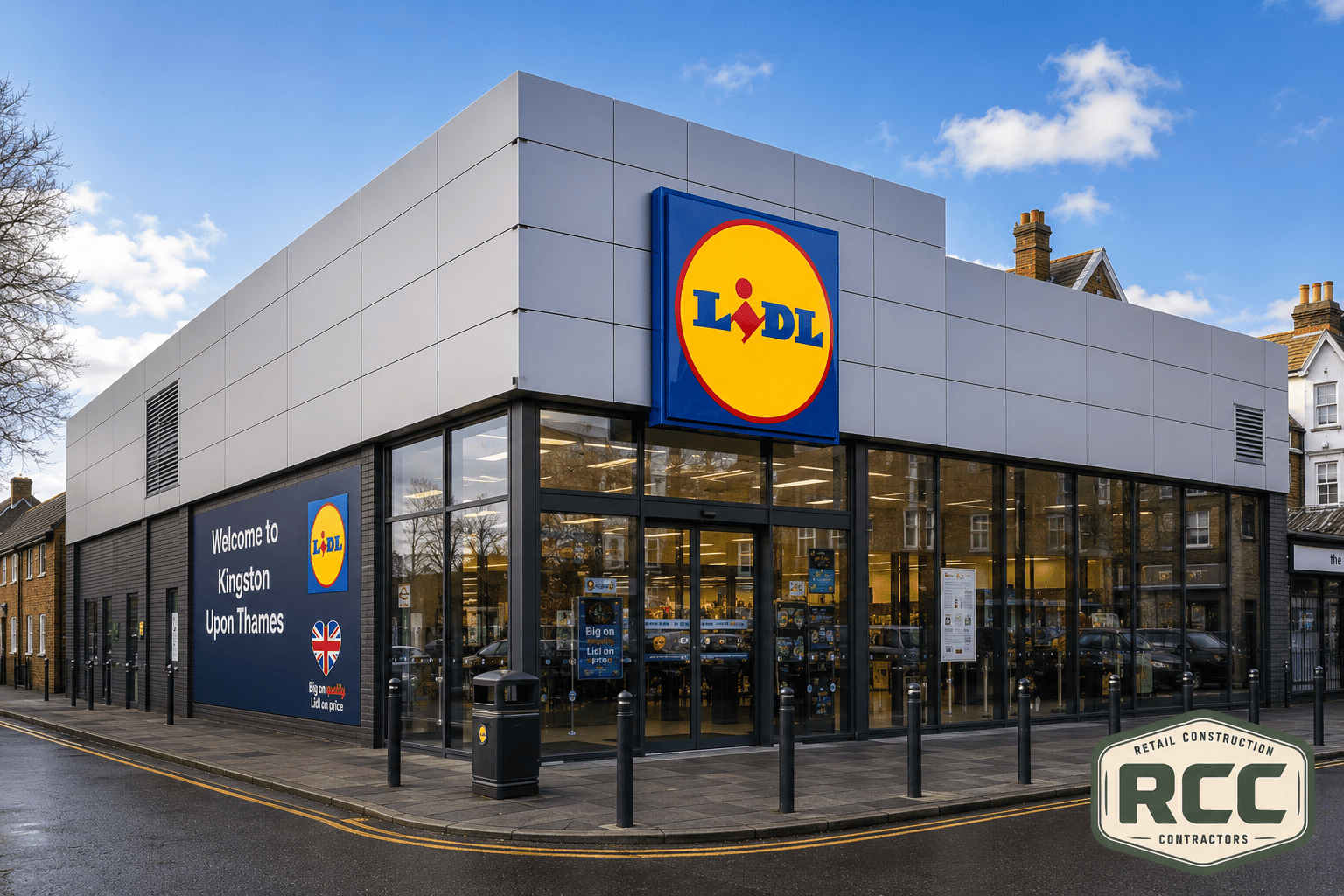
The quality of the quotes you receive from a retail contractor is almost entirely determined by the quality of the brief you provide. A vague brief produces unreliable numbers, programs built on assumptions, and a tender comparison that tells you very little about which contractor will actually perform.
Most of the cost and program surprises that emerge during retail construction projects were predictable at the brief stage. The information existed. It was not gathered and shared before the tender.
This post covers what to prepare before you approach a contractor, and why each element matters.
Start With a Clear Scope of Works
The scope of works describes what you want built. It sounds obvious but it is the element most often left vague in early contractor conversations.
A scope of works for a retail fit out or new build should cover:
- What type of project it is: new build, fit out from shell and core, refurbishment of an existing fit out, or a phased programme across multiple stores.
- The gross internal area of the unit or building.
- What the unit will be used for, including any food preparation, refrigeration, or specialist extraction requirements.
- What the start condition is, meaning what exists now and what will remain after any strip out.
- What the finished condition needs to be, including any brand specification documents if the retailer has them.
- Whether the store will trade during the works, and if so, what trading restrictions apply.
You do not need to write a full specification document before approaching a contractor. But you do need enough clarity on these points that every contractor you approach is pricing the same job. If one contractor assumes a closed-site programme and another assumes live trading, their quotes are not comparable.
Share the Drawings You Have
Contractors price from drawings. The more complete your drawings, the more accurate the quote. But you do not need a full construction information package before going to tender. You need enough to define the scope.
What to share at brief stage:
- Existing floor plans and elevations if the unit is an existing building, showing the current layout and any known structural elements.
- Proposed layout drawings if design work has started, even at concept stage. A rough layout is better than nothing.
- The shell and core specification if the unit is being handed over by a developer, including service termination drawings.
- Any brand specification documents from the retailer, including materials schedules, fit out guides, or approved product lists.
If you have no drawings at all, say so. A contractor with relevant experience can give you a rough order of magnitude cost range and advise on what design information is needed before a proper tender can be run. What they cannot do reliably is give you a fixed price from a verbal description.
Provide the Existing Building Information
For any project involving an existing building, the contractor needs to know what they are working with. This is the information that most often gets shared late and causes the most problems when it surfaces mid-programme.
Before you brief a contractor, gather:
- An asbestos survey covering all areas that will be disturbed by the works. This is a legal requirement before any refurbishment or demolition work begins on a building that may contain asbestos, and any building constructed before 2000 should be treated as potentially containing it.
- Structural drawings for the existing building if they exist. For a unit in a multi-occupancy building, the developer or landlord should hold these.
- Records of previous fit outs, including any structural alterations made by previous occupiers.
- Utility records showing the location and capacity of existing gas, electrical, water, and drainage connections to the unit.
- The lease or agreement for lease, which defines what works the tenant can carry out and what landlord consents are required.
If the asbestos survey has not been done, commission it before tender. A contractor who discovers asbestos during strip out on a project where no survey was provided has no obligation to absorb that cost. It becomes a variation, and a significant one.
Define the Programme Requirements
Your programme requirements are as important as your scope. A contractor needs to know not just what they are building but when it needs to be finished and what constraints they will be working under.
Tell the contractor:
- The target handover date and whether it is fixed by a lease commitment, a trading commitment, or another external deadline.
- Whether the site is available now or has a future access date.
- Any restrictions on working hours, access routes, or delivery times, particularly for units in managed retail environments or mixed use buildings.
- Whether the store will trade during the works and what trading hours must be protected.
- Any phasing requirements if the works are split into stages.
A handover date that is a fixed lease commencement is a different programme risk from a handover date that is a commercial target. Be clear which yours is. A contractor pricing a fixed deadline will and should include more programme contingency, which affects the cost. A contractor who does not know the deadline is fixed may not price that contingency in, and you will both discover the problem at the wrong moment.
Set a Budget Range
Many clients are reluctant to share a budget with a contractor before tender, on the theory that the contractor will just price up to it. This is understandable but counterproductive.
A budget range gives the contractor useful information. It tells them whether the scope is achievable within your expectations or whether there is a fundamental mismatch before anyone spends time pricing. It allows them to make sensible specification recommendations rather than guessing whether you want a budget, mid, or premium specification on items where you have not told them. And it allows them to flag early if the scope cannot be delivered for the budget, which is information you need before you commit to the project.
If you are genuinely uncertain what the budget should be, say so and ask the contractor for a rough order of magnitude estimate before you run a formal tender. That estimate, based on a site visit and a clear scope, will give you a realistic baseline for your budget.
Confirm the Procurement Route
How you intend to procure the works affects what you need to prepare and what the contractor will submit. The main routes for retail construction are:
- Single stage tender: you issue the complete scope and information to a shortlist of contractors and ask for a fixed price. Used when the design is substantially complete before tender.
- Two stage tender: you appoint a preferred contractor at an early stage based on preliminaries and overhead and profit rates, then develop the detailed cost plan together as design progresses. Used when you want to involve the contractor in the design process or when the design is not complete enough for a fixed price tender.
- Negotiated appointment: you approach one contractor and agree the price directly without competitive tender. Used for repeat programmes or where a specific contractor relationship is the starting point.
For most retail fit outs, a single stage tender works well if the design is developed enough to allow accurate pricing. For supermarket new builds and large format projects with complex specifications, a two stage route often gives better outcomes because it brings the contractor's construction expertise into the design process before the specification is fixed.
Be Clear About What You Are Comparing
When tenders come back, the comparison needs to be on a like for like basis. This only works if every contractor has been given the same information and the same scope. Price alone is not a reliable comparison. What is included and what is excluded matters as much as the total.
Ask every contractor to submit their tender with:
- A clear statement of what is included in the price and what is excluded.
- A breakdown by element rather than a single lump sum.
- Their assumptions about start condition, access, and programme.
- Their approach to variations and how they are priced and agreed.
A tender that is 20 percent lower than the others without a clear explanation of what has been excluded is not a bargain. It is a risk. The most common source of cost overrun on retail construction projects is a tender won on a low price that recovers margin through variations once work has started.
What to Prepare: A Summary Checklist
- Clear scope of works covering what is being built, what the start condition is, and what the finished standard needs to be
- Existing drawings and any proposed layout drawings, even at concept stage
- Asbestos survey for any existing building
- Utility records and structural information
- Lease or agreement for lease
- Programme requirements including fixed deadlines and access constraints
- Budget range
- Procurement route decision
- Instructions for tender format and what you want each contractor to include in their submission
Preparing this information before you approach contractors takes time. It saves significantly more time during tender and on site. Every piece of information that is not shared at brief stage gets discovered during the project instead, always at higher cost and with less time to resolve it cleanly.
We work with developers, retailers, and investors across the UK on retail fit outs, refurbishments, and new builds. If you are preparing a brief and want to test it against our experience before you go to tender, get in touch with our team. We will tell you if anything is missing and what it is likely to cost you if it surfaces later.
Shell and Core vs Full Fit Out: What the Difference Means for Your Budget and Programme
September 14, 2026
Shell and core and full fit out are two of the most commonly used terms in retail construction. They are also two of the most commonly misunderstood, because what they actually include varies depending on who you are talking to and what kind of building you are dealing with.
Getting the distinction wrong at the start of a project creates budget gaps that surface mid-programme, when closing them is far more expensive than it would have been at the beginning.
This post explains what each term actually means, what is typically included and excluded, and what the difference means for your budget and programme.
What Shell and Core Actually Means
Shell and core is a developer's delivery standard, not a retailer's. It describes the state in which a landlord or developer hands a unit to a tenant before the tenant carries out their own fit out.
A shell and core unit has the structural frame complete, the external envelope watertight, and the basic building services either provided to the unit or stubbed off at the unit boundary. The interior is unfinished. There are no floor finishes, no internal partitions, no suspended ceilings, no fit out joinery, and no shopfront beyond the structural opening.
But shell and core is not a single consistent standard. What is included in a shell and core varies between developers, between asset types, and sometimes between units within the same scheme. The differences matter significantly to a retailer or fit out contractor pricing the works.
The most common variations are:
- Whether the services are terminated at the unit boundary or distributed within the unit. Some shell and core specifications bring gas, electrical, water, and drainage to a point at the unit boundary and stop. Others distribute services to a higher level within the unit, including electrical distribution boards, mechanical plant, and drainage below the slab.
- Whether the structural slab is finished or unfinished. Some shell and core specifications include a power-floated concrete slab ready to receive floor finishes. Others leave the structural slab in an unfinished state requiring additional preparation before any floor covering can be laid.
- Whether the shopfront structural opening is finished. Some units are handed over with a finished structural opening and the landlord's standard shopfront installed. Others are handed over with a raw structural opening that the tenant is responsible for finishing.
- Whether there is any mechanical or electrical plant serving the unit, such as a landlord-provided heat interface unit in a district heating scheme or a shared mechanical ventilation system in a managed food court.
Before any fit out is priced, the shell and core specification for the specific unit needs to be read carefully. A fit out priced on the assumption that drainage is already below the slab will be short if the slab is solid with no below-floor drainage in place.
What Full Fit Out Actually Means
A full fit out takes a unit from shell and core condition to a trading-ready store. It covers everything the retailer needs to open the doors and trade.
A full retail fit out typically includes:
- Strip out of any existing fit out where the unit was previously occupied
- Below-floor drainage where not already provided in shell and core
- First fix mechanical and electrical installation, including cable runs, containment, pipework, and distribution boards
- Internal partitioning to create back of house, stockrooms, staff areas, and customer toilets
- Suspended ceiling system and finishes
- Second fix mechanical and electrical including light fittings, sockets, extract ventilation, and heating or air conditioning
- Floor finishes throughout
- Shopfront if not provided in shell and core
- Internal decoration and wall finishes
- Bespoke joinery including counters, fitting rooms, display fixtures, and service areas
- Signage and graphics
- External works within the unit's curtilage where applicable
In food retail, a full fit out also includes refrigeration installation and commissioning, commercial kitchen extraction, and any specialist drainage required for food preparation areas.
The Cost Difference
The cost of a full fit out is determined by the gap between the shell and core condition and the trading-ready standard the retailer needs. The wider that gap, the higher the fit out cost.
For a standard retail unit in shell and core condition with services at the unit boundary, a full mid-specification fit out runs approximately:
- Small unit, up to 100m²: £80,000 to £150,000
- Mid-size unit, 100 to 300m²: £150,000 to £400,000
- Large format unit, 300m² and above: £400,000 to £900,000 and above for food retail with refrigeration
These figures are construction cost only, excluding equipment procured separately by the retailer, VAT, and professional fees. The wide ranges reflect the specification differences between a basic shell and core hand over and a well-serviced one, and between a budget fit out and a premium brand specification.
The single biggest source of cost variation within the fit out itself is whether below-floor drainage is already in place. If the shell and core slab is solid, the fit out contractor has to break out the concrete, lay drainage runs to the correct falls, backfill, and reinstate. On a large format unit this alone can add £30,000 to £80,000 to the fit out cost. It is a routine line item on food retail projects and a significant surprise on non-food projects where it was not anticipated.
The Programme Difference
A full fit out from a true shell and core condition, with no existing fit out to strip, typically runs faster than a refurbishment of an occupied unit. There is no unknown to discover behind ceilings and under floors, because the ceilings and floors are not there yet.
Realistic on-site programmes for a full fit out from shell and core:
- Small unit, up to 100m²: 6 to 10 weeks
- Mid-size unit, 100 to 300m²: 10 to 14 weeks
- Large format unit with food retail specification: 14 to 20 weeks
These programmes assume the shell and core condition matches the specification. Where the actual condition on handover differs from what was expected, time is lost investigating and agreeing how the gap is addressed before fit out can proceed properly.
This is one of the most common sources of programme delay on retail fit outs that follow a developer's shell and core hand over. The retailer's fit out contractor expects a certain condition and finds something different. A joint inspection of the unit before the fit out contract is priced, with the developer, the tenant, and the fit out contractor all present, eliminates most of this risk. It is a step that is skipped far more often than it should be.
Who Is Responsible for What
Shell and core creates a clear division of responsibility between the developer and the tenant in principle. In practice, the boundary is often less clear than the lease suggests.
The lease will typically define the shell and core specification. But leases are not construction documents. They describe the outcome, not the detailed specification. When a developer hands over a unit and the tenant's fit out contractor finds that the shell and core does not match what the lease described, the question of who pays for the gap becomes a dispute between the tenant and the landlord that the fit out contractor is stuck in the middle of.
The practical protection against this is a detailed schedule of condition, agreed by the developer and the tenant before the fit out starts, that records the actual condition of the unit on handover against the lease specification. Any differences are identified and resolved before the fit out programme is set, not after it has started.
Landlord Contributions and What They Cover
Many landlords offer a fit out contribution to attract tenants. These contributions typically take the form of a rent-free period or a direct capital payment toward fit out costs. They are negotiated alongside the lease terms and are usually expressed as a fixed sum rather than a percentage of the fit out cost.
A fit out contribution does not change the shell and core specification. It is money toward the tenant's fit out, not a commitment to deliver a higher starting condition. Tenants who treat a landlord contribution as evidence that the fit out will be straightforward are sometimes surprised to find that the shell and core is more basic than expected and the contribution does not cover the gap.
The contribution should be evaluated against a proper cost plan for the actual fit out from the actual shell and core condition, not against an estimate made before the unit has been properly surveyed.
Questions to Ask Before You Sign the Lease
- What exactly is included in the shell and core specification for this unit? Ask for it in writing, with a drawing showing service termination points.
- Is drainage provided below the slab, or will the fit out contractor need to break out the floor to form drainage runs?
- What electrical capacity is provided to the unit, and where is the distribution board located?
- When can a fit out contractor survey the unit, and will you carry out a joint inspection before the fit out programme is agreed?
- If the actual condition at handover differs from the specification, what is the process for resolving the gap before fit out begins?
We deliver retail fit outs from shell and core condition across the UK. If you are about to sign a lease on a retail unit and want to understand what the fit out will actually cost and how long it will take before you commit, get in touch with our team. A site survey before you sign costs nothing. A budget gap discovered after you have signed costs considerably more.
CDM 2015 for Retail Clients: What Your Legal Duties Actually Are
August 26, 2026
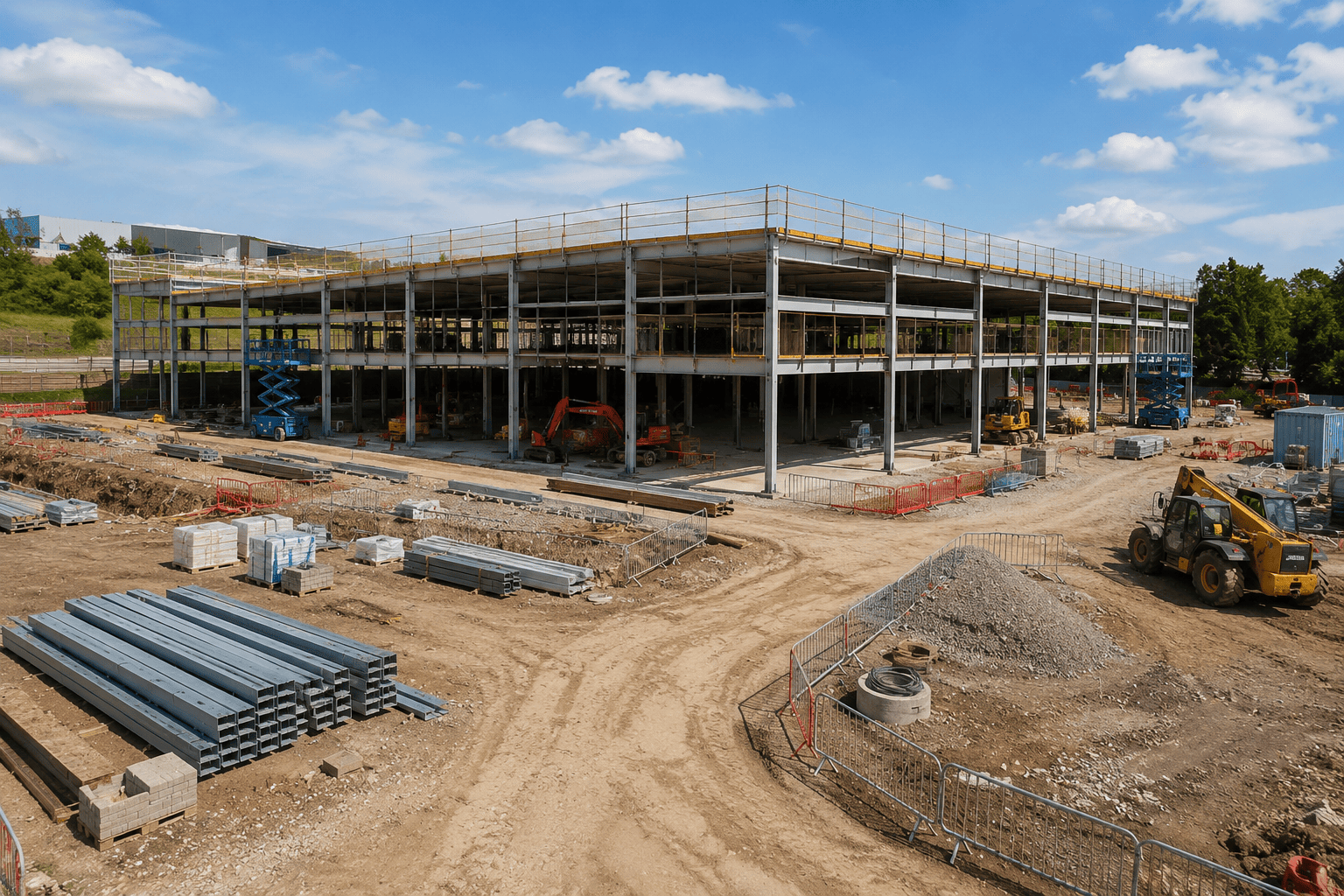
Most retail developers and operators know CDM exists. Fewer know that it places legal duties directly on them, not just on their contractor.
The Construction (Design and Management) Regulations 2015 apply to virtually every retail construction project. And the client, meaning the developer or retailer who commissions the work, sits at the top of the duty holder structure. You cannot transfer that responsibility to a contractor or a designer. You can appoint people to help you discharge it, but the duty remains yours.
This post explains what your duties actually are, what you need to have in place before work starts, and what to check when you appoint a contractor.
Who CDM Applies To
CDM 2015 applies to all construction work in Great Britain. That includes new builds, fit outs, refurbishments, and maintenance work. There is no minimum value threshold. If you are commissioning construction work on a retail unit, CDM applies to you as the client.
The regulations distinguish between domestic clients, who are private individuals having work done on their own home, and commercial clients. Retail developers, investors, and operators are all commercial clients. The full set of client duties applies to you from the moment you decide to have construction work carried out.
Full guidance is published by the Health and Safety Executive.
The Duty Holders and What They Do
CDM 2015 creates a structure of duty holders, each with specific responsibilities. Understanding who does what is the starting point for knowing what you need to arrange before work begins.
The client is you. You commission the work and you are responsible for making suitable arrangements for managing the project so it is carried out safely and without risks to health.
The principal designer is appointed by you on notifiable projects. They coordinate health and safety during the pre-construction phase, which includes design, planning, and preparation. On a retail fit out or new build, the principal designer is typically the lead architect or a specialist CDM consultant. They are not the principal contractor.
The principal contractor is appointed by you to manage the construction phase. On most retail projects this is the main contractor. Their duties include producing the construction phase plan before work starts, managing site safety throughout the build, and coordinating all contractors working on the project.
Designers are anyone who prepares or modifies drawings, specifications, or other documents for construction. Your architect, structural engineer, M&E engineer, and fit out designers are all designers under CDM and all have duties to eliminate and reduce foreseeable risks in their designs.
Contractors are companies that carry out or manage construction work. Every subcontractor on your project is a contractor under CDM.
When a Project Is Notifiable
A project is notifiable to the Health and Safety Executive when the construction phase will last longer than 30 working days with more than 20 workers simultaneously, or when the total volume of work exceeds 500 person days.
Most large format retail fit outs and all supermarket new builds will be notifiable. A small cosmetic refurbishment of a single unit may not be. If you are not sure, ask your contractor or a CDM adviser. Failing to notify a notifiable project is a breach of the regulations.
For notifiable projects, you are required to appoint a principal designer and a principal contractor in writing before the construction phase begins. On non-notifiable projects those roles still exist but the formal written appointment requirement does not apply in the same way.
Your Specific Duties as a Client
The regulations set out client duties in specific terms. These are the things you are legally required to do.
- Make suitable arrangements for managing the project so it is carried out safely and the health of workers is protected. This is the overarching duty and everything else follows from it.
- Appoint a principal designer with the skills, knowledge, and experience to coordinate health and safety during pre-construction. The appointment must be in writing.
- Appoint a principal contractor with the skills, knowledge, and experience to manage health and safety during the construction phase. The appointment must be in writing.
- Ensure the principal designer and principal contractor carry out their duties. You do not manage the work yourself, but you are responsible for seeing that the people you appoint actually do what they are required to do.
- Ensure that before the construction phase begins, the principal contractor has prepared a construction phase plan. You do not write the plan, but you need to confirm it exists and is suitable before work starts.
- Ensure a health and safety file is prepared. For notifiable projects, the principal designer prepares this during pre-construction and hands it to the principal contractor to keep updated during the build. At handover, the file comes to you. You are responsible for keeping it and making it available to anyone who needs it in future.
- Provide pre-construction information to designers and contractors. This means sharing everything you know about the site and the existing building that is relevant to health and safety. Asbestos surveys, structural drawings, utility records, previous occupier information, and anything else that affects how the work can be done safely.
Pre-Construction Information: What You Need to Provide
Your duty to provide pre-construction information is one of the most practical requirements in CDM and one of the most commonly neglected on retail projects.
Before anyone designs or builds anything, you need to gather and share the following where it exists:
- An asbestos survey covering the areas that will be disturbed by the works. On any building constructed before 2000 this is mandatory before strip out starts.
- Structural drawings and information about the existing building, particularly load-bearing elements, party walls, and any known structural deficiencies.
- Utility records including the location and depth of underground services, the position of gas, electrical, and water mains, and the location of any overhead cables.
- Previous occupier information, including any known contamination, buried obstructions, or previous structural alterations.
- The ground investigation report if one has been carried out.
- Any existing health and safety file from previous construction work on the building or site.
If this information does not exist and you know it should, you need to commission it before work starts, not leave the contractor to discover it on site. Handing over an incomplete asbestos survey and telling the contractor to manage the risk is not discharging your duty. It is transferring a risk to someone who cannot price it accurately and who has no control over what they are about to find.
The Construction Phase Plan
The principal contractor must produce a construction phase plan before work on site begins. This is a document that sets out how the construction phase will be managed safely. It covers site rules, welfare arrangements, emergency procedures, the sequence of high-risk activities, and how different contractors will be coordinated.
As the client, you do not write the construction phase plan. But you need to see it before work starts and satisfy yourself that it is suitable. A construction phase plan that is a generic template with no project-specific content is not suitable. Ask your principal contractor to show you the plan before they mobilise. If they cannot produce one, that is a significant warning sign.
The Health and Safety File
At the end of the project, you receive a health and safety file. This document records information about the completed building that is relevant to future construction, maintenance, or demolition work. It includes as-built drawings, details of materials used, the location of concealed services, maintenance requirements, and the outcome of any commissioning.
You are required to keep the health and safety file and make it available to anyone planning future construction work on the building. If you sell the building or transfer the lease, the file transfers with it. If you commission future work on the same building, the file forms part of the pre-construction information you provide to the new project team.
Many retail clients receive a health and safety file at handover and file it without reading it. The file is the reference document for every future fit out, refurbishment, or maintenance project on that building. Losing it or failing to maintain it creates exactly the kind of information gap that causes problems on future projects.
What to Check When You Appoint a Contractor
- Does the contractor operate as principal contractor under CDM 2015, and can they confirm they hold this role on current projects?
- Can they produce a relevant construction phase plan template before you appoint, so you can see what their standard looks like?
- Do they hold CHAS accreditation or equivalent, which demonstrates that their health and safety management has been independently assessed?
- Who will be the named principal contractor representative on your project, and what is their CDM experience?
- What is their process for coordinating subcontractors under CDM, and how do they manage the handover of the health and safety file?
We operate as principal contractor on all of our retail construction projects. Our CDM process covers pre-construction information, construction phase planning, and health and safety file production as standard on every job. If you want to understand what your specific project requires under CDM before appointing anyone, get in touch with our team.
Drive Thru Construction: Planning, Site Requirements and What to Expect
August 21, 2026
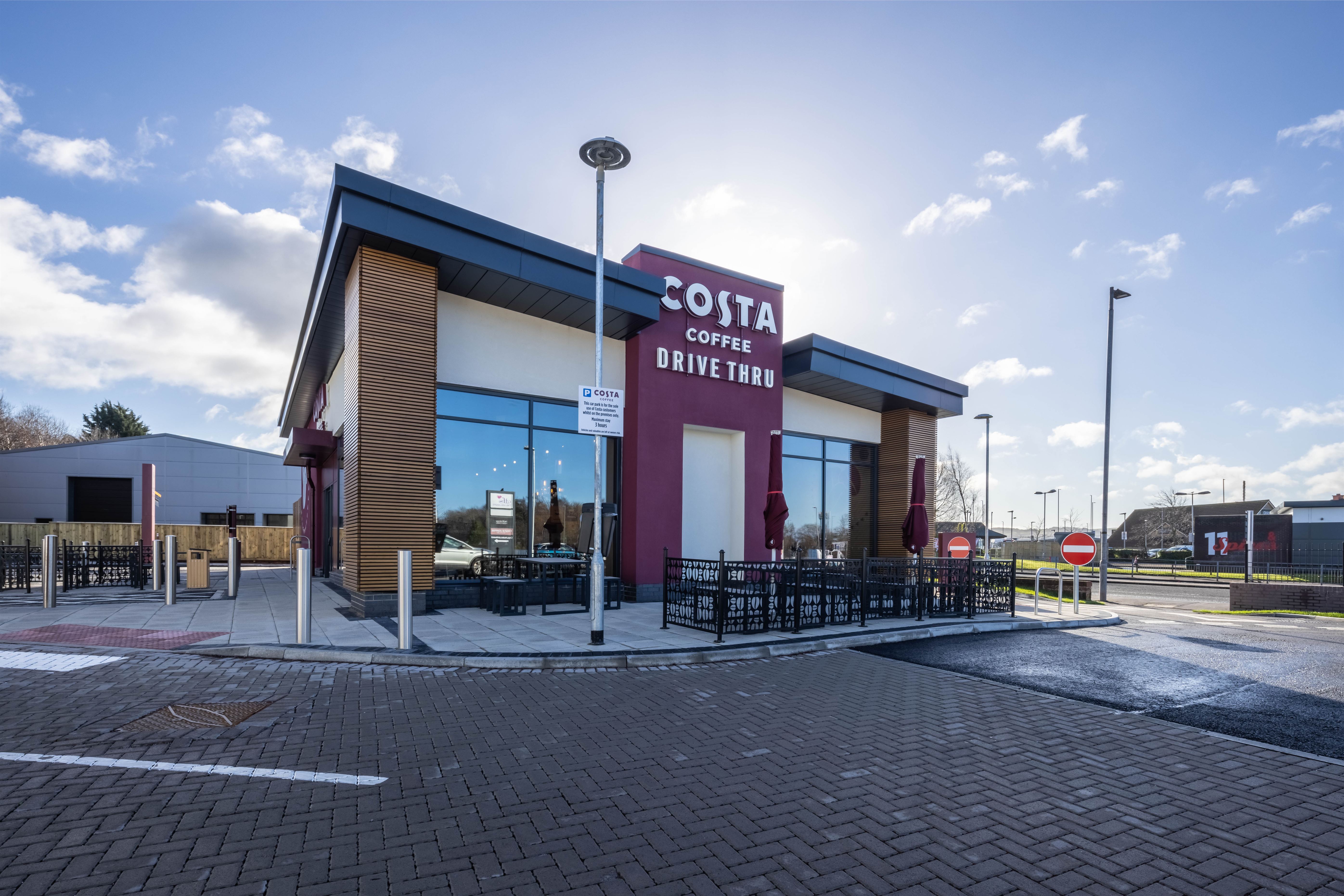
Drive thru restaurants look straightforward from a construction point of view. A small building, a lane, a car park. But the planning route for a drive thru is more complex than most developers expect, and the site requirements are specific enough that the wrong plot can kill a project before planning is even submitted.
This post covers what a drive thru construction project actually involves, from site selection through to handover, and where projects run into problems.
How Planning Policy Treats Drive Thru Restaurants
The first thing to understand is that a drive thru restaurant is classified as a main town centre use under the National Planning Policy Framework. That classification applies regardless of where you want to build it. It means that if your site is outside a defined town centre, your planning application has to go through the sequential test before the local authority can grant permission.
The sequential test requires you to demonstrate that no suitable town centre site or edge of centre site is available for the proposed use. Drive thru restaurants have specific locational requirements that make true town centre sites almost always unsuitable. The requirement for a drive lane, a separate entrance and exit, adequate stacking for queuing vehicles, and a service bay for deliveries cannot realistically be met on a town centre plot. Planning inspectors have accepted these locational arguments in appeal decisions, and most local authorities understand the commercial reality. But you still have to make the case formally, and failure to submit a sequential assessment is in itself a reason for refusal.
The full guidance on the sequential test is published on GOV.UK. If your site is outside a town centre, read it before you brief your planning consultant.
Beyond the sequential test, a drive thru planning application will typically need to address:
- Highways impact, including junction capacity, vehicle stacking in the drive lane, and the effect of queueing cars on the road network outside the site
- Noise impact from speakers at the order point, which is a material consideration particularly near residential properties
- Odour from commercial kitchen extraction, assessed under the EMAQ+ guidance
- Operating hours, which local authorities frequently restrict through conditions where residential properties are nearby
- Design and appearance, since drive thrus on retail parks and roadside sites are often within areas subject to design codes or local character policies
Planning for a drive thru on a straightforward out of centre site with good highways access typically takes four to six months from submission to decision. Sites with more complex sequential assessments, noise sensitivities, or highways objections can take significantly longer.
Site Selection: What the Building Actually Needs
Drive thru restaurants have hard site requirements that cannot be engineered away. Getting these right at site selection stage saves significant cost and time later.
The drive lane itself needs enough linear distance for vehicle stacking between the order point and the collection window. Most operators specify a minimum of six to eight vehicle lengths of stacking inside the site, plus a safe exit onto the road. On a constrained site, the drive lane geometry can force the building into an awkward position that creates problems for servicing, pedestrian access, and the relationship with neighbouring units.
Access to the strategic road network matters. Drive thru restaurants depend on passing trade and ease of access from a main road. A site that requires drivers to navigate several side roads or make awkward turns will underperform commercially, and the highways authority will scrutinise the junction design carefully at planning.
Servicing is frequently underplanned at site selection stage. A drive thru kitchen receives multiple deliveries each week, including refrigerated vehicles, dry goods vehicles, and waste collections. The service bay needs to be large enough to accommodate a full size articulated vehicle turning and reversing safely, and the service route needs to be separated from the drive lane and the customer car park. Getting this wrong means servicing conflicts with customer circulation every time a delivery arrives.
Utilities capacity is the same issue here as on any food retail build. A drive thru kitchen is power hungry. Gas supply for cooking equipment and electrical supply for refrigeration, extraction, and building services need to be confirmed before the site is committed. A utility capacity check should be one of the first things done after a site is identified, not one of the last things before planning is submitted.
The Building Itself
Most UK drive thru restaurants are steel portal frame buildings, single storey, typically between 150 and 300 square metres gross internal area depending on the operator's format. The building footprint is small relative to the total site area. The car park, drive lane, and external landscaping typically occupy far more ground than the building itself.
The kitchen is the most complex element of the build. A drive thru kitchen has to produce food at speed, manage waste streams, receive deliveries, and comply with full commercial kitchen standards for ventilation, extraction, drainage, and gas safety, in a compact space. The kitchen layout drives almost every other decision in the building design, including where the extraction duct exits, where the gas and electrical connections land, and how the drainage runs. Get the kitchen layout agreed and fixed before anything else in the design moves forward.
External finishes are specified tightly by most national operators. Brand compliance requirements cover cladding materials, colours, signage positions, canopy details, and the appearance of the drive lane and collection window. A contractor who has built the format before knows what those requirements look like in practice and how to meet them without the rework that comes from interpreting a specification document for the first time.
External Works: Where Programmes Are Won and Lost
External works on a drive thru are a larger proportion of the total build cost and programme than on most retail projects. The car park, drive lane, landscaping, lighting, drainage, and site boundary treatment all have to be completed before the site can open. And because the drive lane is the product, its surface, kerbing, and drainage have to meet a higher standard than a standard car park.
The drive lane surface is subject to high volumes of slow-moving vehicles, constant stop-start movement, and spillage from drinks and food packaging. Standard tarmac is not appropriate. Most operators specify a concrete or heavy duty block paving surface for the lane itself, with standard tarmac for the wider car park. The kerbing that guides vehicles through the lane has to be positioned precisely to the operator's geometry specification, and it has to be robust enough to survive contact from vehicles without displacement.
Drainage on the drive lane and car park has to meet sustainable drainage requirements under current planning policy. Most drive thru applications are required to submit a drainage strategy, and many planning conditions require infiltration or attenuation solutions rather than a straight connection to the public sewer. This needs to be designed before planning, not after, because the drainage solution affects the ground levels and the extent of external works.
Programme: What to Expect
A drive thru new build on a cleared site with planning permission in place typically runs to a 16 to 22 week on-site programme from groundworks start to handover. The range is driven primarily by ground conditions, utility connection lead times, and whether operator brand approvals run smoothly through the programme.
The programme milestones that matter most are:
- Utility connections confirmed and applications in process before groundworks start
- Kitchen layout frozen before the slab is poured, because drainage and service entry positions are cast in at that stage
- Operator brand approvals for external finishes obtained before cladding starts
- Drive lane surface and kerbing completed before commissioning, because the operator's handover checklist will include a drive through test
The most common cause of programme overrun on drive thru builds is the same as on supermarket builds. Utility connections applied for too late. On a drive thru, gas and electrical connections need to be in process before the steel frame goes up, not when fit out starts.
What to Ask Your Contractor Before Appointing
- Have you built a drive thru restaurant to handover before, and can you show us the programme and photos from a comparable project?
- How do you manage the operator's brand approval process, and who is responsible for submitting and tracking approvals?
- When do utility applications need to go in, and who is responsible for placing them?
- What is your approach to drive lane geometry and surface specification, and have you built to this operator's standards before?
- Who manages the highways and planning conditions discharge, and how is that coordinated with the build programme?
A contractor with genuine drive thru experience answers all of these from projects they have actually run. One without it will tend to treat a drive thru as a small commercial building with a car park, which is not how these projects actually work.
We deliver drive thru construction as part of our wider food retail programme. If you are planning a drive thru restaurant and want to understand what your site and programme actually involve, get in touch with our team. We will give you a straight assessment before you commit to a site or a budget.
How Much Does It Cost to Build a Drive Thru Restaurant in the UK?
August 2, 2026
Drive thru restaurant construction is one of the harder categories to get a realistic cost figure for. The building itself is small, but the total project cost is not, because the external works, utility connections, and fit out are proportionally large relative to the footprint.
Cost guides that quote a single figure without breaking it down are not useful. The total cost for a drive thru new build in the UK varies significantly depending on site conditions, the operator's specification, the extent of external works, and what the ground and utilities need. This guide breaks down each element so you can build a realistic budget rather than working from a headline number.
The Four Cost Categories You Need to Budget Separately
A drive thru construction budget has four distinct cost categories. They need to be treated separately because the risks and variables in each are different.
- Building construction: the steel frame, roof, cladding, and internal fit out
- External works: the car park, drive lane, drainage, landscaping, and site boundary
- Utility connections: gas, electrical, water, and drainage connections from the building to the mains
- Equipment: commercial kitchen equipment, point of sale systems, and drive thru technology
Equipment is usually procured directly by the operator and is not part of the construction contract. The other three categories are all construction costs, but they behave differently and should be quoted and tracked separately.
Building Construction Costs
A standard drive thru restaurant building in the UK is a steel portal frame structure, typically between 150 and 300 square metres gross internal area. The building cost covers the frame, foundations, roof, cladding, glazing, internal partitions, ceilings, flooring, mechanical and electrical installation, kitchen extraction and ventilation, and all finishes to the operator's brand specification.
For a new build drive thru restaurant in the UK in 2026, a realistic construction cost range for the building itself is:
- Standard format, 150 to 200m²: £550,000 to £750,000
- Larger format, 200 to 300m²: £700,000 to £1,000,000
These figures include mechanical and electrical installation, kitchen extraction, and internal fit out to a commercial food retail standard. They exclude equipment, external works, utility connections, VAT, professional fees, and planning costs.
The main cost drivers within the building construction package are:
Kitchen specification. A drive thru kitchen operates at high throughput and requires commercial grade extraction, grease management, refrigeration, and drainage. The kitchen is a larger proportion of the total building footprint than in a casual dining restaurant, and the specification is more demanding. This pushes the per square metre rate for a drive thru building above that of a standard retail unit of similar size.
Operator brand specification. National operators have detailed brand compliance requirements covering cladding finishes, canopy details, signage positions, window configurations, and collection window design. Meeting those requirements exactly, first time, requires experience with the format. Contractors without that experience spend more time on rework and approvals, which adds cost and programme time.
London and South East premium. Labour costs in London and the commuter belt run 25 to 40 percent above the national average. A drive thru build that costs £650,000 outside London may cost £850,000 to £900,000 in Greater London for an identical specification.
External Works Costs
External works on a drive thru are proportionally large because the site is dominated by car parking and the drive lane rather than the building. For a typical drive thru site, external works cover a much larger area than the building footprint.
A realistic external works budget for a drive thru site in the UK includes:
- Drive lane construction in concrete or heavy duty block paving: £80,000 to £150,000 depending on lane length and surface specification
- Car park construction in tarmac or block paving: £40,000 to £80,000 depending on area and surface
- Surface water drainage and attenuation: £30,000 to £80,000 depending on the drainage strategy required by planning conditions
- Site access, kerbing, and highway works: £20,000 to £60,000 depending on the complexity of the junction and any off-site highway improvements required
- Landscaping, boundary treatment, and lighting: £30,000 to £60,000
- Line marking, signage, and drive thru lane furniture: £15,000 to £30,000
Total external works on a typical drive thru site run between £215,000 and £460,000. The range is wide because drainage and highway works are the most variable elements. A site that requires a new junction or significant off-site highway improvements can push external works costs well above this range. A site that requires an attenuation tank to meet sustainable drainage requirements adds cost that is determined by the drainage strategy, not the building.
Utility Connection Costs
Utility connections are the most unpredictable cost on a drive thru project and the one most often underestimated at the budget stage.
A drive thru restaurant needs gas, electricity, mains water, and foul drainage connections. For a new build on a cleared site, all four connections are new. The cost of each depends on how far the building sits from the nearest mains and what capacity is available.
Gas connection for a commercial kitchen typically costs £5,000 to £20,000 for a straightforward connection from an existing main nearby. If the site is not close to a gas main, the cost rises significantly and in some cases the operator specifies an LPG alternative.
Electrical connection is the most variable. A drive thru kitchen needs a minimum of 100 to 200 kVA of supply depending on the specification. If the local network has capacity, a new connection costs £10,000 to £40,000. If a new substation or network reinforcement is required, costs can reach £80,000 to £150,000 or more, and the timeline extends to 16 to 26 weeks regardless of when the building is ready.
Water and foul drainage connections typically cost £5,000 to £20,000 combined for a standard site. Sites with difficult access to the public sewer, or where the sewer is at a level that requires pumping, cost more.
The total utility connection budget for a typical drive thru sits between £20,000 and £80,000 for a straightforward site. Flag any site where the electrical supply capacity is not confirmed before committing to a programme. Electrical upgrades with long lead times are the most common cause of late stage delay on drive thru builds.
Total Budget Summary
Combining the three construction cost categories, a realistic total construction budget for a drive thru restaurant new build in the UK is:
- Standard format outside London: £800,000 to £1,300,000
- Larger format outside London: £1,000,000 to £1,600,000
- London and South East: add 25 to 40 percent to the above ranges
These figures exclude VAT, land cost, planning fees, professional design fees, and the operator's equipment package. They also exclude any off-site highway works required as a planning condition, which can add significantly to the budget on constrained or complex sites.
A contingency of 10 to 15 percent on the construction cost is appropriate for a drive thru new build. Ground conditions and utility connection costs are the two most common sources of cost that exceeds the budget, and both are influenced by the site rather than the building.
What Drives the Cost Up Beyond the Ranges Above
Several factors push a drive thru build beyond the ranges above. They are worth identifying before you commit to a site or a budget.
Poor ground conditions discovered during the ground investigation, or during groundworks if no proper investigation was done. Piled foundations on a site with poor bearing ground add £30,000 to £80,000 to the groundworks cost and weeks to the programme.
Contaminated land from a previous use. If the site has a history of industrial, fuel retail, or other potentially contaminating use, a Phase 2 ground investigation and remediation is required. Remediation costs depend entirely on the type and extent of contamination and cannot be estimated without investigation data.
Off-site highway works required as a planning condition. A new roundabout, a widened junction, or a signalised crossing can add £100,000 to £500,000 or more to the project cost, and these works are coordinated with the local highways authority on their timetable, not the developer's.
Operator change requests during construction. Every design change after the slab is poured costs more than the same change at design stage. On a drive thru, changes to the kitchen layout or the drive lane geometry after groundworks start are particularly expensive because drainage positions and slab penetrations have already been fixed.
Getting a Realistic Cost Plan
The figures in this post are a realistic starting point for budget setting and feasibility. They are not a substitute for a cost plan based on your specific site, your operator's specification, and a ground investigation.
The most common mistake at budget stage is treating the building cost as the total project cost and forgetting the external works, utilities, and contingency. A drive thru that looks viable at £700,000 often looks different when external works and utility connections are added.
We deliver drive thru construction across the UK. If you want a cost plan for your specific site and operator format rather than an industry average, get in touch with our team. We will give you a line by line breakdown before you commit to anything.
Drive Thru vs Standalone Restaurant: What Actually Changes in the Construction
July 28, 2026
From the outside, a drive thru restaurant and a standalone restaurant look like minor variations of the same building. Both need a commercial kitchen, a counter, an extraction system, and a car park. Both go through planning. Both require building regulations approval.
But the construction of a drive thru is different from a standalone restaurant in ways that go beyond the lane and the collection window. The site requirements are different. The planning route is different. The build sequence is different. The things that cause delay and cost are different.
If you are a developer or operator deciding between the two formats, or trying to understand why a contractor is pricing them differently, this is worth reading before you commit.
The Site Is Different
A standalone restaurant can occupy a much wider range of sites than a drive thru. A town centre unit, an edge of centre food court, a leisure park anchor, a converted former retail unit. The building's relationship with the public highway is flexible. Customers arrive on foot, by public transport, or by car from a shared car park.
A drive thru has hard site requirements that rule out the majority of available sites. The building needs a dedicated drive lane with enough stacking distance for queuing vehicles. It needs a separate entrance and exit to the public road, designed to NPPF sequential test standards. It needs a service bay accessible to full size delivery vehicles that does not conflict with the drive lane or the customer car park. And it needs enough separation from residential properties and noise-sensitive uses to satisfy the environmental health requirements on speaker noise and extraction odour.
In practice this means drive thrus end up on retail park sites, roadside plots on arterial routes, and petrol forecourt developments. Town centre sites are almost never suitable. The geometry simply does not fit.
That difference has a direct effect on the planning application, the ground conditions, and the utility infrastructure available at the site, all of which affect the construction cost and programme.
The Planning Route Is Different
A standalone restaurant in a town centre or edge of centre location is typically a Class E use under current planning regulations. Changes of use within Class E, for example converting a former shop into a restaurant, may not require planning permission at all. Where permission is required, the application is usually assessed straightforwardly against local design and amenity policies.
A drive thru restaurant is a main town centre use under the NPPF regardless of where it is located. Any site outside a defined town centre triggers the sequential test, requiring the applicant to demonstrate that no suitable town centre or edge of centre site is available. Given the locational requirements of a drive thru, this test is usually passable, but it still has to be made and documented formally. Failure to submit a sequential assessment is in itself a reason for refusal.
Beyond the sequential test, a drive thru application has to address highways impact including vehicle stacking and junction capacity, noise from the order point speaker, extraction odour assessed under the EMAQ+ guidance, and operating hours where residential properties are nearby. A standalone restaurant application rarely has to deal with stacking calculations or speaker noise.
The practical effect is that a drive thru planning application involves more specialist input, takes longer, and carries more risk of conditions that affect the design or the programme. Budget more time and more professional fees for the planning stage of a drive thru than for a comparable standalone restaurant.
The Building Design Is Driven by Different Priorities
A standalone restaurant is designed around the customer experience inside the building. The kitchen supports the dining room. The layout is optimised for dwell time, covers, and table turns. The external appearance is important but the relationship with the car park and the road is secondary.
A drive thru is designed around throughput. The kitchen is the product. The building wraps around the kitchen and the service counter. The drive lane geometry, the position of the order point, the location of the collection window, and the stacking distances inside the site determine the building's position on the plot. The customer never enters the building in a drive thru only format, so the internal experience is irrelevant. What matters is how quickly a car can enter, order, collect, and exit without backing up onto the road.
This priority difference changes the design process. On a standalone restaurant, the kitchen is sized to support the number of covers. On a drive thru, the kitchen is sized to support the target throughput in vehicles per hour. The extraction system, the drainage, the refrigeration capacity, and the gas supply are all sized to support peak throughput rather than peak covers. These are different calculations producing different specifications, and the construction cost reflects that difference.
External Works Are a Larger Proportion of the Budget on a Drive Thru
On a standalone restaurant, the building is the majority of the construction budget. The car park is secondary. External landscaping is a finishing detail.
On a drive thru, the external works are a significant proportion of the total construction cost. The drive lane itself requires a higher specification surface than a standard car park because it handles high volumes of slow-moving vehicles in constant stop-start movement. Concrete or heavy duty block paving is standard for the lane. The kerbing has to be positioned precisely to the operator's geometry and be robust enough to survive vehicle contact. The drainage on the lane has to manage oil and food waste as well as surface water.
The car park design on a drive thru is more complex than on a standalone restaurant because it has to accommodate the drive lane entry and exit, the pedestrian access route that is separate from vehicle traffic, the service bay with its own access route, and the disabled parking bays in positions that do not conflict with any of the above. Getting all of this to work within the site boundary while meeting the operator's specification and the local planning authority's layout requirements is a design exercise that is more constrained than it looks on a site plan.
The Build Sequence Is Driven by the Ground Works
On a standalone restaurant build, the sequence is broadly: foundations and slab, frame, envelope, fit out. The kitchen drainage and service penetrations are fixed at slab stage but the rest of the programme has reasonable flexibility.
On a drive thru, the slab stage locks in more decisions than on a standalone build because the kitchen layout, the drive lane geometry, and the service yard drainage are all interconnected. Change the kitchen equipment layout after the slab is poured and you are breaking out and re-forming drainage and service penetrations in hardened concrete. Change the lane geometry after the kerbs are set and you may need to rebuild sections of drive lane that are already complete.
This means the design freeze that has to happen before groundworks start on a drive thru is more comprehensive than on a standalone restaurant. The operator's kitchen layout, the drive lane geometry signed off by the operator's QSR team, and the drainage strategy have to be agreed and fixed before anyone breaks ground. Treating these as details to be resolved during the build is the most reliable way to create expensive variations.
Commissioning Is More Complex on a Drive Thru
Commissioning a standalone restaurant covers the usual building systems. Electrical certification, ventilation commissioning, fire alarm sign off, kitchen equipment commissioning, gas safety inspection.
Commissioning a drive thru adds the operator's own technology package to that list. Drive thru restaurants use digital ordering systems, vehicle detection loops embedded in the lane surface, intercom and speaker systems at the order point, and kitchen display systems that connect the order to the collection window. These systems are usually installed by the operator's technology contractor, but they need power, data, and in the case of the vehicle detection loops, penetrations through the drive lane surface that have to be formed at the right stage of the external works programme.
The operator's technology installation and commissioning runs alongside the building commissioning and has to be coordinated with it. A drive thru that is complete to building handover standard but cannot run a full drive through cycle because the ordering system has not been commissioned is not ready to open. Building the technology commissioning into the programme from the start, rather than treating it as something the operator sorts out after handover, is the difference between opening on programme and opening late.
What This Means if You Are Deciding Between the Two Formats
Drive thru and standalone are not interchangeable formats on the same site. The site selects the format as much as the operator does.
If you have a town centre or edge of centre site with pedestrian footfall, a standalone restaurant will be easier to plan, faster to build, and cheaper per square metre than a drive thru. The planning route is simpler, the external works are less complex, and the building design has more flexibility.
If you have a roadside or retail park site with good vehicle access from a main road, a drive thru is the format that will perform commercially. A standalone restaurant on a site with no pedestrian footfall will underperform. The planning route for a drive thru on a suitable out of centre site is well understood even if it takes longer, and the construction programme is predictable for a contractor with drive thru experience.
The mistake is trying to make a drive thru work on a site that does not have the geometry for the lane and the stacking, or trying to make a standalone restaurant generate enough trade on a pure roadside site. Both formats work very well when they are on the right site. Neither performs when they are not.
Questions Worth Asking Your Contractor Before Appointing
- Have you delivered both drive thru and standalone restaurant builds, and can you show examples of each?
- On the drive thru projects, who managed the operator's technology installation and how was it coordinated with the build programme?
- How do you handle the design freeze before groundworks, and what is your process if the operator changes the kitchen layout after that point?
- Who is responsible for the drive lane geometry sign off with the operator's QSR team, and when does that happen in the programme?
We deliver drive thru construction as part of our wider food retail programme. If you are deciding between formats, planning a drive thru new build, or trying to understand what a site can actually accommodate, get in touch with our team. We will give you a straight answer based on your site rather than a general overview.
Kitchen Extraction and Ventilation for Food Retail Construction
July 20, 2026
Why Extraction Is Not Optional
The Technical Standards That Actually Govern the Design
- DW/172, published by BESA, which provides the industry specification for kitchen ventilation systems. It covers canopy sizing, airflow rates, grease filtration, duct construction, and fire safety. Any ventilation design engineer working on a food retail project should be designing to DW/172.
- TR/19, also published by BESA, which covers the internal cleanliness of ventilation systems and sets out cleaning schedules for ductwork. A system that meets TR/19 requirements at installation can be demonstrated to be clean. A system that cannot be accessed for cleaning does not meet the standard regardless of what the initial specification says.
- BS 6173, which covers the installation and maintenance of gas-fired catering appliances, including the requirement for adequate ventilation and gas interlock systems.
Make-Up Air: The Part Most People Get Wrong
Odour Control and Planning
- Where the extraction discharge is close to residential properties or sensitive receptors, activated carbon filtration or UV-C odour control is typically required. This is not a recommendation. It is what planning conditions and environmental health teams will require.
- The route of the extract duct and the location of the discharge point need to be agreed with the local authority before work starts, not after the duct has been installed.
- Noise from extraction fans is assessed separately. A fan that meets the airflow requirements but generates noise above the permitted level at the nearest sensitive receptor will not pass environmental health scrutiny.
Fire Safety in Ductwork
How Extraction Affects the Construction Programme
- Duct routes often conflict with structural elements, other services, or ceiling voids that were not coordinated at design stage. Discovering that the extract duct cannot follow the specified route once the ceiling grid is in costs time and money to resolve.
- Roof penetrations for the extract discharge require structural approval if they are in a load-bearing element, landlord approval if the building is not yours, and waterproofing details that are separate from the extraction specification. None of these are the extraction contractor's responsibility by default.
- Make-up air units are often large pieces of plant that need a structural support and a services connection. If the support is not in place when the unit arrives, the unit cannot be installed and the programme stalls.
- Gas interlock commissioning requires the extraction to be running before the gas engineer will sign off the appliances. If extraction commissioning slips, gas sign-off slips with it, and a food retail store cannot open without the gas appliances commissioned.
What to Confirm Before the Extraction Package Is Designed
- What cooking processes and equipment will the kitchen operate? The extraction design is based on the cooking load. A bakery counter with deck ovens has a different extraction requirement from a hot food counter with fryers. Designing to the wrong load produces either an undersized system that fails commissioning or an oversized system that costs more than necessary.
- Where can the extract duct route go, and where is the discharge point? This needs to be agreed with the building owner, the local authority, and the neighbouring properties before the design is fixed.
- Is planning permission or prior approval required for the extraction discharge? For a change of use or a new food preparation use in an existing building, this is almost always yes.
- Has the structural engineer confirmed the duct route through the building and the support for the make-up air unit and any roof-mounted plant?
- Is a gas interlock system required, and who is responsible for designing and commissioning it?
What to Ask Your Contractor
- Who is designing the extraction system, and are they designing to DW/172?
- Have you built food retail extraction systems with gas interlock before, and can you show us a project where the system passed commissioning first time?
- How is make-up air handled in this design, and has the supply volume been calculated against the extraction rate?
- What access provision is built into the ductwork installation for TR/19 cleaning?
- Who is coordinating the duct route with the structural engineer and the other M&E trades?
The Honest Summary
Refrigeration and F-Gas Compliance for Food Retail Construction
July 13, 2026
If you are building or fitting out a food retail unit in the UK, refrigeration is not just a specification decision. It is a compliance one. The refrigerants used in commercial refrigeration are regulated under UK F-Gas legislation, and getting that wrong has consequences that go beyond a fine. You can end up with a system you cannot legally service, a store that cannot open, or a stock loss claim your insurer refuses to pay.
Most developers and retailers hand this off entirely to their refrigeration contractor and assume it is sorted. Sometimes it is. Sometimes the issue only surfaces when commissioning reveals a system that does not meet current requirements, or when a maintenance call reveals that the refrigerant in the cabinets is already restricted.
This post explains what F-Gas compliance actually means for a food retail build, what the rules require, and what to get right before the refrigeration package is specified.
What F-Gas Regulation Actually Is
F-Gas stands for fluorinated greenhouse gas. The gases in question are hydrofluorocarbons, or HFCs, which are the refrigerants used in the vast majority of commercial refrigeration equipment. They are very effective at cooling. They are also potent greenhouse gases. R-404A, still found in older retail refrigeration equipment, has a global warming potential of 3,922. That means one kilogram leaking to atmosphere does the same climate damage as nearly four tonnes of CO2.
In Great Britain, the regulatory framework is the Fluorinated Greenhouse Gases Regulations 2015, which retained the EU F-Gas framework into domestic law after Brexit. Northern Ireland follows the updated EU regulation under the Windsor Framework, so the rules are slightly different if your store is there. The practical effect for a food retail operator in England, Scotland, or Wales is the same: your refrigeration system is subject to legal requirements on the refrigerants it uses, who can work on it, how often it must be checked for leaks, and what records you must keep.
The full guidance is published on GOV.UK and covers operators, engineers, and companies in detail.
The Refrigerant Phase-Down and What It Means for New Builds
The UK is committed to phasing down HFC refrigerants by 79 percent against the 2009 to 2012 baseline by 2030. Defra ran a consultation in late 2025 on tightening that schedule further from 2027, and while no new legislation had been confirmed at the time of writing, the direction is clearly toward faster restriction, not slower.
For a new food retail build, the practical effect is this. If you specify refrigeration equipment that uses a high global warming potential refrigerant today, you are building a system that may be increasingly difficult and expensive to service within the life of your lease. The restrictions that are already in force make the point clearly:
- Since 2020, virgin R-404A cannot be used to top up refrigeration systems with a charge above 40 tonnes of CO2 equivalent. Reclaimed or recycled R-404A is permitted until 2030, but supply is restricted and prices have risen significantly as a result.
- From January 2025, the ban on using virgin refrigerants with a global warming potential above 2,500 applies to systems of any size, not just those above the previous threshold. R-404A, with a GWP of 3,922, is caught by this ban.
- The phase-down schedule is tightening. Less HFC refrigerant is permitted on the market each year, which pushes prices up regardless of what specific bans are in force.
For a new build, the answer is straightforward: specify equipment that uses low global warming potential refrigerants from the start. R-290 (propane) is now widely used in self-contained plug-in units. CO2, known as R-744, is increasingly specified for larger central pack systems in food retail. These are not experimental choices. They are what the major supermarket operators are already installing at scale.
Specifying high GWP refrigerant in a new food retail fit out in 2026 is a decision that will create compliance and cost problems within the operational life of the store. Any refrigeration contractor who does not raise this with you at specification stage is not doing their job.
Who Is Responsible for Compliance
This is the part that catches operators out most often. The legal duty under F-Gas regulation sits with the operator, meaning the business that runs the equipment, not the contractor who installed it. You can outsource the work. You cannot outsource the liability.
If your refrigeration system leaks and you cannot produce a current F-Gas register and records of leak checks, the Environment Agency can issue civil penalties. More practically, insurers are increasingly treating an incomplete F-Gas register as evidence of non-compliant maintenance when processing stock loss claims. A claim for spoiled stock that cannot be supported by maintenance records is a claim at risk.
Your legal duties as an operator include:
- Ensuring leak checks are carried out at the required frequency by a certified engineer
- Keeping records of the refrigerant type and quantity in each system, leak checks carried out, and any refrigerant added or recovered
- Ensuring any company working on your refrigeration holds current F-Gas company certification from an approved body
- Ensuring refrigerant is handled only by individually certified engineers
Leak Check Frequency
How often you need to check for leaks depends on the size of your system, measured in tonnes of CO2 equivalent. To calculate your system's CO2 equivalent, multiply the refrigerant charge in kilograms by the global warming potential of the refrigerant and divide by 1,000.
The thresholds that trigger different requirements are:
- 5 to 49 tonnes CO2 equivalent: leak check required every 12 months, or every 24 months if automatic leak detection is fitted
- 50 to 499 tonnes CO2 equivalent: leak check required every 6 months, or every 12 months with automatic leak detection
- 500 tonnes CO2 equivalent and above: leak check required every 3 months, or every 6 months with automatic leak detection
A typical food retail unit with multi-deck chilled displays and frozen cabinets will almost certainly exceed the 5 tonne threshold. A large format supermarket running a central pack system will typically be well above 50 tonnes. The full guidance on thresholds and calculation is on GOV.UK.
Automatic leak detection is worth specifying for new builds. It reduces the required check frequency, which reduces ongoing compliance cost, and it catches leaks faster, which reduces refrigerant loss and the associated cost of topping up.
Who Can Work on Your Refrigeration System
Only engineers who hold personal F-Gas certification from a government-approved awarding body can carry out regulated work on your refrigeration system. Regulated work includes installation, servicing, maintenance, leak checking, and refrigerant recovery. This is not something to assume. Before any refrigeration engineer works on your system, ask for their certification.
The company employing or contracting those engineers must also hold F-Gas company certification. Individual and company certification are separate requirements. Both must be in place.
Sending an uncertified operative to top up a cold room or investigate a leak is a legal breach. It is also a risk to the integrity of the system. The regulations exist because refrigerant handling requires specific training. A poorly handled recovery or charge can damage equipment and create safety risks.
What This Means for the Construction Programme
F-Gas compliance affects the construction and commissioning programme in three ways that are worth understanding before work starts.
First, refrigerant specification affects procurement lead times. CO2 systems and R-290 equipment are increasingly available off the shelf from major manufacturers, but the lead times for larger central pack systems can be significant. This needs to be confirmed at specification stage, not after the programme is set.
Second, commissioning a refrigeration system takes time. The system needs to run to stable operating temperature before it can be signed off. You cannot rush that process. For a food retail store, commissioning of the refrigeration system sits on the critical path, and it must be complete before any food-grade finishes or seals go down around the cabinets and before stock can arrive.
Third, the F-Gas commissioning certificate is a handover document. It records the refrigerant type and charge for each system, and it is the starting point for your ongoing F-Gas register. A contractor who hands over a store without complete F-Gas documentation is leaving the operator without the records they are legally required to have from day one of trading.
What to Confirm Before the Refrigeration Package Is Specified
- What refrigerant will be used in each system, and what is its global warming potential? If any refrigerant has a GWP above 750, ask why a lower GWP alternative has not been specified.
- Does the refrigeration contractor hold current F-Gas company certification, and can they confirm that every engineer who will work on the system holds individual certification?
- Will automatic leak detection be fitted, and where will the detection points be located?
- What is the lead time for the specified equipment, and when does the order need to be placed to hit the commissioning date on the programme?
- What F-Gas documentation will be included in the handover package, and who is responsible for producing it?
What to Ask Your Contractor
- Have you designed and commissioned refrigeration systems for food retail before, including central pack systems?
- What refrigerants are you specifying for this project and why?
- How do you handle the F-Gas handover documentation, and who will complete the initial equipment register?
- What is your commissioning process for bringing the system to operating temperature, and how long does that take for this configuration?
A refrigeration contractor with food retail experience answers all of these specifically. One without it tends to default to familiar refrigerants without considering the compliance trajectory, and leaves the operator to work out the documentation requirements after handover.
The Honest Summary
F-Gas compliance for food retail refrigeration is not complicated, but it needs to be considered at specification stage, not after commissioning. The refrigerant you specify today determines how serviceable and compliant your system will be across the life of the lease. The documentation produced at handover is the foundation of your ongoing legal compliance. And the operator, not the contractor, carries the liability if any of this is not in order.
We have delivered eleven Lidl supermarkets and a range of food retail fit outs across the UK. Refrigeration specification and F-Gas compliance are part of every food retail programme we run. If you are planning a food retail build and want to understand what the compliance picture looks like for your specific project, get in touch with our team. We will work through the requirements with you before the specification is set.
Coordinating Retail Construction Inside a Mixed Use Scheme
July 6, 2026
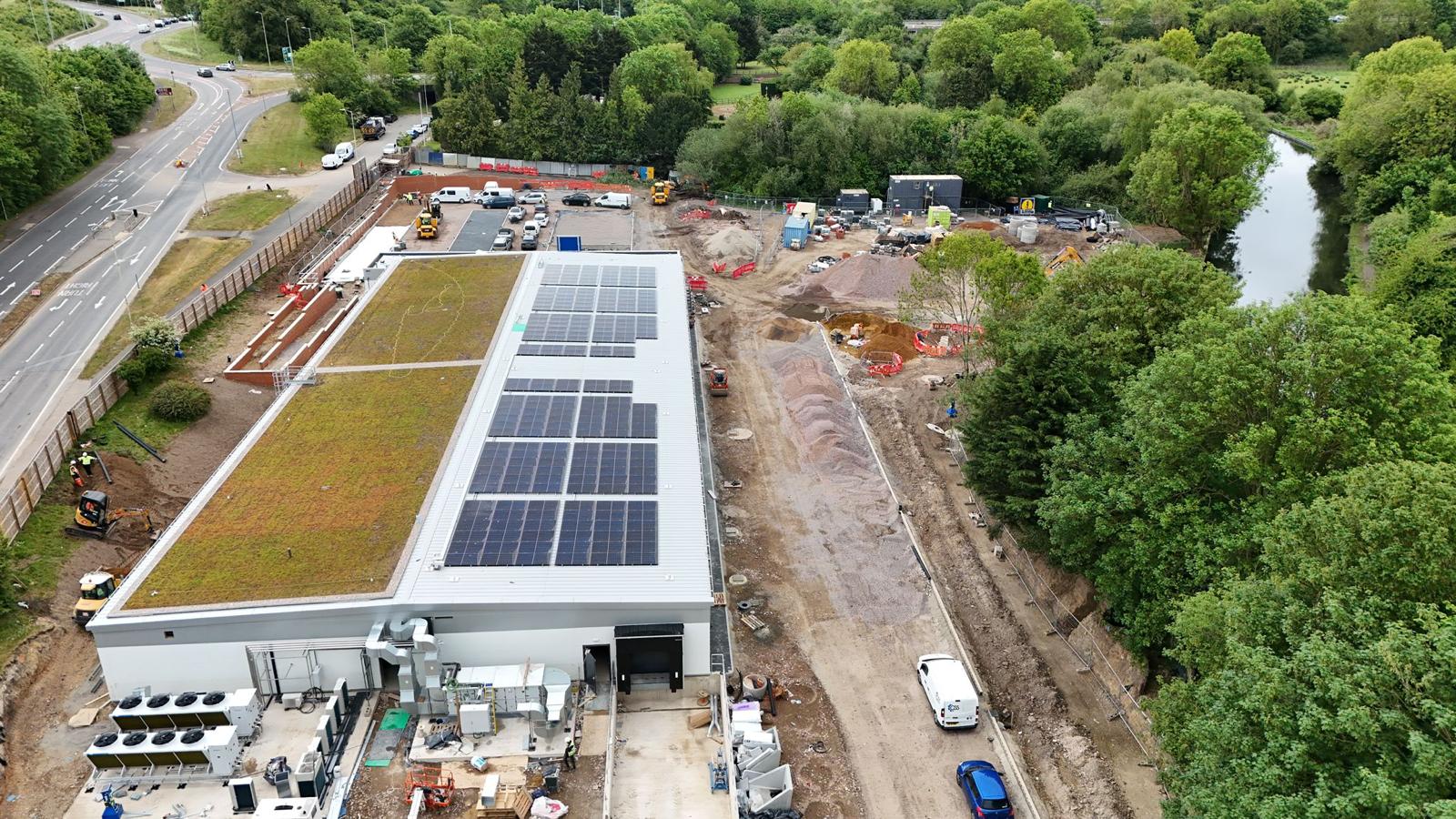
Building retail inside a mixed use scheme looks straightforward from the outside. Ground-floor retail, residential, or offices above. Separate entrances, separate occupiers, everyone gets on with their own project.
In practice it does not work like that. The retail construction below affects everyone above. And if coordination is poor, the programme, the budget, and the relationships between developers, occupiers, and contractors all suffer for it.
This is what actually needs managing on a mixed use retail build, and where things go wrong.
You Are Building Inside Someone Else's Building
On a standalone retail build you control the site. On a mixed use scheme you do not. There are other occupiers above you, often moving in on their own programme. There is a building frame that belongs to the developer, not to you. There are shared systems running through your ceiling that serve floors you will never touch.
Every decision your contractor makes has the potential to affect someone else. Noise from groundworks travels up through the structure. Dust from strip out gets into communal areas. A penetration through the wrong ceiling void compromises fire compartmentation for the whole building.
A contractor who has only ever delivered standalone retail does not automatically understand this. They are used to being the only show on site.
Fire Compartmentation
This is the issue that causes the most problems and gets the least attention at tender stage.
In a mixed use building, the retail ground floor is a separate fire compartment from everything above it. That compartmentation has to be maintained throughout construction, not just at handover. If your contractor creates an opening in the compartment floor or ceiling during the works, even temporarily, the fire safety of the whole building is compromised.
Any penetrations for services, pipes, cables, or ductwork that pass through the compartment boundary need intumescent seals and building control sign off. This is not optional and it is not a detail to sort out at the end. Get it wrong and building control will not sign off the unit. Get it very wrong and your fit out causes a fire safety issue for the residential occupiers above.
Before work starts, your contractor needs a clear record of where the compartment boundaries are and what penetrations already exist. On older mixed use buildings that record is often incomplete or inaccurate.
Shared Services
Mixed use buildings have shared services running through them. Drainage stacks, gas risers, electrical risers, communal heating systems, sprinkler mains. Some of these pass through your retail unit. Some are accessible only through your retail unit.
You need to know, before work starts, exactly which services in your unit are shared and which are yours alone. Cutting into a shared drainage stack to alter your layout affects every occupier connected to it. Isolating a riser to do electrical work on your floor may cut supply to the floors above.
The building owner or managing agent should hold a services schedule. If they do not, your contractor needs to carry out an investigation before any services work starts. Assuming everything in your ceiling void belongs to your unit is a mistake that costs time and money to unpick.
Structural Interfaces
The retail ground floor in a mixed use scheme sits below a structure that supports everything above it. Any structural alteration to your unit, removing a wall, forming a new opening, installing a mezzanine, affects the load path for the floors above.
This means structural work in a mixed use retail unit is never just your engineer and your contractor. It needs sign off from the building's structural engineer, not just building control. And the building's structural engineer works for the developer, not for you.
Add that approval process to your programme. It takes time and it cannot be rushed. Trying to start structural works before sign off is obtained is not a shortcut. It is a contractual and safety breach.
Working Hours and Neighbour Impact
Standalone retail construction usually has flexible working hours. Mixed use does not.
If there are residential occupiers in the building, your contractor will be restricted on early starts, late finishes, and weekend working. The developer's building contract with the residential occupiers will often include specific noise and vibration limits. Breaking those limits is not just a nuisance complaint. It can be a contractual breach that the developer is liable for.
Noisy work, demolition, core drilling, concrete breaking, needs to be planned around the restrictions, not crammed into whatever gaps are available. On a tight programme that requires proper sequencing. It cannot be managed on the fly.
Access and Deliveries
Mixed use buildings usually have shared access routes. Loading bays, lifts, and entrance lobbies that serve the whole building, not just your unit.
Your contractor cannot treat those as their own. Large deliveries need to be booked. Hoisting equipment needs to be agreed with the building manager. Materials cannot be stored in communal areas. If your unit does not have direct external access, every delivery has to go through a shared space that other occupiers are using at the same time.
This slows things down. Budget for it in the programme rather than assuming access will be straightforward.
CDM and Principal Contractor Responsibilities
On a mixed use scheme, the CDM picture is more complex than on a standalone build. The retail contractor is the principal contractor for the retail fit out. But they are working within a building that may have its own principal contractor still active on other parts of the scheme, or a principal designer with ongoing responsibilities.
The interfaces between those CDM duty holders need to be clearly agreed before work starts. Who controls access to the site? Who manages the emergency procedures for the whole building? What happens if an incident on the retail fit out affects occupiers on upper floors?
None of this is difficult to manage if it is set up properly at the start. It becomes very difficult if it is left undefined and an incident happens.
What to Sort Out Before You Appoint a Contractor
- Get a full services schedule from the building owner and confirm which services in your unit are shared
- Confirm the compartment boundaries and get a record of existing penetrations
- Check what working hour restrictions apply and make sure they are written into the contractor's programme
- Agree the access and delivery arrangements with the building manager before mobilisation
- Establish who holds CDM responsibilities for the wider building and how your contractor interfaces with them
- Make sure your structural engineer has an agreed route to the building's structural engineer for any alteration approvals
What to Ask Your Contractor
- Have you delivered retail construction inside an occupied mixed use building before?
- How do you manage fire compartmentation during the works, not just at handover?
- What is your process when you discover a shared service that is not on the schedule?
- Who manages the relationship with the building manager and the other occupiers day to day?
A contractor with mixed use experience answers these from jobs they have actually run. A contractor without it will give you a general answer about how they manage all sites carefully. Those are not the same thing.
We have delivered retail construction inside mixed use schemes alongside our programme of large format supermarket builds. If you are planning a retail fit out inside a mixed use development and want to understand what coordination is actually involved, get in touch with our team. We will tell you what your specific building involves before the programme is set.
Why Supermarket Builds Go Over Budget
July 1, 2026
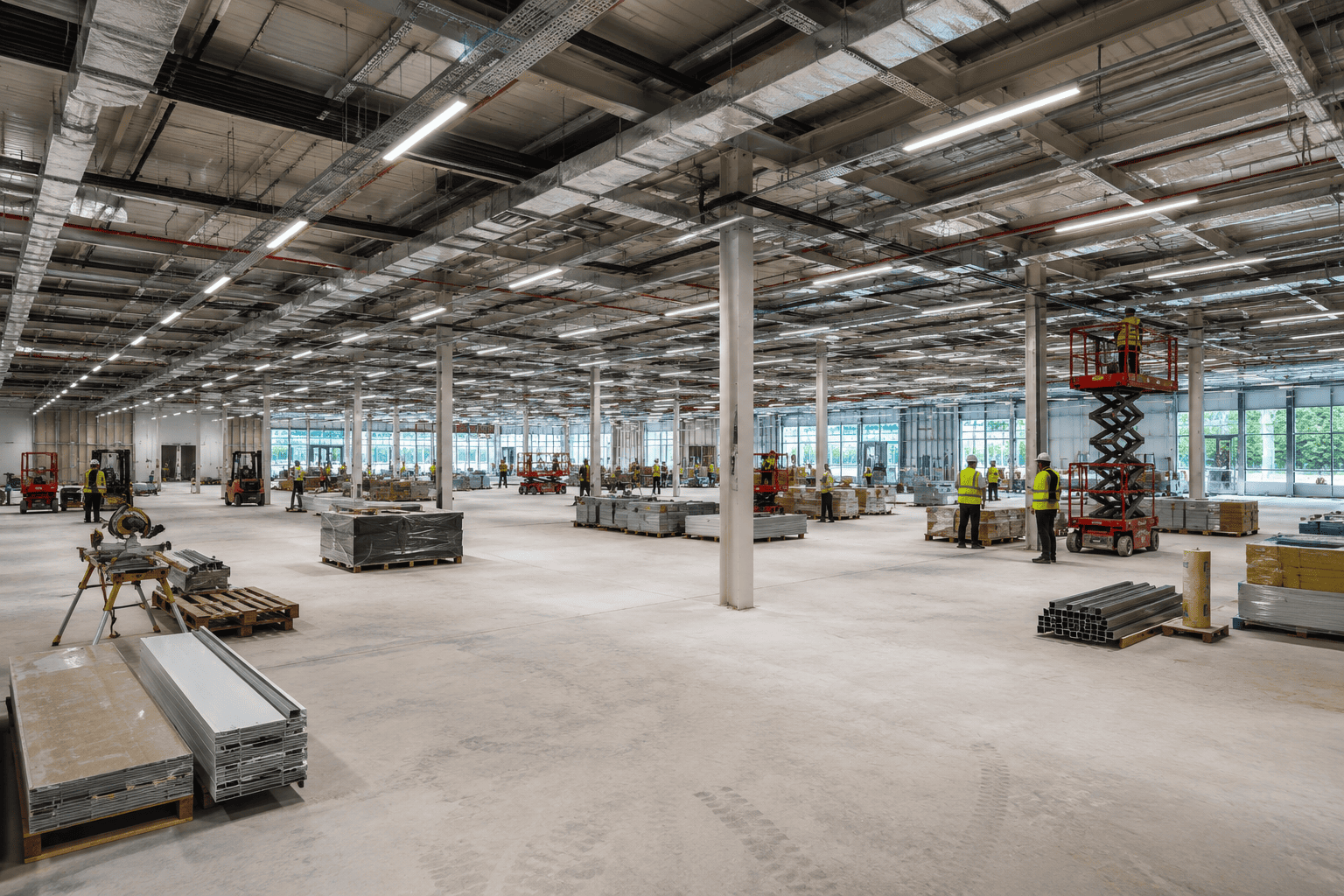
Most supermarket builds that go over budget do not fail because of bad luck. They fail because of decisions made in the first few weeks of a project that nobody challenged at the time.
Having delivered eleven supermarkets for Lidl, we have seen the same problems come up repeatedly. Not on our projects, but in the industry around us. Developers who came to us mid-build. Retailers stuck with a contractor who underpriced to win the job. The causes are almost always the same.
Here is what actually drives overruns on supermarket builds.
The Utility Problem Nobody Talks About
A supermarket needs serious power. A discount format store needs somewhere between 350 and 600 kVA depending on size and refrigeration load. A full-line supermarket needs more.
If the existing supply to the site cannot meet that demand, you need a new or upgraded connection from the local network operator. That process sits entirely outside your control. The network operator sets the timeline, not your contractor. And that timeline is typically 16 to 26 weeks from application to connection.
The problem is that developers often do not commission a utility capacity check until after they have committed to a programme. By the time the issue surfaces, the application should have gone in months earlier. The programme either slips, or the project opens with temporary power at significant ongoing cost.
Fix: get a utility capacity report before you set your programme. If an upgrade is needed, the application goes in before anything else.
Ground Conditions
Ground investigation reports get skipped or scoped too lightly to keep pre-contract costs down. Then groundworks start and the ground is not what anyone expected.
Made ground, contamination, old foundations from a previous building, high water table. Any of these can add weeks to a programme and significant cost to the groundworks package. None of them are unknowable. They are just not known because nobody paid for the investigation upfront.
A ground investigation on a typical supermarket site costs between £5,000 and £15,000 depending on size and complexity. The cost of discovering bad ground after you have mobilised is multiple times that, plus programme delay.
Fix: do the ground investigation before you price the job. Not after.
A Tender That Was Never Realistic
Some contractors price to win, not to deliver. They submit a number that gets them appointed, knowing the real cost will emerge through variations once the contract is signed and it is too late for the client to go elsewhere.
This is most common when the tender is awarded on price alone and the scope at tender stage is vague. Vague scope means a contractor can price what is explicitly described and exclude everything else. Those exclusions become variations. Variations have margin on top. The client ends up paying more than a realistic tender would have cost, plus the time and friction of arguing every change.
Fix: get the design to a proper level of detail before you tender. And compare tenders on what is included, not just the bottom line number.
Design Changes After Work Starts
Every design change after a supermarket build starts costs more than it would have cost at design stage. That is not a contractor trying to catch you out. It is just how construction works. Work gets undone. Trades return. Materials get wasted.
On a large format supermarket, the refrigeration layout drives almost everything else. The drainage positions, the floor slab penetrations, the electrical distribution, the ventilation. Change the refrigeration layout after groundworks have started and you are not changing one drawing. You are changing the programme for multiple trades simultaneously.
Fix: freeze the design before you start on site. Specifically freeze the refrigeration layout. Changes after that point are expensive.
Long Lead Items Ordered Too Late
Refrigeration plant, electrical switchgear, and specialist ventilation equipment all have manufacturer lead times. In 2025 those lead times sit between 10 and 20 weeks for most supermarket specification items.
If these items are not ordered at or before contract award, they will not arrive when the programme needs them. The programme then stalls waiting for plant. Trades that should be commissioning are standing around. Prelims are running. The contractor may be entitled to claim for the delay depending on who was responsible for placing the order.
Fix: identify every item with a lead time over six weeks at tender stage. Order them at or immediately after contract award. Do not wait for the design to be fully finalised if the lead time cannot absorb the wait.
Planning Conditions Not Discharged Before Start
Most supermarket planning permissions come with pre-commencement conditions. These are conditions that have to be signed off by the local planning authority before you can legally start work. Things like archaeological investigation, ecology surveys, drainage strategies, or materials approval.
Starting on site before these are discharged is a planning breach. But more commonly the issue is that the conditions are submitted but not yet approved when work starts. If the local authority comes back with queries, or if the condition triggers a requirement the design does not currently meet, work on affected elements has to stop.
Fix: get all pre-commencement conditions discharged before you mobilise. Do not assume the local authority will turn around approvals quickly. Build their response time into your pre-start programme.
Preliminaries Underpriced
Preliminaries are the costs of running the site. Site management, welfare, hoarding, temporary power, skips, insurance. On a supermarket build they typically represent 12 to 18 percent of the total contract value.
Contractors under competitive pressure sometimes price prelims too thin to bring the overall number down. If the programme then runs long for any reason, those prelims run over because the fixed costs of the site do not stop. That overrun either comes out of the contractor's margin or gets argued out through extensions of time and associated cost claims.
Fix: check how prelims are priced. A site manager, welfare facilities, and a security fence cost what they cost. If the prelims look thin relative to the programme length, ask why.
What to Do Before You Commit to a Budget
None of the problems above are unavoidable. They are all predictable if you know what to look for.
Before you commit to a budget on a supermarket build, you need:
- A utility capacity check, with an application in process if an upgrade is needed
- A ground investigation report that covers the full footprint and any areas of historic use
- A design that is detailed enough to tender properly, particularly the refrigeration layout
- A clear list of long lead items and a plan for when they get ordered
- All pre-commencement planning conditions identified and a realistic timeline for discharging them
- Tenders compared on scope, not just price
A contractor who has delivered multiple supermarkets will tell you all of this upfront. They have seen what happens when it is skipped. A contractor quoting their first or second supermarket is less likely to flag these risks because they have not lived through the consequences yet.
We have delivered eleven supermarkets for Lidl. Every one of those projects taught us something about where costs go wrong when the pre-contract work is not done properly. If you are planning a supermarket build and want a realistic view of what it will cost and what the risks are, talk to our team before you set your budget. Not after.
What a Realistic Retail Fit Out Programme Looks Like Week by Week
June 23, 2026
Most retailers and developers get a programme from their contractor that looks clean on paper. Ten weeks, maybe twelve. Logical sequence. Everything falls into place.
Then the job starts.
Strip out reveals something nobody priced for. A specialist trade is waiting on a delivery that is three weeks late. Building control wants something revisited. Suddenly the handover date is a moving target.
This post covers what a large format retail fit out programme actually looks like, not the version that wins tenders, but the one that reflects how these jobs actually run. We are writing from our experience delivering large format stores, including eleven Lidl supermarkets, so the timelines here come from real programmes rather than theory.
What Large Format Actually Means
For this post, large format means a retail unit of roughly 400 square metres and above. That covers food retail, discount supermarkets, large high street stores, and anchor units on retail parks.
At this size, a fit out is not a shopfit. You are dealing with significant mechanical and electrical installations, specialist refrigeration in food retail, commercial extraction, full compliance packages, and a programme that realistically runs 12 to 16 weeks from site start to handover. Anyone quoting you eight weeks for a unit at this scale either has a very generous definition of handover or is not pricing the full scope.
Before Week One: The Work That Has to Happen First
The programme clock usually starts at site mobilisation. But there is a body of work that has to be done before anyone sets foot on site, and if it has not been done, week one does not go as planned.
Before site start you need:
- Building regulations approval in place, not just submitted
- All design information issued and signed off, including M&E drawings and refrigeration layout for food retail
- Long lead items ordered, particularly refrigeration plant, electrical switchgear, and anything with a manufacturer's lead time over four weeks
- Utility applications submitted if the unit needs an upgraded supply
- CDM documentation ready, including the construction phase plan
The most common reason a programme runs late has nothing to do with what happens on site. It is that one or more of these things was not in place when the job started. A contractor who does not flag this clearly in the pre-start period is not doing their job.
Weeks 1 and 2: Strip Out and Enabling Works
Strip out is when you find out what you are actually dealing with. Previous fit out, redundant services, asbestos that was not on the register, structural alterations from a previous occupier that nobody documented properly. You will not know everything until the ceiling comes down and the floor comes up.
In weeks one and two on a large format unit you should expect:
- Full strip out of the existing fit out to shell
- Asbestos removal if the survey identified it, or further investigation if areas were not accessible before
- Surveys of existing drainage, electrical supply, and structural condition
- Site compound set up, welfare in place, deliveries route agreed
- Temporary protection to any retained elements
If the asbestos survey was done from common areas only, which happens more often than it should, you will get surprises behind plasterboard and above suspended ceilings. Budget for it and programme for it rather than hoping it does not happen.
Weeks 2 to 5: First Fix
First fix is where the building starts to take shape, but none of it is visible in the finished store. It is the infrastructure behind everything else and it has to be right before anything goes on top of it.
First fix on a large format unit covers:
- Groundworks: drainage runs, new floor slab or slab repairs, any below ground services
- Structural works: new openings, steelwork, any alterations to the shell
- Mechanical first fix: pipework for heating and ventilation, refrigeration pipework in food retail
- Electrical first fix: containment, distribution boards, cable runs throughout the unit
- Refrigeration first fix: pipework and drainage for chilled and frozen cabinets
In food retail, refrigeration first fix is the trade you build the rest of the programme around. The pipework runs are long, the connection points are precise, and the refrigeration plant itself often needs to be positioned and installed before other trades can finish around it. If refrigeration is late starting, everything downstream moves with it.
Weeks 5 to 8: Second Fix and Structure
Once first fix is complete and inspected, the unit starts to look like a building. Partitions go up, the ceiling grid goes in, and the second fix trades follow.
This phase covers:
- Partitions and internal walls to finished height
- Suspended ceiling grid and tiles
- Mechanical second fix: fan coil units, ventilation grilles, extraction hoods in food retail
- Electrical second fix: light fittings, sockets, containment lids, distribution board connections
- Refrigeration cabinets landed and connected
- Sprinkler installation if required
- Fire alarm devices and detection throughout
The sequencing of trades in this phase is where programmes are won or lost. If partitions are not complete when the ceiling grid needs to go in, you lose time. If electrical second fix cannot start because mechanical is still running pipework, you lose time. A contractor who is managing this phase properly is tracking trade progress daily, not weekly.
Weeks 8 to 11: Finishes
Finishes are the most visible phase but rarely the most complex. By this point the programme is set. If you are on track coming into week eight you will hit your handover date. If you are not on track by week eight, no amount of weekend working will recover more than a few days.
Finishes on a large format unit typically cover:
- Floor finishes throughout, screeds where required, final floor covering
- Painting and wall finishes
- Shopfitting and joinery, including checkout counters, service counters, and customer toilet fit out
- Signage and wayfinding
- External works, including car park markings, trolley bays, and any landscaping in scope
Food retail has one additional requirement here that catches people out: the cold chain has to be commissioned and running at temperature before any food grade finishes or seals go down around the cabinets. You cannot do that in the right order if refrigeration first fix was late.
Weeks 11 to 13: Testing, Commissioning, and Snagging
A large format retail fit out does not end when the last tile goes down. There is a commissioning and testing phase that cannot be rushed and cannot be skipped.
This covers:
- Electrical testing and certification, including EICR
- Ventilation commissioning and air flow balancing
- Refrigeration commissioning, temperature logging, and F-Gas certification
- Fire alarm commissioning and sign off
- Building control final inspection
- Snagging by the client and contractor, with a defined period for making good
On a food retail store, commissioning alone takes longer than most clients expect. Refrigeration systems need to run at stable temperature before they can be signed off. You cannot fast track that with extra labour. It takes the time it takes.
What Pushes Programmes Back
Most delays on large format fit outs come from the same causes. In order of how often we see them:
- Long lead items ordered late or not at all before site start, most often refrigeration plant and switchgear
- Design information still being finalised after work has started, which means trades are waiting or working off incomplete drawings
- Utility upgrades needed but not applied for until after mobilisation, the network operator lead time is outside anyone's control once you have missed the window
- Strip out revealing ground conditions or structural issues that were not known before
- Building regulations queries that stop a trade mid-phase while the design team responds
- Subcontractors double-booked because the programme slipped and they have moved on to another job
None of these are unusual. They are the normal risk on this type of project. The difference between a contractor who manages them and one who does not is whether these risks are identified and mitigated before they become programme events, not after.
What a Realistic Programme Looks Like
For a large format retail fit out of 400 to 800 square metres, with full M&E, commercial extraction, and refrigeration for food retail:
- Pre-start preparation: 4 to 6 weeks before site mobilisation
- Strip out and enabling: weeks 1 to 2
- First fix: weeks 2 to 5
- Second fix and structure: weeks 5 to 8
- Finishes: weeks 8 to 11
- Testing, commissioning, snagging: weeks 11 to 13
- Handover: week 13 to 14
That is a 13 to 14 week on-site programme for a straightforward large format unit. Add two weeks if the shell condition throws up structural or drainage issues at strip out. Add two to three weeks if refrigeration or utility connections have a long lead time that was not managed early.
A contractor quoting ten weeks for this scope is either cutting the commissioning phase, assuming snagging is your problem, or has not priced the job properly. Ask them which it is.
Questions Worth Asking Before You Appoint
- What is your pre-start process and what do you need from us and the design team before you mobilise?
- When do long lead items need to be ordered and who is responsible for placing those orders?
- Have you done food retail fit outs with live refrigeration commissioning, and can you show us a programme where that went to plan?
- Who is on site every day managing the trades, and what is their background?
- What is your process when strip out reveals something that was not in the scope?
A contractor with real experience on large format fit outs answers all of these without hesitation. The answers come from jobs they have actually run, not from what they think you want to hear.
We have delivered eleven Lidl supermarkets and a range of large format retail fit outs across the UK. If you want a realistic programme for your project rather than an optimistic one, get in touch with our team. We will tell you what your job actually involves before you commit to a start date.
How Retail Park Construction Actually Differs from High Street Builds
June 17, 2026
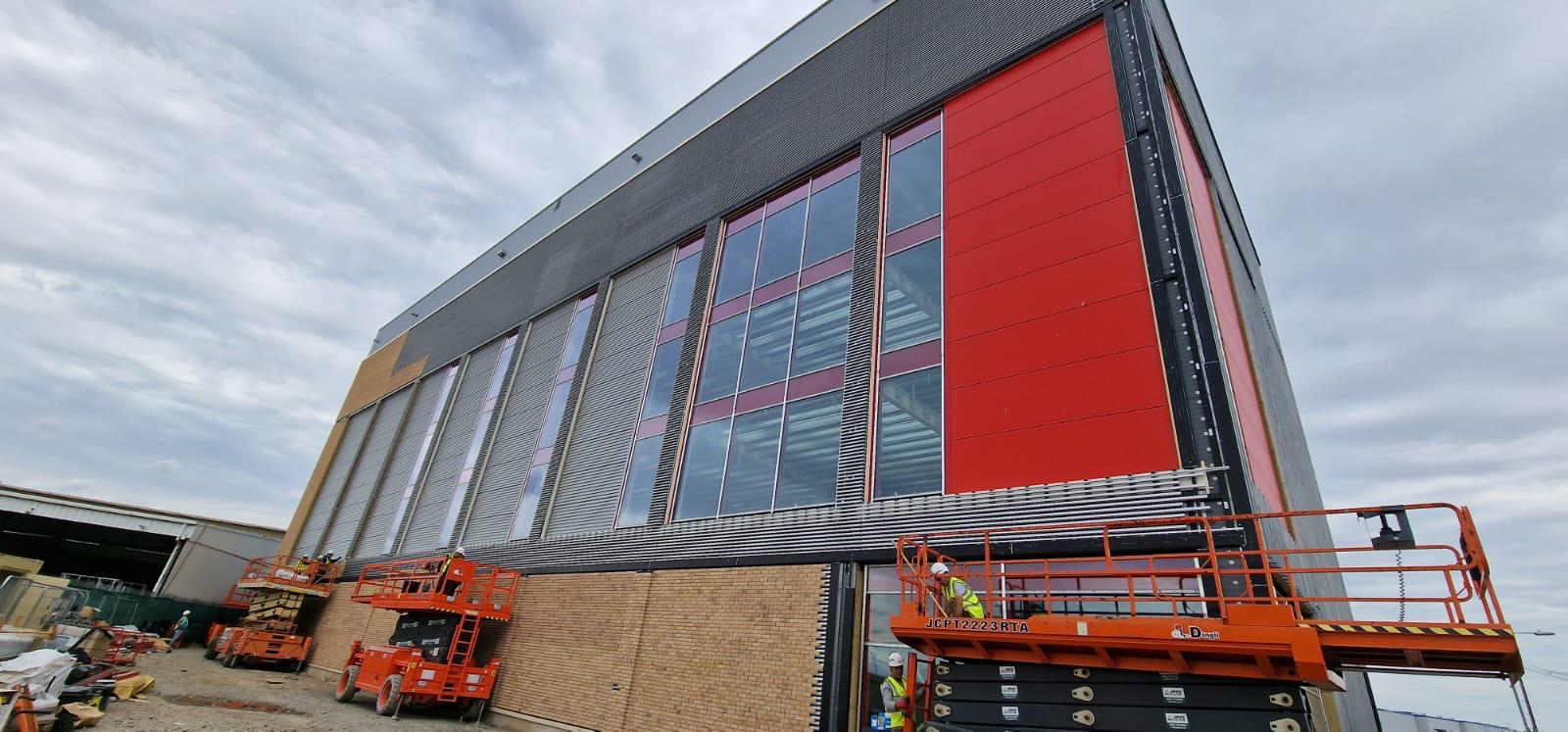
Ask most people outside construction what the difference is between building a unit on a retail park and fitting out a shop on a high street, and you will get a shrug. Retail is retail. Shopfront, till point, stockroom, done.
Ask anyone who has actually run both types of project and you get a different answer. The site is different. The route to planning permission is different. The people working around you are different. The risks that actually cause delay and cost are different. None of this shows up much in the finished shop. A customer walking in cannot tell whether the unit sits on a retail park or a high street. But everyone who delivered that unit could tell you, in detail, because the two projects were run under almost completely different rules.
If you are a developer deciding where to put your next unit, or a retailer trying to work out why two contractors quoted such different programmes for what looks like a similar job, this is worth understanding properly. Here is what actually changes, not the version that sounds tidy in a tender document.
The Site You Are Actually Building On
A retail park site is usually a cleared, serviced plot, often part of a wider development that has already been through earthworks and infrastructure as a single exercise. You arrive with room. Room for the crane, room for the site compound, room to stack materials, room for deliveries to come straight to the building without threading through anyone else's space. What you are building is mostly visible before you start, because it does not exist yet. The risk sits in the ground and in the services, not in the unknown.
A high street site is the opposite. You are almost always working inside or behind an existing building, frequently one that sits above or beside other occupied premises. There is no blank plot. There is a structure with a history you cannot fully read from the outside, and in most cases you do not find out what that history actually involves until strip out starts. A unit advertised as a straightforward shopfit can turn into something closer to a refurbishment the moment the ceiling comes down and reveals what is above it.
The Structure Itself
New retail park units are almost always steel portal frame buildings. Single storey, large clear spans, a structural grid that a contractor experienced in the format has built many times before. You are designing the geometry from a blank sheet, which means the structure can be optimised for exactly what the retailer needs rather than negotiated around what is already there.
High street units are built into whatever already exists, and what already exists is frequently decades old. Masonry or older concrete frames, party structures shared with the building next door, floor loadings that were never designed with modern retail equipment in mind, and alterations made by previous occupiers that were not always notified to building control at the time. Any structural work, even something as routine as widening an opening between two rooms, starts with a proper structural survey rather than a drawing. Treat that step as optional and you find out the hard way, usually mid programme, that the wall you wanted to remove was doing more work than anyone thought.
Getting Permission to Build It
This is where the two project types diverge most sharply, and in the opposite direction to what most people expect.
A new unit on a retail park is usually classed as an out of centre or edge of centre location for main town centre uses. National planning policy directs that kind of development through a sequential approach, meaning the local authority wants to see that no suitable town centre or edge of centre site was available first. Above a certain scale, currently 2,500 square metres of gross floorspace unless the local plan sets a lower figure, a Retail Impact Assessment is also required, examining what effect the new floorspace will have on the vitality of existing centres. The full detail of how this is applied sits in the government's planning practice guidance on town centres and retail. None of this is about whether the building itself is acceptable. It is about whether the principle of retail floorspace in that location is acceptable, and that conversation can run for months before anyone discusses bricks.
A high street unit usually sits inside Class E, the broad commercial use class introduced in 2020 that groups retail together with cafes, offices, gyms, and several other everyday uses under one planning category. Moving from one Class E use to another inside the same building, say from a clothing shop to a café, typically does not need planning permission at all. What it does need is building regulations approval for any structural, fire safety, or services work, and very often listed building consent or conservation area consent if the building or the street has either designation, since shopfront design is one of the most tightly controlled elements of any high street scheme.
Put simply, the unit that is easiest to build is often the hardest to get permission for, and the unit that is hardest to build is often the easiest to get permission for. Anyone pricing a programme without understanding which side of that line their project sits on is guessing.
Access, Logistics, and the Working Day
A retail park gives you the kind of access most contractors only get to dream about. Large vehicles can reach the unit directly. A site compound sits on site, not three streets away. Deliveries land where they are needed, when they are needed, without anyone negotiating a loading window with the council.
A high street site removes almost all of that. Streets are narrow, vehicle access is restricted, and there is rarely anywhere on site to store materials, so deliveries have to be planned to arrive just before they are needed rather than stockpiled. Scaffolding and hoarding that occupy the pavement need a licence from the local authority. Working hours are frequently restricted to protect neighbouring residents and businesses, which on a high street usually means evenings and early mornings are off limits, not just unsociable. And if your works involve anything near a shared boundary, an existing wall, or excavation close to a neighbouring building's foundations, you are very likely into Party Wall Act territory, which means a formal notice to your neighbour, a response period, and potentially a surveyor appointed on each side before you can start the work in question. None of that exists on an open retail park plot.
Who Else Is Around You
On a retail park, your site is usually exactly that, your site. One client, one boundary, one CDM picture to manage. The principal contractor coordinates trades, deliveries, and safety within a perimeter that nobody else has a reason to enter.
On a high street, you are frequently inside a multi occupancy building. Flats or offices above, shops either side, a shared means of escape that cannot be compromised at any point during the works, and fire compartmentation between your unit and everything around it that has to be maintained throughout construction, not just signed off at the end. You are also, in many cases, working a few feet from the public on an open pavement rather than behind a secured boundary, which changes how seriously pedestrian safety has to be planned and supervised. The legal duties under CDM 2015 apply equally to both project types, but the practical difficulty of discharging them is not remotely equal.
How the Programme Is Actually Built
Retail parks are frequently delivered as a parade of units, sometimes for several different retailers as part of one wider scheme, sometimes built speculatively to a shell and core specification before tenants are even confirmed. That repetition is valuable. The second and third units on a retail park benefit from everything learned building the first, and the programme becomes more predictable with every unit completed, not less.
A high street project rarely offers that benefit. It is usually one unit, for one retailer, with a building condition that is specific to that exact address. There is nothing to repeat and nothing learned on the last job that automatically transfers, because the last job was a different building with a different history. A realistic high street programme has to leave room for what strip out reveals, rather than assuming the clean run that a new build retail park unit can reasonably expect.
Where the Cost and Risk Actually Sit
On a retail park, the risk that drives cost overruns is mostly below ground and in the utilities. Ground conditions on a cleared or redeveloped plot, drainage capacity, and power supply for whichever anchor tenant is moving in. A food retail anchor or a large format DIY unit can require a substation upgrade with a long lead time, and getting that application in early is one of the most common ways a retail park programme either holds its date or loses months. Our supermarket construction work has taught us that utility capacity, not the steel frame, is usually the long pole in a retail park new build.
On a high street, the risk that drives cost overruns is almost always hidden building condition. Asbestos in an older building, electrical installations well below current standards, structural alterations made by a previous occupier without proper sign off, and the simple fact that nobody can accurately price what they cannot see. A contingency that looks generous on a retail park unit can be tight on a high street refurbishment of similar value, because the unknowns are bigger even when the floor area is smaller. Our retail refurbishment projects, including work like our store refurbishment in Kingston upon Thames, have shown the same pattern again and again. The building tells you what it actually needs once strip out starts, not before.
What This Means Before You Appoint a Contractor
If you are planning either type of project, these are the questions worth asking before you sign anything.
- Has the contractor actually delivered a new build unit on a retail park, including the utility applications and highways coordination that involves, or only ever fitted out units inside one once someone else had built the shell?
- Has the contractor managed a Party Wall Act process from notice to resolution, not just heard of one, and can they show you a project where it happened?
- For a high street project, what contingency are they pricing for hidden building condition, and is it based on the actual age and history of your specific building or a generic percentage applied to every job?
- Who is actually on site day to day, the same in house team across both project types, or a different subcontracted crew depending on which side of town the job happens to be?
- For a retail park scheme, when does the utility application go in, and is that date written into the programme or just assumed?
A contractor with real experience on both sides of this comparison answers each of these with a specific project, a specific number, and a specific person. A contractor who has only ever worked on one type tends to talk in generalities about the other.
The Honest Summary
Retail park construction and high street construction are not the same job wearing a different sign. One gives you a clean site and a hard planning route. The other gives you a difficult site and, in most cases, an easier planning route. The risks that matter most are reversed between the two, and a programme or a cost plan that does not reflect that reversal is not a realistic one.
Having delivered eleven new build stores for Lidl alongside high street refurbishment projects like our work in Kingston upon Thames, we run both kinds of build under real site conditions, not as a theoretical comparison. If you are planning a retail park unit, a high street refurbishment, or trying to work out which one actually solves your problem, get in touch with our team. We will tell you what your specific site actually involves before you commit to a programme or a budget.
How Long Does It Take to Build a Supermarket? A Realistic Timeline from Planning to Handover
June 12, 2026
If you are planning a new supermarket, the first question is rarely about cost. It is about time. Your opening date drives everything else. Lease commitments, staff recruitment, stock orders, marketing spend and revenue forecasts all hang off the day the doors open. Get the timeline wrong and every one of those decisions becomes more expensive.
So here is the short answer. A new build supermarket in the UK typically takes 18 to 30 months from site acquisition to trading. The construction phase itself usually takes 6 to 10 months for a standard format store. A conversion of an existing building can cut the on site period to 4 to 6 months.
Those are wide ranges, and the difference between the bottom and top of each range is rarely down to the builder. It is down to planning, utilities and decisions made before anyone breaks ground. This guide walks through every phase, gives realistic durations for each, and explains where programmes actually gain and lose time. We have delivered eleven stores for Lidl, so the durations below come from real programmes, not theory.
The Full Timeline at a Glance
Here is how a typical new build supermarket programme breaks down:
- Site acquisition and feasibility: 2 to 6 months
- Design and pre application: 2 to 4 months
- Planning permission: 3 to 9 months
- Pre construction and procurement: 2 to 4 months
- Groundworks and substructure: 6 to 12 weeks
- Frame, envelope and external works: 3 to 5 months
- Internal fit out and refrigeration: 2 to 4 months
- Commissioning, snagging and handover: 3 to 6 weeks
Some of these phases overlap. A good contractor will run procurement during planning and start fit out trades before the envelope is fully complete. That overlap is where experienced teams claw back months. But the sequence above is the honest shape of a supermarket programme, and skipping a phase on paper does not make it disappear on site.
Phase 1: Site Acquisition and Feasibility (2 to 6 Months)
Before design starts, you need to know the site can actually take a supermarket. This phase answers three questions. Can you build what you want here? Will the council let you? And what will the ground cost you?
Feasibility work typically covers site surveys, ground investigation, access and highways assessment, flood risk, contamination checks and a review of local planning policy. None of this feels like progress because nothing visible happens. But weak feasibility work is the single most common root cause of delays that surface a year later. A contaminated site discovered during groundworks can add three months and six figures. The same discovery during feasibility costs you a report and a negotiation on the land price.
What you should do in this phase: involve a contractor early. Most developers bring construction expertise in after planning. By then the big buildability decisions are already locked in. A contractor reviewing the site at feasibility stage will flag access constraints, crane positions, utility capacity and ground risks while you can still do something about them.
Phase 2: Design and Pre Application (2 to 4 Months)
Design for a supermarket is faster than for most commercial buildings because the formats are well established. The major operators work to standardised store layouts, which compresses design time significantly. A discounter format store has a known footprint, a known structural grid and a known services strategy. Design becomes a process of adapting a proven template to the site rather than starting from a blank page.
The pre application process with the local authority sits inside this phase. A formal pre application enquiry is not mandatory, but for retail schemes it is almost always worth the time. It surfaces objections early, signals what conditions the council is likely to attach, and reduces the risk of a refusal that costs you six months in appeal or redesign. The Planning Portal sets out how the pre application process works and what most authorities expect.
Phase 3: Planning Permission (3 to 9 Months)
This is where timelines stretch, and where you have the least control.
The statutory determination period for a major application is 13 weeks. Treat that number with caution. In practice, retail applications regularly take longer because of three things:
- Retail impact assessments. Councils often require evidence that a new store will not damage existing town centres. Preparing and defending this assessment takes time, and objections from competing operators are common.
- Section 106 agreements. Where the council requires contributions to highways, infrastructure or community facilities, the legal agreement is negotiated after the committee decision. Permission is not issued until it is signed. This step alone routinely adds 2 to 4 months.
- Highways and access. Supermarkets generate traffic, and highways authorities scrutinise junction capacity, deliveries and car park layouts closely. Requests for additional modelling can stall an application for months.
Realistic planning durations: a straightforward application on an allocated retail site might complete in 4 to 5 months. A contested application with retail impact objections and a Section 106 agreement can take 9 months or more. Budget your programme on the cautious end and treat anything faster as a bonus.
One practical point. Permission almost always comes with pre commencement conditions, which are requirements you must discharge before starting on site. Materials approvals, drainage details, construction management plans and ecology measures are typical. Discharging conditions takes the council up to 8 weeks per submission. Developers who treat the decision notice as the finish line lose 2 to 3 months here. Developers who prepare condition submissions during the planning period lose almost none.
Phase 4: Pre Construction and Procurement (2 to 4 Months)
Once planning is secured, the project moves into pre construction. This covers detailed technical design, building regulations approval, procurement of the supply chain, and mobilisation.
This phase is where the contractor model you choose starts to affect the programme. A traditional main contractor spends much of this period tendering packages to subcontractors, comparing bids and negotiating terms. Each package tender takes weeks, and the programme cannot be locked until the supply chain is. A contractor with an in house workforce skips most of that. The teams that will deliver the groundworks, structure and fit out already exist, their availability is known, and the programme can be committed earlier and with more confidence.
The other critical task in this phase is utility applications. Supermarkets are power hungry buildings. Refrigeration, bakery ovens and EV charging push electrical demand well beyond a standard commercial connection, and new substations or network upgrades have long lead times. Utility connections are one of the most common causes of late stage delay in food retail, and the application should go in the moment planning looks likely, not when the frame is up.
Phase 5: Groundworks and Substructure (6 to 12 Weeks)
On site at last. Groundworks covers site clearance, excavation, foundations, drainage and the ground floor slab.
The range here is driven almost entirely by ground conditions. Good bearing ground with no contamination sits at the bottom of the range. Poor ground needing piled foundations, soil stabilisation or remediation sits at the top, and in bad cases beyond it. This is why the ground investigation in Phase 1 matters so much. The ground does not get better because the programme needs it to.
Weather is the other variable. Groundworks in a wet winter run slower than groundworks in a dry summer. If your programme allows any flexibility on start date, starting groundworks outside the worst of the winter months buys real protection.
Phase 6: Frame, Envelope and External Works (3 to 5 Months)
Most UK supermarkets are steel portal frame buildings. The frame itself goes up fast, often in 2 to 3 weeks, and it is the most visible progress on the whole programme. The roof, cladding, glazing and curtain walling follow, taking the building to weathertight.
Weathertight is the milestone that matters. Once the envelope is sealed, internal trades can start regardless of weather, and the programme becomes far more predictable. Experienced contractors sequence the envelope to get the building sealed as early as possible, even if external finishing work continues afterwards.
External works run in parallel through this phase. Car parking, service yards, access roads, landscaping and signage. The car park matters more than many developers expect. It is a large area of drainage, sub base and surfacing, and on constrained sites it competes with the building for space, cranage and deliveries. Sequencing the externals badly is a classic way to lose a month without anyone noticing until it is gone.
Phase 7: Internal Fit Out and Refrigeration (2 to 4 Months)
The fit out phase turns a weathertight shell into a trading store. Mechanical and electrical installation, refrigeration, flooring, ceilings, internal partitions, cold rooms, checkouts, racking and lighting.
Refrigeration is the long pole. Refrigeration packs, cases and cold rooms have long manufacturing lead times and a fixed commissioning sequence. The system must be installed, gas charged, commissioned and temperature proven before stock can arrive. If refrigeration is ordered late, nothing else in the fit out can compensate. This is a procurement decision made in Phase 4 that decides whether Phase 7 runs to programme.
Coordination is the other challenge. A supermarket fit out puts a dozen trades in the same building at the same time, and the interfaces between them are where delays breed. This is where the contrast between a subcontracted model and an in house model is sharpest. When the M&E team, the flooring team and the shopfitting crew all answer to the same employer, sequencing disputes get resolved in a morning site meeting rather than through contractual correspondence. Our retail fit out page covers how we run this phase in more detail.
Phase 8: Commissioning, Snagging and Handover (3 to 6 Weeks)
The final phase covers testing and commissioning of all building systems, statutory sign offs, snagging and the formal handover to the operator.
For a food store, handover is not the end of the timeline that matters to you. After handover comes merchandising, stock fill, staff training and soft launch, typically 2 to 4 weeks run by the retailer. When you plan backwards from a public opening date, build that retailer period in. A handover date that meets the contract but misses the opening date has not really succeeded.
Health and safety documentation also lands here. The handover package should include the health and safety file required under CDM regulations, as set out by the Health and Safety Executive, along with operation and maintenance manuals and all commissioning certificates. A contractor who hands these over complete and on time saves the operator weeks of chasing.
New Build vs Conversion: The Timeline Difference
Everything above describes a new build. Converting an existing retail or industrial unit into a supermarket changes the picture.
A conversion removes the groundworks and frame phases almost entirely, which can take 4 to 6 months out of the construction period. Planning is often faster too, because change of use within retail classes is simpler than building on open land. A well chosen conversion can go from acquisition to trading in 9 to 12 months against 18 to 30 for a new build.
The trade off is risk. Existing buildings hide problems. Structural capacity for new plant, floor slabs that cannot take cold room loads, asbestos, and roofs at the end of their life all surface during conversion works rather than before them. A thorough building survey before acquisition is the price of a fast conversion programme. Our retail refurbishment page covers how we approach existing buildings.
Why Discounter Stores Build Faster
Lidl and Aldi open stores faster than almost anyone else in UK retail, and it is worth understanding why, because the lessons apply to any operator.
- Standardised formats. The store design is proven and repeated. Design time shrinks, procurement is predictable, and the construction team is never solving a problem for the first time.
- Early and fixed decisions. Specifications are settled before construction starts and they do not move. Late client changes are the quiet killer of retail programmes, and the discounter model designs them out.
- Experienced delivery partners. Contractors who have built the format before know the sequence, the pinch points and the lead times. Having delivered eleven stores for Lidl, we can commit to a programme with confidence because we have run that exact programme before.
A standard discounter format new build typically completes its on site phase in around 5 to 7 months. That speed is not a corner cut. It is the compound effect of repetition, fixed decisions and a delivery team that has done it before. For more on how we deliver food retail schemes, see our supermarket construction page.
The Five Things Most Likely to Delay Your Supermarket
- Planning conditions discharged late. The decision notice is not permission to start. Prepare condition submissions during the planning period, not after it.
- Utility connections. Power upgrades for refrigeration have the longest lead times on the project. Apply at the earliest credible moment.
- Ground conditions. Spend properly on ground investigation. It is the cheapest insurance on the whole programme.
- Late refrigeration procurement. Order refrigeration as early as the design allows. Nothing in the fit out can recover time lost here.
- Client change during construction. Every change after start on site costs more time than the same decision made before it. Lock the specification, then build it.
Questions to Ask Before You Commit to a Programme
When a contractor gives you a programme, test it with these questions:
- Have you built this store format before, and can you show me the actual programme from a comparable project?
- Which activities sit on the critical path, and what float exists around them?
- How will you handle utility applications, and when do they need to be submitted?
- How much of the work is delivered by your own workforce, and which packages are subcontracted?
- What happens to the programme if ground conditions are worse than the survey suggests?
A contractor with real supermarket experience answers these in specifics. Vague answers now become delays later.
The Honest Summary
From a standing start, plan for 18 to 30 months to a trading new build supermarket, with 6 to 10 months of that on site. A conversion can trade within 9 to 12 months of acquisition. The construction phase is the most predictable part of the whole journey. The phases that wreck opening dates are planning, utilities and late decisions, and all three are manageable if they are taken seriously early.
The single best protection for your opening date is bringing delivery experience into the project before the programme is written, not after. A timeline built by people who have delivered the building before is a commitment. A timeline built from industry averages is a hope.
If you are planning a supermarket project and want a realistic programme based on stores we have actually delivered, get in touch. We will tell you what is achievable on your site, including the parts you might not want to hear.
How to Choose a Retail Construction Contractor in the UK
June 7, 2026
Choosing a retail construction contractor is one of the most significant commercial decisions in any retail project. Get it right and you have a team that delivers what was agreed, on the programme you were given, to the standard your brand requires. Get it wrong and you are managing delays, quality disputes, a snag list that never gets resolved, and a relationship that gets more difficult as the project gets harder.
The frustrating reality is that most contractors look very similar at the tender stage. A professional website, a list of accreditations, and a portfolio of project photos tell you almost nothing about how a team will actually perform when programme pressure builds and problems arrive. Every contractor has a good answer to the easy questions. The ones worth knowing about have good answers to the hard ones too.
This guide is about helping you ask the hard ones.
Start With the Right Type of Experience
The first and most important filter is whether the contractor has genuinely relevant experience in retail construction specifically. Not commercial construction in general. Not a mix of office fit outs, industrial units, and the occasional shop. Retail construction.
The reason this matters is that retail environments have specific demands that general construction experience does not prepare a contractor for. Brand compliance requires working to specification documents where the tolerances are tight and the sign-off process is rigorous. Shopping centre and managed retail environments involve method statement submissions, working hour restrictions, contractor pre-registration processes, and landlord approval stages that catch unprepared contractors off guard. Live trading delivery requires a completely different approach to site management, daily reset standards, and dust and noise control.
When you ask a contractor for examples of comparable work, push for specifics. Not the name of a brand they worked for three years ago, but the type of project, the environment, the scale, and the challenges. A contractor with genuine retail experience will talk about the specific problems they solved and how. One without it will stay general.
For a sense of what that experience looks like in practice, our about us page covers the background and approach of our team in detail.
Understand How They Actually Deliver the Work
This is the question most clients never ask, and it is the one that has the most bearing on what your experience will actually be like.
Does the contractor deliver the work with their own directly employed trades, or do they subcontract most of it to independent companies? When a contractor's site team works for them directly, the site manager can make coordination decisions in real time. When most of the team are independent subcontractors, each decision that crosses company lines takes longer. Each quality issue involves a conversation between the main contractor and a third party.
Ask the question directly. Ask who specifically will be on site, whether they are directly employed, and who has the authority to make decisions during out-of-hours working. The answer will tell you more than the rest of the tender document combined.
For a detailed explanation of why this matters legally as well as practically, read our guide on what a principal contractor is and why it matters.
Check Accreditations and Know What They Mean
Accreditations are a minimum standard, not a differentiator. But they are a meaningful filter.
CHAS accreditation is the Contractors Health and Safety Assessment Scheme pre-qualification. Many national retailers and shopping centre operators require it before a contractor can be appointed on their sites.
Constructionline Gold registration covers a broader pre-qualification framework including financial stability, health and safety competence, environmental management, and quality management systems. Gold level is more rigorous than standard registration.
CDM 2015 compliance needs to be verified specifically. Ask whether the contractor operates as principal contractor under the CDM 2015 regulations and ask to see their Construction Phase Plan template. On insurance, ask for specific monetary figures and request certificates rather than written assurances. Public liability cover of at least five million pounds is standard for commercial retail construction.
Evaluate the Cost Plan, Not Just the Total
When quotes come in, the instinct is to go straight to the bottom line and compare the numbers. This is exactly what contractors who quote low and charge high rely on.
A properly prepared cost plan for a retail fit out or refurbishment will include a line by line breakdown of every element of the scope. Not a single figure. Not three or four broad categories. Every element priced separately so you can see what you are paying for and what the assumptions are. It will include a clear statement of what is excluded as well as what is included. And it will include a stated approach to how variations are managed.
If you receive a quote that is a single figure with minimal breakdown, that is not a cost plan. It is a number chosen to win the tender, with the detail to be resolved later, usually at your expense.
Call the References. Actually Call Them.
A portfolio of project photos tells you what a contractor's completed work looks like. A five-minute conversation with the person who managed that project from the client side tells you how the contractor actually behaved when things got difficult.
Ask every contractor you are seriously considering for two or three references from comparable projects completed within the last two years. Ask specifically for the name and contact details of the individual who managed the project on the client side. When you call, ask whether the project completed on programme, whether there were cost variations and whether they were agreed in advance, how the contractor communicated during the build, and most importantly: would you use them again?
The Warning Signs Worth Taking Seriously
Some signals are consistent indicators of a contractor who will cause problems on your project.
A quote that is 20 to 30 per cent below the other tenders is the most common one. The work costs what it costs. A significantly lower number almost always means something is excluded, something is underestimated, or the contractor intends to recover the margin through variations during the build.
Vagueness about who is on site is another clear signal. If a contractor is evasive about whether their trades are directly employed or subcontracted, the answer is usually that most of the work is subcontracted.
An inability to produce CDM documentation at the tender stage is a significant concern. A contractor who cannot show you a relevant Construction Phase Plan template has not been operating as a proper principal contractor.
Pressure to make a decision quickly is the final warning sign worth naming. A contractor who is confident in their pricing and their track record is comfortable with scrutiny.
What Good Looks Like
A contractor worth appointing will have specific, demonstrable experience in your type of project. They will give you a line by line cost plan with clear inclusions and exclusions. They will introduce you to the site manager who will run your project before you sign anything. They will hold current CHAS and Constructionline Gold accreditation. They will explain their variation management process clearly before you commit. And they will not create urgency around your decision.
If you are evaluating contractors for a retail fit out, retail refurbishment, or supermarket construction project, we are happy to have a straightforward conversation about whether we are the right fit. If we are not, we will tell you.
How Much Does a Retail Refurbishment Cost in the UK? (2026 Guide)
June 6, 2026
Retailers planning a refurbishment face a frustrating problem. Ask three contractors what it costs and you will get three completely different answers, each qualified with so many caveats that the figure is almost meaningless.
The reason costs vary so much is not that contractors are being evasive. Retail refurbishment covers an enormous range of work. A coat of paint and new flooring is a refurbishment. A full structural transformation is also a refurbishment. The word means different things depending on who is using it.
This guide breaks down retail refurbishment costs honestly, by scope, so you can work out which category your project falls into and what a realistic budget looks like before you speak to a contractor.
Cost by Scope: The Four Types of Retail Refurbishment
| Refurbishment Type | Cost Per Sq Ft | What It Covers |
|---|---|---|
| Cosmetic refresh | £25 to £50 | New decoration, updated lighting, replacement flooring, shopfront signage. No structural works, no significant MEP changes. |
| Partial refurbishment | £50 to £90 | One or two departments, new ceiling system, improved lighting, updated fixtures, targeted MEP upgrades. |
| Full refurbishment, live trading | £80 to £140 | Complete replacement of finishes, fixtures, ceiling, lighting, flooring, joinery and shopfront delivered in phases around trading hours. |
| Full strip-out and rebuild, closed site | £90 to £160 | Full demolition of existing fit out, structural modifications where required, complete reinstatement to new layout and specification. |
These figures are for construction works only. They exclude VAT, professional design fees, and any fixtures or fittings procured separately by the client.
What Drives the Cost Up
Structural Works
If your refurbishment involves removing or relocating walls, installing structural beams, or creating new openings, you move into a different cost category. Structural works require building control notification, structural engineering input, and significantly more site management than cosmetic or MEP-led refurbishment. They are worth doing when the existing layout genuinely cannot be made to work, but they are not a cost to take on lightly.
MEP Replacement
Replacing electrical systems, upgrading HVAC, installing new data infrastructure, or adding extract ventilation in a food retail environment adds significant cost. It is often unavoidable in older retail units where the existing services are at end of life or inadequate for the retailer's equipment requirements. Old wiring in particular tends to surface as a cost that should have been in the budget from the start but was not.
Live Trading Delivery
Refurbishing a store while it is open costs more than a closed-site programme. Work happens primarily out of hours. Each section is reset to trading-ready condition every morning before the store opens. The programme is longer and the site management requirement is higher.
For a detailed look at how live trading refurbishments work in practice, read our guide on how to plan a retail refurbishment without closing your store.
Second-Generation Complications
Older retail units frequently have hidden issues that are not visible until strip-out begins. Asbestos in floor tiles, electrical systems below current standards, and structural modifications made without building control sign-off are all common discoveries. A contingency of 10 to 15 per cent on the construction cost is not excessive on a refurbishment of a unit with no recent fit-out history.
What Landlords Contribute and How to Make the Most of It
Lease renewals are the most common trigger for retail refurbishment, and they are also the moment when landlords are most likely to offer a financial contribution to works.
Landlord contributions typically take one of two forms. The first is a rent-free period at the start of the new lease term. The second is a direct capital contribution to the fit-out works. Both are negotiable, and the amount available depends on the landlord's assessment of the tenant's value to the scheme, the state of the market, and how motivated they are to retain or attract a particular operator.
A few things worth knowing before you negotiate. The earlier you raise the refurbishment with your landlord, the more options you have. Raising it three months before lease expiry limits your negotiating position significantly. Raising it twelve months out gives you time to agree the scope, agree the contribution, and factor it properly into your budget.
For managed retail environments, landlord approval of the design is usually required regardless of whether a contribution is being made. Building that approval process into your pre-construction programme avoids delays on site. Our retail refurbishment contractors page covers the landlord liaison process in more detail.
Sample Budget: 3,000 Sq Ft Retail Unit, Mid-Specification Refurbishment
| Element | Cost Range |
|---|---|
| Strip-out and waste disposal | £8,000 to £12,000 |
| First fix MEP | £18,000 to £28,000 |
| Partitioning works | £6,000 to £10,000 |
| Suspended ceiling | £12,000 to £18,000 |
| Second fix MEP including lighting | £16,000 to £24,000 |
| Flooring | £12,000 to £18,000 |
| Shopfront and entrance | £8,000 to £15,000 |
| Bespoke joinery and fixtures | £20,000 to £40,000 |
| Decoration and finishes | £8,000 to £12,000 |
| Signage | £5,000 to £10,000 |
| Preliminaries and site management | £12,000 to £18,000 |
| Total construction cost | £125,000 to £205,000 |
Add 10 to 15 per cent contingency, professional fees if applicable, and VAT. A realistic all-in budget for this scope and specification is £150,000 to £250,000 depending on specification choices and any site-specific complications.
The Question Worth Asking Before You Refurbish
Not every store needs a refurbishment and not every refurbishment delivers the return it promises. Before committing to a budget, it is worth asking honestly whether the physical environment is the reason this store is underperforming, or whether the issue is the location.
A well-executed refurbishment in a store with genuinely declining footfall will not solve a location problem. If the store is underperforming relative to similar locations in your estate and the location itself is sound, a refurbishment is worth serious consideration. If the footfall data points to a structural location issue, it is not.
For an in-depth look at how to make this decision, read our guide on retail refurbishment vs relocation. And if you want to understand the evidence behind refurbishment's commercial return, our blog on whether retail refurbishment actually increases sales covers the data in full.
Getting a Realistic Quote for Your Refurbishment
The starting point for an accurate cost plan is a site visit. We need to see the unit, understand your brief, and assess the existing condition before we can give you a figure that means anything.
At RCC, we provide line by line cost plans as standard with inclusions, exclusions, and assumptions clearly stated. If you are planning a retail refurbishment and want to understand what it will actually cost, contact our team and we will arrange a site visit within the week.
Multi-Site Retail Refurbishment: How to Maintain Standards Across Every Store
June 5, 2026
Why Multi-Site Refurbishment Is Not Just Single-Site Refurbishment Repeated
The Most Common Ways Multi-Site Programmes Fail
What a Well-Managed Multi-Site Programme Looks Like
Procurement and Supply Chain Management Across Multiple Sites
Reporting: What a Property Director Actually Needs to Know
Practical Completion Across Multiple Sites
What to Ask a Contractor Before Appointing Them for a Multi-Site Programme
The Honest Summary
Five Things That Go Wrong on Retail Refurbishments and How to Avoid Them
June 4, 2026
1. Programme Slippage Caused by Late Decisions
2. Specification Changes That Add Cost Without an Agreed Process
3. Strip-Out Discoveries That Were Not in the Budget
4. Trade Coordination Failures That Cascade Through the Programme
5. Practical Completion That Is Not Actually Complete
The Pattern Behind All Five
What Retail Refurbishment Actually Involves
June 3, 2026
Retail refurbishment is not a single thing. It sits on a spectrum that runs from a targeted cosmetic refresh at one end to a complete structural transformation at the other, and the scope of what your project actually involves depends on three things: the current condition of your space, the standards your brand now requires, and how the store needs to perform commercially when the works are complete.
What makes retail refurbishment more complex than standard commercial construction is the layering of those requirements. Every element of the build affects the others, and decisions made early in the programme have consequences that run through every subsequent stage. Understanding what each element actually involves, not just what it is called, is what allows you to brief a contractor accurately and evaluate a cost plan honestly.
Here is what a retail refurbishment programme genuinely covers, explained in the level of detail that is useful before you appoint anyone.
Strip-Out and Preparation
Strip-out is the first physical stage of any retail refurbishment and the one that most directly determines the quality of everything that follows. It is also the stage most commonly rushed, most commonly under-resourced, and most commonly responsible for problems that emerge at later stages of the programme.
A proper strip-out involves the systematic removal of all existing elements that are being replaced or reconfigured. That means fixtures, shelving systems, counters, display units, and all associated fixings. It means removing the existing floor finish and, where required, the screed beneath it to expose a clean concrete substrate. It means taking down ceiling systems, exposing the structural soffit above, and removing all associated MEP infrastructure that is not being retained. It means stripping wall finishes back to the substrate in areas being replastered or boarded, and removing partitions where the layout is changing.
What it does not mean is pulling everything out as quickly as possible and leaving the site in a state that creates problems for the trades that follow.
The most common strip-out failures in retail refurbishment are leaving adhesive residue on floor substrates that prevents new flooring from bonding correctly, removing electrical and data infrastructure without properly documenting what served where, creating structural penetrations without understanding whether the element being removed is load-bearing, and leaving debris in ceiling voids that creates problems when new MEP infrastructure is being installed.
Our approach to strip-out treats it as a preparation exercise rather than a demolition exercise. The state in which the space is left after strip-out is the baseline against which every subsequent trade is measured. A clean, properly surveyed, and clearly documented strip-out compresses the programme for every trade that follows. A poorly executed one expands it.
Waste management is also a strip-out consideration that is frequently underestimated. In food retail environments, particularly, the disposal of refrigeration equipment requires compliance with F-gas regulations. The removal of fluorescent lighting requires proper handling of mercury-containing components. Asbestos surveys, where the building is of an age at which asbestos-containing materials may be present, need to be completed, and any identified materials removed by licensed contractors before any other strip-out work proceeds. We identify these requirements at the pre-construction stage so they are included in the programme and budget from the start, rather than being discovered on site after the works have begun.
Structural Works
Not every retail refurbishment involves structural works, but when it does, those works require a level of planning, compliance management, and technical oversight that separates them from every other element of the programme.
Structural works in retail refurbishment typically involve one or more of the following. Partition removal or relocation to reconfigure the floor plate, which is straightforward when the partition is non-load-bearing and significantly more involved when it is not. Structural openings through walls or floors for new entrances, service access, or connections between units. Mezzanine installation, where additional floor area is being created above the existing ground floor level, or mezzanine removal, where an existing structure is being taken out. Alterations to the building fabric, including works to the roof structure, the building envelope, or the foundations, where subsidence or drainage issues have been identified.
Any works that affect the structural integrity of the building require notification to building control under the Building Regulations. This is not optional and cannot be signed off retrospectively. Building control sign-off provides legal certification that the structural elements have been designed and built to the required standard, and that this certification is required for future lease transactions, the sale of the property, and insurance purposes. We manage building control notifications and inspections as part of our standard process for any project involving structural works, as the responsibility for ensuring compliance lies with the principal contractor.
CDM 2015 requires that structural works are managed by a principal contractor with appropriate competence. For projects involving structural alterations, the Construction Phase Plan needs to address the specific risks associated with those works, including temporary propping, working at height, exclusion zones, and interfacing with any other activities occurring concurrently on the site. We write specific CDM documentation for the structural element of every project that involves it, because generic health and safety paperwork does not address the specific risks of the works being carried out.
The structural survey is the other element of structural works that determines how the rest of the programme runs. Before any structural element is altered, we need to know what it is actually doing structurally. That means reviewing existing drawings where available, commissioning a structural engineer to survey and specify the works where drawings do not exist or do not reflect what was actually built, and establishing the temporary support strategy before any load-bearing element is touched. Getting this right at the planning stage costs a fraction of getting it wrong on site.
MEP: Mechanical, Electrical and Plumbing
MEP is the most technically complex element of retail refurbishment and the one where specification decisions have the longest-lasting commercial consequences. When done properly, MEP in a retail refurbishment is invisible to customers yet fundamental to how the space performs. Done poorly, it creates compliance problems, operational failures, and remediation costs that frequently exceed the original savings.
Electrical installation
A retail refurbishment typically involves a full electrical strip-out and reinstatement. The existing distribution board is assessed for its capacity and compliance with current standards. In most older retail units, the existing installation is not adequate for the electrical loads required by a modern retail environment, and the distribution board needs to be upgraded or replaced. This is one of the elements most commonly excluded from low tender prices and most commonly discovered as a variation once work has started. We survey the existing electrical installation and assess its adequacy as part of our pre-construction process, so the cost plan reflects what the installation actually needs rather than what it would cost if everything were serviceable.
New electrical circuits serve lighting, power, data, HVAC, security, and in food retail environments, refrigeration and kitchen equipment. The routing of those circuits needs to be planned before the first fix begins, because changes to circuit routing after ceilings are closed are expensive and disruptive. The lighting circuit design, in particular, deserves specific attention at the planning stage because it needs to reflect the final lighting scheme, not a generic layout that is modified on site.
Lighting specification
We treat lighting as a separate discipline within the MEP scope because its commercial impact on a retail environment is greater than any other single element of the refurbishment. The colour temperature of your retail lighting determines how products look. A warm white light at 2700 to 3000 Kelvin makes food, hospitality environments, and lifestyle products look inviting. A cooler neutral white at 3500 to 4000 Kelvin suits fashion, technology, and precision retail. The wrong colour temperature makes products look less appealing regardless of how well they are merchandised, and it is an error that cannot be corrected without replacing the fittings.
Lux levels, which are the measure of how much light falls on a surface, need to meet both the functional requirements of the retail environment (typically 500 to 1000 lux at the horizontal working plane in most retail formats) and the specific requirements of key merchandising points where product presentation is critical. Accent lighting at display positions, which typically runs at higher intensity than ambient lighting to create visual hierarchy and draw the eye to key products, needs to be planned as part of the lighting design rather than added retrospectively.
The LED specification needs to consider not just the wattage and colour temperature of the fitting but the CRI (colour rendering index), which measures how accurately the light source renders the colour of objects compared to natural light. A CRI of 80 or above is the minimum standard for retail lighting. For fashion, food, and any environment where colour accuracy is commercially important, CRI 90 or above produces measurably better product presentation.
Data and communications infrastructure
Modern retail environments require data infrastructure that supports EPOS systems, payment terminals, stock management systems, digital signage, in-store Wi-Fi, and in many cases CCTV, access control, and alarm systems. Getting the data infrastructure right at first fix stage means understanding the full technology requirement of the completed retail environment and routing containment, cable, and termination points accordingly before any ceiling or wall finish closes those routes.
Retrofitting data cabling after ceilings are closed is possible but disproportionately expensive and disruptive relative to doing it correctly at first fix. We review the technology requirements of the completed store at the pre-construction stage and design the data infrastructure to serve them, rather than installing a generic data layout and hoping it covers everything the client needs.
HVAC and ventilation
Heating, ventilation, and air conditioning in retail environments need to maintain customer comfort across the full range of seasonal conditions while managing the additional heat load generated by lighting, refrigeration, and occupancy. The existing HVAC system in an older retail unit is often inadequate for a modernised environment, particularly when the lighting specification has changed (LEDs generate less heat than fluorescent fittings, which alters the cooling calculation) or when the store layout has been reconfigured.
In food retail environments, kitchen extraction ventilation is a separate and significantly more complex discipline. Commercial kitchen extraction systems need to be sized for the full equipment load, routed to a termination point that meets planning conditions on odour and noise, and maintained to the standard required by Environmental Health. We coordinate extraction design with the operator's equipment specification during pre-construction to ensure the system is sized and routed correctly before any structural element is fixed.
Plumbing and drainage
Most retail refurbishments involve some plumbing works, ranging from welfare facility upgrades to the full drainage installations required in food retail and hospitality environments. Where drainage routes need to change, the floor slab needs to be broken out and reinstated, which is a significant programme and cost item that needs to be identified at survey stage and included in the cost plan from the start. In food retail environments, drainage in food preparation and wash-up areas needs to meet the gradient and access requirements of Environmental Health, which are more demanding than standard commercial drainage specifications.
Flooring
Retail flooring is one of the highest-impact and fastest-return elements of a refurbishment, and one of the areas where the technical requirements are most commonly underestimated in budget discussions.
The commercial impact of flooring on the retail environment is significant. Flooring is the element customers process most quickly and most subconsciously when they enter a store. Damaged, discoloured, or visually inappropriate flooring communicates something about the quality of the products sold in the space and about the operator's attention to the customer experience. New flooring transforms how a space feels before any other element of the refurbishment is considered.
But the quality and longevity of any retail floor installation are determined less by the specified material and more by the substrate preparation beneath it. This is the area where most retail flooring problems originate and where most cost-cutting decisions in refurbishment programmes create problems that are far more expensive to resolve than the original saving.
Retail floor substrates take significant wear and tear over the life of the existing fit-out. Fixing holes from previous shelving and fixture installations compromises the substrate integrity. Adhesive residue from previous floor finishes creates bonding problems for new materials. Localised damage from water ingress, heavy loads, or impact creates surface irregularities that telegraph through most thin-section floor finishes. Dampness in the substrate, which is common in older retail units, particularly at ground-floor level, causes adhesive failure in most flooring materials.
Our approach to substrate preparation treats it as the most important stage of the flooring installation rather than a cost line to be minimised. The substrate is surveyed before any flooring material is specified. Damp levels are tested using an appropriate methodology. All adhesive residue is mechanically removed. Hollow spots, cracks, and surface irregularities are made good using appropriate floor levelling compounds to the tolerances required by the flooring manufacturer. Where the substrate is not capable of supporting the specified floor finish without risk of failure, we advise on remediation or alternative specification before work begins.
Material selection needs to balance four considerations. Aesthetics must align with the brand environment and the customer experience the retailer is trying to create. Durability must be appropriate to the footfall intensity of the specific location, bearing in mind that a destination retail environment with weekend peak traffic places different demands on a floor finish than a high street convenience store operating seven days a week for extended hours. Slip resistance must meet the requirements of the Health and Safety at Work Act and the specific guidance applicable to the retail environment, particularly at entrances and in wet areas. Maintenance requirements need to be appropriate for the operator's cleaning regime and budget, because a flooring material that requires specialist maintenance to remain presentable will deteriorate quickly in an environment where that maintenance is not consistently delivered.
Common flooring materials in retail refurbishment each have specific performance characteristics worth understanding. Porcelain tile is highly durable and visually versatile, but it requires proper substrate preparation and grout selection. The hardness that makes it durable also makes it unforgiving to staff who stand on it for extended periods. LVT (luxury vinyl tile or plank) is increasingly popular in retail environments for its combination of aesthetics, resilience, and maintenance characteristics, but adhesive-down LVT is highly sensitive to the quality of substrate preparation and will fail quickly on inadequate or damp substrates. Polished concrete and resin floors provide a seamless appearance suited to premium and design-led retail environments, but require skilled application and appropriate substrate preparation to achieve a consistent finish. Commercial carpet tiles are appropriate for some retail formats and offer excellent acoustic performance but require a carefully managed seaming and laying pattern to avoid joins that deteriorate under rolling traffic.
Ceiling Systems
The ceiling plane is one of the most visible and commercially significant elements of a retail environment, and one of the most frequently treated as a cost-saving opportunity in refurbishment budgets. The decisions made about ceiling specification affect not just aesthetics but acoustic performance, lighting integration, MEP access, fire safety compliance, and ultimately how the whole space feels to the customer.
Standard grid and tile suspended ceiling systems remain the most commonly specified ceiling type in retail refurbishment because they provide reliable performance, relatively straightforward installation, and accessible void space for MEP above. The quality of the specification within that category varies significantly. Budget grid and tile installations use lightweight components that show movement and deflection over time, produce visible joint lines that deteriorate with humidity and temperature cycling, and provide limited acoustic performance. A mid-specification grid and tile ceiling with appropriate tile density and properly designed junction details produces a flat, consistent ceiling plane that performs well acoustically and provides a clean backdrop for the lighting scheme above it.
Exposed structure ceilings, where the ceiling grid is removed and the structural soffit and MEP services above are left visible, have become increasingly common in retail refurbishment. Done properly, they create a distinctive, often compelling retail environment. Done without sufficient thought to what is being exposed and how it will look, they reveal a structural soffit in poor condition with services running in directions that were never intended to be seen, producing an environment that looks unfinished rather than considered. The decision to specify an exposed structure ceiling needs to be made with a clear understanding of what the structural soffit actually looks like and what remediation work is required to make it presentable.
Bespoke ceiling features, including coffered ceilings, curved sections, feature bulkheads, and integrated lighting troughs, are used to create visual hierarchy in the retail environment, drawing customer attention to specific zones or creating a sense of scale and arrival at key points in the customer journey. These elements require careful design coordination between the ceiling designer, the lighting designer, and the MEP engineer to ensure that what is designed is physically achievable within the structural void available and integrates correctly with the services running above.
Acoustic performance is the ceiling characteristic most frequently overlooked in retail refurbishment budgets. A retail environment that generates significant noise from customer activity, HVAC systems, and music creates a customer experience that drives people toward the exit rather than encouraging them to linger. The acoustic performance of a suspended ceiling is primarily determined by the tile specification (specifically its absorption coefficient and the frequency range across which it performs) and the proportion of the ceiling area that is solid versus perforated or open. Where acoustic performance is a priority, which it should be in most retail formats, tile selection should be based on actual acoustic performance data rather than visual specification alone.
Fire safety compliance for ceiling systems in retail environments requires that the void above the suspended ceiling is properly fire-stopped to prevent fire and smoke spread through the ceiling void. This is a building regulation requirement, not an optional upgrade. Fire stopping around all service penetrations through the ceiling plane, at compartment boundaries, and at the junction with structural walls needs to be installed correctly and inspected during the installation rather than retrospectively. Our site team manages fire stopping as a live inspection activity throughout the ceiling installation, maintaining records that are included in the handover documentation.
Shopfront and Facade
The shopfront is the first element of a retail environment that a customer encounters and the one that determines whether they come in. It is the physical expression of the brand at street level and the first decision a customer makes about whether what is inside is relevant to them.
A shopfront refurbishment can range from a direct replacement of the existing glazing system and signage within the same structural opening to a complete reconfiguration of the entrance arrangement, including changes to the structural lintel, the glazing system, the entrance canopy, external lighting, and security shutters or barriers.
In managed retail environments, including shopping centres and retail parks, shopfront works require design approval from the landlord or the centre management team before works can begin. The approval process is not a formality. Shopping centres have design guides that specify the materials, finishes, proportions, and signage parameters that are acceptable within the scheme, and departures from those parameters require specific negotiation. We prepare and submit shopfront design packages to landlords and centre management teams as part of our pre-construction process, managing the approval correspondence and responding to any queries before the construction programme starts. Discovering that a shopfront design requires significant modification after the construction programme has been built around it is an avoidable programme and cost risk.
The glazing system specification has both commercial and regulatory dimensions. Thermally broken aluminium framing is the current standard for retail shopfronts because it meets energy performance requirements and provides adequate structural rigidity for the spans typical of most retail entrance configurations. The glazing specification needs to meet current Part L Building Regulations requirements for energy performance where the shopfront work triggers a notifiable change. Security glazing specification needs to be appropriate for the retail environment and location, with laminated safety glass as the minimum standard for any glazing that could be subject to impact or forced entry.
External signage design and installation in retail refurbishment is frequently managed separately from the construction programme, with the brand's preferred signage contractor carrying out the sign installation within the building contractor's programme. Where this is the case, the coordination between the main contractor and the signage contractor needs to be explicitly managed. Electrical provisions for illuminated signage need to be included in the main contractor's MEP scope, sign fixing points need to be structurally adequate for the sign weight and wind load, and the sign installation needs to be sequenced correctly within the overall shopfront programme. Poor coordination between the main contractor and the signage contractor is one of the most common causes of delays in the shopfront programme.
Fixtures, Fittings, and Joinery
The fixtures, fittings, and joinery within a retail environment drive the store's commercial performance in a way that the background elements of the refurbishment do not. They are the elements that customers interact with directly. They determine how products are presented, how the brand's visual identity is expressed in three dimensions, and how the space functions for the staff who work in it.
There is a significant difference between standard retail shelving and fixture systems, which are procured from specialist retail equipment suppliers and configured to the store layout, and bespoke joinery, which is designed and manufactured specifically for the store and delivers a level of brand expression that standard systems cannot achieve. Most retail refurbishments involve a combination of both.
Bespoke joinery elements in retail refurbishment typically include the main service counter and cash desk, which is the primary operational and brand focal point in most retail formats. Display plinths, feature shelving, and the primary display units in key product zones are frequently bespoke where the brand specification requires a specific aesthetic that standard systems cannot deliver. Fitting rooms in fashion retail, consultation rooms in pharmacy or optician formats, and barista equipment surrounds in food and beverage formats are also commonly bespoke elements.
The procurement and programme implications of bespoke joinery need to be understood before the construction programme is fixed. Bespoke joinery is manufactured to order, and the manufacturing lead time from confirmed design drawings to on-site delivery is typically eight to twelve weeks. The design drawings cannot be finalised until the structural dimensions of the space are confirmed, which is typically available only after the structural works are complete. This creates a sequence dependency that needs to be managed in the programme: structural works complete, dimensions confirmed, joinery drawings finalised, joinery ordered, joinery manufactured, joinery delivered and installed. Compressing any stage of that sequence creates risk. We identify the joinery programme requirements at the pre-construction stage and place joinery orders with sufficient lead time to prevent the final stage of the programme from being held up by manufacturing delays.
In food retail environments, the joinery scope extends to refrigeration display units, chilled counter configurations, and all associated infrastructure. Refrigeration display units are specialist items that need to be coordinated with the refrigeration contractor responsible for the pipework and plant. The interface between the main contractor's joinery installation and the refrigeration specialist's pipework installation is one of the highest-risk coordination points in food retail construction. We manage this interface explicitly in the programme, establishing the sequence and coordination protocol with the refrigeration specialist before work begins. For more detail on how we approach food retail construction specifically, our food retail construction page covers the refrigeration coordination challenge in full.
Decoration and Brand Finishes
Decoration and brand finishes are the point in the programme where the character of the retail environment first becomes visible, and where the distinction between a well-executed refurbishment and an ordinary one becomes apparent.
In a retail environment, decoration is not the same as painting in the domestic sense. It is the systematic application of brand-specified colours, finishes, and materials to the walls, columns, soffits, and any other surfaces within the customer environment, to a standard that produces a consistent, high-quality result throughout the space.
Preparation is the element of decoration most frequently compromised when programmes are under pressure. Plasterwork needs to be fully dry before decoration begins. Substrate imperfections need to be filled, sanded, and sealed before any finish coat is applied. New plasterboard joints need to be taped, filled, sanded, and primed before the top coat is applied, or the joints will be visible through the finished surface. Taking shortcuts at the preparation stage produces a result that looks acceptable on the day but deteriorates quickly and requires remediation long before the next planned refurbishment.
Most national retail brands have colour specifications that reference specific RAL, BS, or proprietary paint manufacturer codes. Meeting those specifications requires using the correct paint type (not just the correct colour), applied by the correct method (brush, roller, or spray) to achieve the correct sheen level and texture, in the correct number of coats on a correctly prepared substrate. Our decorating team works to brand specifications as standard and does not substitute alternative products without specific client approval, because the customer-facing result of getting the colour or finish wrong is visible to every person who enters the store.
Graphic installations form an increasingly significant element of the decoration scope in brand-aligned retail refurbishments. Large-format vinyl graphics, fabric-tensioned lightbox panels, and printed wall coverings require that both the surface to which they are applied and the installation be carried out by someone experienced in the specific medium. Bubbles, wrinkles, or alignment errors in large-format graphics are immediately visible at retail scale and cannot be corrected without reprinting and reinstalling the affected panels.
Signage and Wayfinding
Signage in a retail environment serves two distinct functions that are sometimes treated as one and suffer when they are.
External signage functions as brand identification, marketing communication, and customer orientation. It tells people outside the store who you are, what you sell, and where the entrance is. The specification, placement, and illumination of external signage need to be designed around the sightlines available from the directions customers approach, not just the elevation that looks best on an architectural drawing.
Internal wayfinding and departmental signage function as a navigation system within the store. It reduces the cognitive effort customers need to expend to find what they are looking for, which reduces friction and increases the time available for browsing and purchasing rather than searching. Poorly designed or inadequately maintained internal wayfinding increases customer frustration and reduces conversion. In large format retail, food retail, and multi-department environments, the internal signage system needs to be designed as a coherent wayfinding hierarchy, not applied store by store as an afterthought.
Point-of-sale infrastructure, including the mounting, cabling, and power provisions for POS terminals, digital screens, and promotional display elements, needs to be coordinated with the MEP scope at first fix stage. The most common POS infrastructure problem in retail refurbishment is discovering at the fit-out stage that the electrical provisions for digital display elements are in the wrong positions or at the wrong capacity. Addressing this after ceilings and walls are closed is disproportionately expensive compared to coordinating it correctly at first fix.
Digital display provision is increasingly standard in retail refurbishment across most formats. Large-format screens, digital price display, interactive product information, and queue management systems all require power, data, and in some cases structural fixing that needs to be designed into the works programme rather than added afterwards. We review the digital display requirements of the completed retail environment during pre-construction and include all necessary provisions in the MEP scope.
A note on reading this section:
Not every element listed above applies to every refurbishment. A cosmetic refresh does not require structural works. A flooring and lighting upgrade does not require bespoke joinery. The scope of any specific refurbishment is determined during the site consultation stage based on the space's needs, its current condition, and the client's brand standards.
What this section is designed to do is give you enough understanding of each element to have a properly informed conversation about your project before you commit to any scope or budget. A detailed, line-by-line cost plan for your specific brief is what comes next.
If you are planning a retail refurbishment and want to understand what your specific project involves and what it will cost, get in touch with our team. We will visit the site, assess every element, and provide a cost plan that shows exactly what you are paying for.
Retail Refurbishment vs Relocation: Which Makes More Financial Sense?
June 3, 2026
At some point, every retailer who has been in the same location for several years faces the same decision. The store looks tired, trading is below where it should be, and the question is on the table: do we invest in this space or move to a better one?
It feels like a strategic question. In reality, it is primarily a financial one, and the numbers are often far less straightforward than they first appear.
Most retailers who choose relocation over refurbishment do so because the costs of moving feel more controllable than the costs of staying and investing. A new unit feels like a fresh start. A refurbishment feels like spending money on a problem that might not go away.
What most retailers do not do before making the decision is add up the real total cost of relocation. When you do, the comparison changes significantly.
This guide walks through both options honestly, with real cost data, so you can make the right decision for your specific situation rather than the one that feels more intuitive.
The True Cost of Retail Relocation
Relocation costs are almost always underestimated. The instinct is to think about the new rent and the cost of fitting out the new space. The reality is a significantly longer list of costs that accumulate before the new store opens and after the old one closes.
Here is what relocation actually involves financially.
Dilapidations on the existing unit
When you leave a retail unit at lease end, your landlord is legally entitled to serve a schedule of dilapidations requiring you to return the space to its condition at the start of your tenancy. This means reinstating any structural alterations you made, removing any fixtures or partitioning you installed, repairing any damage, and, in most cases, redecorating throughout.
Dilapidation costs include repairs, cleaning, and restoring the property to its original condition, and can range from £7 to £30 per square foot, depending on how extensively the space was altered during occupancy. For a 3,000 sq ft retail unit that has been significantly fitted out, the bill is £21,000 to £90,000 before you have spent a penny on the new space. Phelans
A British Chambers of Commerce survey found that 68 per cent of SMEs reported surprise dilapidation bills during a move, with many exceeding the cost of the physical relocation itself. These costs are not optional. They are contractual obligations that your landlord can pursue for up to six years after the lease ends. Uk
Fit out of the new unit
A new unit requires a complete fit-out from shell or Cat A condition. Depending on the specification and the condition of the space, construction costs range from £40 to £200 per square foot, plus fixtures and fittings, equipment, and any brand-specific elements. For a standard 3,000 sq ft retail unit at mid-specification, a realistic fit-out budget is £150,000 to £250,000 before professional fees and VAT.
Legal and professional fees
Commercial lease negotiations require a solicitor. Surveys of the new premises are advisable before you commit. If you are in a shopping centre or managed retail environment, the landlord's legal costs may also be passed through to you as the incoming tenant. Legal fees for a commercial property transaction typically run between £2,000 and £8,000, with the schedule of condition survey adding a further £1,000 to £2,000. LCC
Lease deposit on the new unit
Most landlords require a rent deposit from incoming tenants, typically three to six months of rent held as security. On a unit with a monthly rent of £1,500, that is £4,500 to £9,000 tied up before you have spent anything on the fit-out. For higher-value retail units in prime locations, the deposit requirement is proportionally larger. Coalesceconstruction
Trading disruption costs
The period between closing your existing store and opening the new one represents lost revenue. Even if the transition is managed efficiently, there will typically be several weeks when you are not trading from either location. For a store turning over £100,000 a month, a four-week gap costs £100,000 in lost revenue on top of every other cost.
Staff disruption and potential attrition
If the new location is not accessible to your existing team, you may face staff turnover, requiring recruitment and training. The cost of replacing experienced retail staff is difficult to quantify precisely but consistently underestimated in relocation budgets.
When you add these items together for a typical 3,000 sq ft UK retail relocation, the realistic total cost, excluding ongoing higher rent at the new location, is likely to sit between £250,000 and £500,000 before the new store opens. Many retailers who thought they were making a straightforward commercial decision are surprised by how large that number becomes when everything is counted.
The Current Market Context Makes Relocation More Expensive Than It Has Been
The retail property market in 2026 is working against retailers considering relocating to a better location.
Vacancy rates in sought-after retail locations have continued to decline. Retail parks are exhibiting vacancy rates of 6.1 per cent, the lowest level since 2018, while major Central London streets are at around 5 per cent or below. Top shopping centres are nearing full occupancy. Wikipedia
In practical terms, this means the best retail locations have almost nothing available. Retailers competing for what little prime space exists are bidding aggressively, and that competition is pushing rents upward. Prime rents on Carnaby Street rose 20 per cent year on year, Oxford Street West rose 10 per cent, and Cheapside rose 17 per cent. Similar pressures are evident across most prime UK retail locations. Stancold
There is a widespread shortage of expansion space across retail locations, and this scarcity underpins rental growth expectations for 2026, most pronounced in prime high street locations and retail parks. Ctsshopfitting
The practical consequence is that a retailer who wants to relocate to a genuinely better location is now competing against more tenants for less space at higher rents than at any point in the last several years. The likelihood of securing a significantly better unit on materially better commercial terms than your existing location is lower than it would have been three years ago.
Secondary locations, by contrast, continue to face underperformance and higher vacancy levels, with pressure to repurpose for alternative uses such as healthcare, leisure, and residential. This creates a stark choice for retailers considering relocation. Prime spaces are expensive and scarce. Secondary spaces are available but unlikely to solve the underlying trading problem. Retail Gazette
What Refurbishment Actually Costs by Comparison
Set against the real total cost of relocation, a refurbishment of the same 3,000 sq ft retail unit typically looks like this.
A cosmetic refresh addressing flooring, lighting, decor, and signage costs £75,000 to £150,000 in construction. A mid-specification refurbishment covering MEP upgrades, ceiling replacement, new joinery, shopfront improvement, and brand realignment runs £150,000 to £250,000. A full strip-out and rebuild runs £250,000 to £350,000.
Even at the top of that range, a full refurbishment of your existing unit costs less than the total outlay of a relocation, and it delivers without the lease deposit, the dilapidations liability, the trading gap, or the rent increase on a new unit in a competitive market.
There is also a factor that significantly affects the refurbishment calculation: relocation does not offer it.
The Landlord Contribution: The Factor That Changes the Numbers
If your lease is approaching renewal, your landlord has a strong commercial incentive to keep you in the unit. The costs of finding a new tenant, fitting out an empty unit to attract them, and the void rent period between your departure and their arrival are high. A landlord who would rather retain a known, paying tenant than manage that process will often contribute to a refurbishment as part of lease renewal negotiations.
That contribution typically takes one of two forms. A rent-free period at the start of the renewed lease term, commonly three to nine months depending on the landlord's motivation and the market, during which your refurbishment can be funded from rent savings. Or a direct capital contribution toward the fit-out works, sometimes expressed as a fixed sum and sometimes as a contribution per square foot.
On a 3,000 sq ft unit with a rent of £30,000 a year, a six-month rent-free period represents a £15,000 contribution toward the refurbishment programme. On a higher-value unit in a stronger location, that contribution can be substantially larger.
The key insight is that this contribution is available when you renew the lease on your existing unit. It is not available when you relocate. Timing your refurbishment decision to coincide with lease renewal can mean the net cost of upgrading your existing space is meaningfully lower than the headline construction figure suggests.
The earlier you raise the conversation with your landlord, the more leverage you have. Raising it twelve months before lease expiry gives you time to negotiate properly, agree the scope, and plan the programme. Raising it eight weeks before expiry leaves you with minimal room for negotiation.
For a detailed look at how to approach that negotiation and what landlords typically agree to, our blog on how to get a landlord contribution to your retail refurbishment covers the process in detail.
When Relocation Actually Makes More Financial Sense
Everything above makes the case for refurbishment. But there are genuine scenarios where relocation is the right answer. Being honest about those is important.
When the location is structurally failing
The financial comparison above only holds if your existing location has reasonable fundamentals. If footfall in your area is in structural decline, if the retail mix around you is deteriorating, or if your customer demographic has shifted away from your location, refurbishing the physical environment will not solve those problems.
Investors and retailers are highly selective about location, targeting well-configured schemes and prime pitches while secondary high streets and older centres with high vacancy rates continue to struggle. A location that is losing the battle between prime and secondary is not rescued by a well-executed refurbishment. The footfall is the problem, not the environment. Fscl
When the unit itself has fundamental constraints
Some units have physical constraints that cannot be resolved by refurbishment. A unit that is too small for your current trading requirements. A layout that cannot work regardless of how it is reconfigured. Back-of-house provision is inadequate for your operational model. These are problems that investment in the environment cannot fix. If the unit cannot do what your business needs it to do, relocation is the logical answer regardless of the cost comparison.
When a significantly better location is available on genuinely better terms
In 2026, the supply of prime retail space is so constrained that this scenario is increasingly rare. Top shopping centres are nearing full occupancy, and competition for prime high street space is intense. But when a genuinely better location becomes available at commercially viable terms, the long-term trading benefit of that move can justify the upfront cost. The key phrase is genuinely better. Not marginally different. Materially better in footfall, customer profile, or retail mix terms. Wikipedia
When your lease has already ended or a break clause has been triggered
If you are already out of lease or approaching a break clause, the dilapidations calculation changes. Without a lease renewal to negotiate against, the landlord contribution option is less available and the dilapidations liability is more immediate. In those circumstances, the comparison shifts and relocation may make more sense depending on what alternatives are available.
How to Know Which Problem You Actually Have
The most important question in the refurbishment versus relocation decision is the one most retailers do not answer rigorously before committing to a course of action. Is the underperformance of this store caused by the physical environment or by the location?
These are different problems with different solutions. Applying the wrong solution is expensive regardless of which direction you go.
The clearest way to answer this question is to look at your footfall and conversion data together. A store with strong footfall but weak conversion is most likely an environment problem. Customers are coming in, but the space isn't working hard enough to convert them. That is a refurbishment candidate.
A store with weak footfall relative to comparable locations with similar catchment areas is most likely a location problem. The customers are not coming in the numbers needed. Refurbishing the interior of a store that people are not entering will not move that metric.
If you do not have reliable footfall data for your store, commissioning a count before you make any decision is a worthwhile investment. It is far cheaper than committing to the wrong outcome.
The Lease Timing Factor: Why When Matters as Much as What
The financial comparison between refurbishment and relocation shifts significantly depending on where you are in your lease. There are three scenarios that produce different calculations.
If you have three or more years remaining on your lease, a refurbishment can spread its commercial return across the remaining term and potentially into a renewed term. The earlier in the remaining lease a refurbishment is completed, the longer the period over which the sales uplift compounds. A refurbishment with three years of remaining lease and a renewal is more commercially attractive than the same refurbishment with eighteen months of remaining lease.
If you are at lease renewal, you are in the strongest negotiating position for a landlord contribution and the best circumstances for a refurbishment decision. This is the moment the calculation most consistently favours refurbishment over relocation.
If you are past the end of your lease on a holding-over basis, the calculus changes. You have less certainty about the remaining term, less leverage with the landlord, and potentially more exposure to dilapidations risk. In this situation, the decision is more complex, and the financial comparison needs to be run more carefully.
Making the Decision
The right answer to the refurbishment-versus-relocation question is not universal. It depends on your specific location, your lease position, the real total cost of both options, and an honest assessment of whether the physical environment or the location is the underlying problem.
What we would push back on is the assumption that relocation is the more commercially straightforward choice. For most retailers, in most situations, in the current UK retail property market, a well-planned refurbishment of an existing unit in a sound location delivers better financial outcomes than the total cost of relocation to a new one.
The most useful starting point for that decision is a site consultation with a contractor who will give you an honest cost plan, not a sales pitch. We do not make money by telling retailers to refurbish when they should relocate, or by discouraging relocation when it genuinely makes more sense. We make money by delivering well-executed refurbishment programmes for clients who have made the right decision for the right reasons.
If you are facing this decision and want an honest assessment of what a refurbishment of your existing space would cost and what it would deliver, get in touch with our team. We will come to the site, review your brief, and give you a straightforward picture of what refurbishment involves and whether it makes sense for your situation.
For more on how we approach retail refurbishment programmes across different environments and scales, visit our retail refurbishment contractors page. If you want to understand the commercial case for refurbishment before the financial comparison, our blog on whether retail refurbishment actually increases sales covers the evidence in detail.
Does Retail Refurbishment Actually Increase Sales? The Evidence
June 3, 2026
Does Retail Refurbishment Actually Increase Sales? The Evidence
Every contractor who has ever pitched a retail refurbishment has told a client their sales will increase afterwards. Most of those claims come with no evidence to back them up. They are confident assertions made to close a deal, not honest assessments grounded in what refurbishment actually does and does not deliver.
So here is the question asked plainly. Does retail refurbishment actually increase sales? And if it does, by how much, under what circumstances, and which elements of the refurbishment are responsible?
The honest answer is yes, under the right conditions, refurbishment reliably increases sales. But the conditions matter. Refurbishment is not a universal fix. Applied to the wrong problem, in the wrong environment, it delivers a worse-looking store at high cost with no improvement in commercial performance. Understanding the difference before you commit to a programme is what this article is about.
What the Evidence Actually Shows
The most credible data comes from retailers who have publicly reported the results of their refurbishment programmes in their own results statements, because unlike contractor claims, those figures are auditable.
Marks and Spencer reported the results of their foodhall renewal programme in their half-year results to September 2025. The twelve foodhall renewals opened over the past year delivered sales uplifts to date of approximately 16 per cent. That is not a projected figure or a marketing claim. It is what actually happened in those stores after the works were completed, reported in the company's own financial statements. Dcsconcrete
Marks and Spencer has been devoting 23 to 26 per cent of its capital expenditure to store refurbishments in the UK, which, at their scale, represents hundreds of millions of pounds of sustained investment. Companies allocate that proportion of their capital budget to a programme because data from completed projects justify the continued commitment. KDM Group
Primark invested more than £100 million in its UK stores in 2024 alone, with 15 existing stores refurbished as part of an ongoing refit programme. Primark's model is built on physical retail with no meaningful online sales channel. Their confidence in continued investment in refurbishment reflects the commercial returns they are seeing from completed projects. Construction Index
Aldi is committing £300 million to upgrade 25 British stores as part of a major refurbishment push. For a discount operator whose competitive positioning is built on cost efficiency, the decision to allocate that scale of resource to refurbishment reflects a clear internal assessment that it delivers commercial return. Ctsshopfitting
Retailers report sales increases of up to 30 per cent following a well-executed store refit, driven by new technology, updated ranges, and a better customer experience. That figure is a ceiling rather than an average. Not every refurbishment delivers 30 per cent. But it is achievable, and it is being achieved by retailers who execute the right programme in the right environment. Princebuild
Why Refurbishment Increases Sales: The Mechanism
Understanding why refurbishment tends to increase sales is more useful than the headline figures, because it tells you which elements of your programme will drive commercial improvement and which are purely cosmetic.
Sales in a physical retail environment are driven by three variables. How many people enter the store? How long do they stay once they are in? And what proportion of visitors make a purchase?
A refurbishment can improve all three, but through different mechanisms.
Footfall increases because the store becomes more visually appealing from the outside.
The shopfront, the entrance, and the external signage are the first factors a customer considers when deciding whether to enter. A tired, dated frontage actively discourages people who would otherwise have come in. A well-executed shopfront refurbishment reduces that friction. It does not transform a failing location into a thriving one. But on a site with adequate passing trade, it converts more of that passing trade into actual customers.
Dwell time increases because the internal environment becomes more comfortable and easier to navigate.
Dwell time is a key driver of in-store conversion, and well-designed store layouts that reduce navigation friction and highlight high-value product areas consistently improve the time customers spend in the store. Houzz
A retail environment that is confusing to navigate, poorly lit, or uncomfortable to spend time in shortens the customer visit. A well-planned refurbishment that addresses layout, lighting, and the overall quality of the internal environment extends it. And time in store is directly correlated with purchase intent.
Conversion rates increase because product presentation improves.
Well-run physical retail stores see between 15 and 30 per cent of footfall convert to a purchase at the till. That range is wide because the internal environment is a significant variable. Lighting is the most important single element. The colour temperature of your lighting, how it renders your product's colour, and how it draws the eye to key merchandising areas directly affect whether customers pick up and buy items. Keygrp
A refurbishment that properly addresses lighting specifications, rather than just replacing like-for-like, reliably improves product presentation and, with it, conversion rate. This is the mechanism behind a significant proportion of the uplift in sales data from completed refurbishments.
Which Refurbishment Elements Deliver the Strongest Commercial Return
Not all refurbishment spending delivers equal commercial return. Understanding the hierarchy helps you allocate budget toward the elements that move the needle and scale back on those that are primarily cosmetic.
Lighting specification consistently yields the highest return on refurbishment investment.
This is not just about replacing old fittings with LEDs, although the energy cost saving from that switch is significant in its own right. It is about the quality of the light: the colour temperature, the beam angle, the lux levels at key product display points, and how the lighting design draws customers through the space and highlights high-margin products.
Retailers who have invested in proper retail lighting design, rather than standard commercial lighting specifications, consistently report stronger conversion improvements than those who treat lighting as a cost line rather than a commercial tool.
Layout and customer journey redesign delivers measurable dwell time improvement.
The sequence in which customers encounter products as they move through a store is not accidental in well-designed retail environments. It is engineered. A refurbishment is the moment to redesign that journey based on your actual sales data, placing your highest-margin products in the locations where customers naturally spend the most time, and removing the layout friction that sends people toward the exit before they have seen everything you want them to see.
Shopfront and entrance configuration drives footfall improvement.
The first visual impression your store makes determines whether the people walking past it come in. A new shopfront, improved glazing, a cleaner entrance sequence, and well-executed external signage make a measurable difference to how many people cross the threshold. For a store on a busy high street or in a managed shopping centre, the commercial value of converting a fraction more of the passing traffic into store visitors is significant.
Flooring replacement improves the overall quality perception of the environment.
Flooring is one of the first things customers process subconsciously when they enter a store. Tired, damaged, or visually inappropriate flooring communicates something about the quality of the products sold in the space. New flooring alone will not transform commercial performance, but it contributes to the overall quality signal the environment sends.
MEP upgrades deliver energy cost savings that improve margin rather than sales.
Electrical upgrades, HVAC improvements, and heating system replacements do not directly drive sales. They reduce operating costs. On a refurbishment where the budget is tight, MEP upgrades are justified on cost-saving grounds rather than sales uplift grounds. But they belong in the programme because an older store's energy costs are often significantly higher than a modernised equivalent, and that margin difference compounds over the remaining lease term.
What Does Not Move the Commercial Needle
Being honest about this is as important as identifying what works.
Decoration and painting without layout or lighting change deliver minimal commercial return.
Repainting walls and replacing surface finishes makes a store look fresher. It does not change the customer journey, the product presentation, or the conversion rate in any meaningful way. As a standalone programme, it is rarely commercially justified on sales-uplift grounds alone, though it may be necessary for brand compliance or dilapidation purposes.
Bespoke joinery and premium finishes enhance the quality of the environment but yield diminishing commercial returns beyond a certain specification level.
There is a point at which additional specification creates an environment that feels luxurious without driving a proportional increase in sales. That point varies by brand and customer profile, but for most mainstream retail operators, mid-specification finishes deliver commercial performance equivalent to high-specification finishes at significantly lower cost.
Technology additions that are visible but not functional create a poor return.
Digital displays, interactive screens, and in-store technology installations are increasingly common in retail refurbishments. Used well, they improve product discovery and customer engagement. Used badly, they are expensive decorations that customers ignore. The commercial case for in-store technology needs to be evaluated on a per-deployment basis rather than assumed to be positive.
When Refurbishment Will Not Deliver the Return You Are Expecting
This is the section most contractors leave out. It matters more than any of the data above because it is about knowing when not to invest.
Refurbishment addresses problems created by the physical environment. It does not address problems created by the location.
If your store is underperforming because footfall in its location is structurally declining, the retail mix around it is deteriorating, or the unit itself has fundamental constraints that cannot be changed by refurbishment, investing in the physical environment will not solve those problems. It will create a better-looking store in a failing location, which is an expensive way to delay an inevitable outcome.
Retailers are increasingly selective about location, with prime buildings in secondary spots proving much harder to let than would be expected at this stage of the property cycle. The same selectivity should apply to refurbishment decisions. The questions worth asking before committing to a programme are whether the performance problem is environmental or location-related, and whether the site's footfall data provides a realistic basis for commercial improvement after the works. County Contractors
At RCC, we ask these questions during the site consultation stage because we would rather help you make the right decision than win a project that will not deliver the return you expect. If the evidence at the consultation points to a location problem rather than an environment problem, we will tell you that before you have committed any budget.
How to Measure Whether Your Refurbishment Worked
Measuring the commercial impact of a refurbishment requires establishing a meaningful baseline before the works start, which most retailers do not do rigorously enough.
The metrics worth tracking from the point of commission are footfall (visitors into the store per day and week, not just total sales), conversion rate (what proportion of visitors made a purchase), average transaction value (the average basket size), and sales per square foot. Track these consistently in the twelve months before the refurbishment and in the twelve months after practical completion. That comparison, adjusted for any external market factors affecting the wider estate, is your actual return on the investment.
Dwell time is another important measure, as customer time in store correlates directly with purchase intent and basket size. Tracking dwell time before and after a refurbishment helps isolate the impact of layout and environment changes from other variables. T.A Knox
Retailers who confidently make refurbishment investment decisions are the ones who consistently track these metrics across their estate. The data tells them which stores are underperforming relative to their physical environment (refurbishment candidates) and which are underperforming relative to their location (candidates for different decisions).
The Realistic Picture
Retail refurbishment, executed properly and applied to the right problem, consistently delivers measurable commercial improvement. The evidence from major retailers who have publicly reported their results confirms this. Sales uplifts of 15 to 20 per cent from well-executed refurbishment programmes are well within the normal range for UK retail, with some projects delivering significantly more.
The keyword is properly. A refurbishment that addresses lighting specification, layout, shopfront, and the overall quality of the customer environment is a commercially justified investment for a store with sound location fundamentals. A refurbishment that applies new surface finishes to a store whose underlying problems are structural will deliver a fresher-looking environment and not much else.
Getting the programme right starts with an honest assessment of what is actually driving the underperformance. That conversation belongs at the site consultation stage, before you have committed to a scope or a budget.
If you are considering a retail refurbishment and want an honest assessment of what it would involve, what it would cost, and whether it makes commercial sense for your specific situation, get in touch with our team. We will visit the site, review your trading data, and share our thoughts before you commit to anything.
For more on how we deliver retail refurbishment programmes, including live trading refurbishments where the store stays open throughout the works, visit our retail refurbishment contractors page.
How to Get Planning Permission for a Drive-Thru in the UK
May 27, 2026
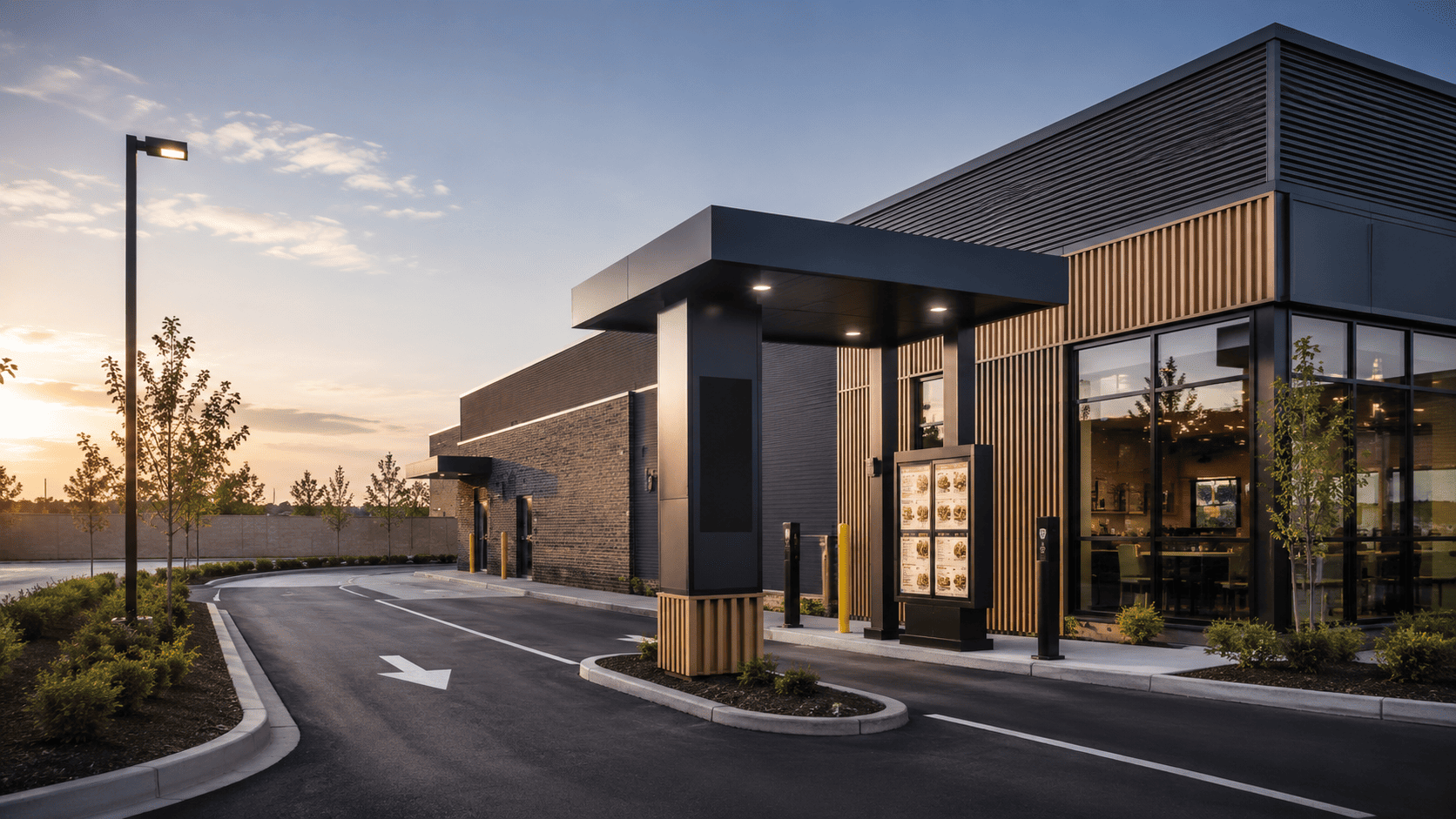
If you are planning a drive-thru development, you have probably already discovered that this is not a straightforward planning application. Drive-thru restaurants fall into a category that local planning authorities treat with particular attention, for reasons that go well beyond the building itself.
The traffic impact, the noise from kitchen extraction, the stacking of vehicles within the site, and in some areas, specific local planning policies that restrict fast food development near schools or residential areas, all of these create a more complex application than most commercial new builds. Get it right, and you have an approved site that can be built and traded. Get it wrong and you face a refusal, an appeal, and months of delay that can cost you the site or the franchise window entirely.
This guide explains the process from the beginning, what makes drive-thru applications different, and what you need to have in place before you submit anything.
Why Drive-Thru Planning Is Different from Standard Retail
A standard commercial planning application is primarily about the building: its size, design, relationship to neighbouring properties, and compliance with local planning policy. A drive-thru application has all of that, plus a substantial additional layer of transport, highway, noise, and in some cases ecological assessment that other retail applications do not require.
The UK planning permission process follows six key stages: pre-application advice, application submission, council validation, a statutory consultation period, officer assessment, and a decision. For commercial applications, the standard determination period is 8 weeks, though complex applications with multiple statutory consultees regularly extend beyond this. Construction One
For drive-thru applications, the statutory consultees almost always include the highway authority. Their involvement adds a layer of assessment and potential requirement for additional information that is largely absent from standard retail planning. The local planning authority cannot approve an application that the highway authority objects to on highway safety grounds, which means the transport assessment becomes as important as the architectural drawings.
Before You Apply: The Research That Saves You Months
The single most valuable thing you can do before spending money on transport assessments and architectural drawings is to understand the planning policy context for your specific site.
Start with the Local Plan. Every local planning authority in England has a Local Plan that sets out where development is encouraged, restricted, and subject to specific conditions. Some Local Plans include dedicated policies on hot food takeaways and drive-thru restaurants. These policies can restrict drive-thru development in proximity to schools, residential areas, or established town centres. They can require specific design standards. They can impose restrictions on opening hours in certain zones. Understanding what is in your local authority's plan before you proceed tells you whether the principle of what you want to do is likely to be acceptable before you have invested in a full application.
The local authority's planning register is also worth several hours of your time. Searching for recent drive-thru applications in the area, both approved and refused, tells you what issues the planning authority has focused on, what conditions they have applied, and how the highway authority has responded to traffic assessments on comparable sites. This is all publicly available information and it is far more useful than generic planning advice about drive-thrus in the abstract.
Check whether the site has any special designations. Conservation areas, sites adjacent to listed buildings, areas within green belt boundaries, or sites with Article 4 Directions all introduce additional planning considerations. None of them necessarily makes a drive-thru application impossible, but they all change the nature of what is required.
Step One: Pre-Application Advice
For a drive-thru application, pre-application advice from the local planning authority is not an optional extra. It is a necessary first step.
Pre-application advice is a formal paid service where you submit a description of your proposed development and receive written feedback from a planning officer before committing to a formal application. The cost varies by authority but typically sits between £200 and £800 for a commercial development of this scale. It is consistently one of the most cost-effective investments in the planning process.
The planning officer's written response will tell you which issues the authority will focus on, which consultees will need to be involved, and their initial view on whether the principle of the development is acceptable in that location. For drive-thru applications specifically, this initial engagement often tells you whether the highway authority needs to be brought in at the pre-application stage as well, which is more common for drive-thru sites than for most other commercial applications.
Getting highway authority input before you have finalised your site layout is particularly valuable. A layout that looks workable on a drawing can fail on transport grounds once traffic generation and queue modelling have been applied to it. Discovering this at the pre-application stage means you can redesign before committing to a formal application. Discovering it after submission means amendments, additional information requests, and programme delay.
You can access the pre-application advice service for most local authorities directly through their websites or via the Planning Portal.
Step Two: The Transport Assessment
For almost all drive-thru applications, a Transport Assessment or Transport Statement will be required. The distinction between the two comes down to the scale of transport impact expected.
A Transport Statement is a lighter document appropriate for smaller developments with limited traffic generation. A full Transport Assessment is required for developments that are likely to generate significant additional trips or have a material impact on nearby junctions. Most drive-thru applications in accessible locations fall into the full Transport Assessment category because drive-thru traffic generation at peak periods is disproportionately high relative to the building footprint.
The Transport Assessment needs to address several specific issues that highway authorities focus on for drive-thru applications.
Trip generation is the starting point. How many additional vehicle movements will the site generate during peak periods? Drive-thru sites have distinctive peak trading patterns around breakfast, lunch, and late evening. The assessment uses established traffic survey data for the relevant operator or format and adjusts for the specific location.
Traffic distribution models where those additional trips come from and go to on the surrounding road network. A drive-thru on a busy arterial road serving commuters generates different traffic patterns to one in a retail park.
Junction impact assessment tests whether the nearby road network can accommodate the additional traffic without unacceptable delays or safety impacts. This is where many applications run into difficulty. If your site access is onto a road that is already operating near capacity, the traffic impact assessment may show impacts that the highway authority cannot support.
Vehicle stacking within the site is a particularly important element for drive-thru applications. Highway authorities regularly require a minimum stacking distance between the service window and the site entrance, to ensure that queuing vehicles within the site cannot back up onto the public highway. Getting the stacking capacity right in the site layout at the design stage is significantly easier than trying to add it retrospectively once the application has been submitted.
Transport Assessments are prepared by specialist transport planning consultants rather than by the construction contractor. But understanding what the assessment needs to demonstrate is important for ensuring your site layout supports its conclusions from the start. Our drive-thru construction contractors page covers the construction implications of site layout decisions in detail.
Step Three: Noise and Odour Assessment
If your site is within reasonable proximity of residential properties, schools, healthcare facilities, or any other noise-sensitive use, a Noise and Odour Assessment will be required as part of the application.
For noise, the assessment measures background noise levels at the site as a baseline and then models the additional noise generated by the development, including drive-thru lane activity, kitchen extraction plant, delivery movements, and customer-facing external areas. The assessment demonstrates that the development does not increase noise to unacceptable levels at the nearest sensitive locations.
For odour, the assessment demonstrates that the kitchen extraction system is designed to contain and treat cooking odours to a standard that does not cause a statutory nuisance at sensitive receptors. The Environment Agency and the Institute of Air Quality Management both publish guidance that local authorities routinely use when setting conditions on extraction system design.
The practical construction implication of this is significant and worth understanding before your planning application is submitted. If a planning condition requires your extraction system to meet a specific odour emission standard at a residential property one hundred metres from the site, that standard needs to be designed into the system before construction begins. Retrofitting a more capable extraction system after the building is complete is expensive, structurally disruptive, and sometimes physically impossible without significant structural alteration.
This is one of the most common areas where early involvement of the construction contractor adds real value to the planning process. A contractor who understands drive-thru kitchen MEP requirements can advise on what extraction system design is achievable within the building structure before that structure is fixed in the drawings.
Step Four: Submitting the Application
Once pre-application advice has been received, supporting assessments have been completed, and the site layout has been refined to address the issues identified, the formal planning application is submitted through the Planning Portal.
A complete drive-thru planning application typically includes the following documents.
The application forms and ownership certificates are the administrative starting point. A location plan at 1:1250 scale clearly showing the site in its context is required. A site plan at 1:500 scale showing the proposed development, including the building, drive-thru lane, car parking, landscaping, and access is needed. Floor plans, elevations, and sections of the proposed building must be included. A Design and Access Statement explaining the design rationale, access arrangements, and the principle of the development in planning policy terms is standard for commercial applications. The Transport Assessment or Statement covers the traffic and highway matters. A Noise and Odour Assessment is required where relevant. A Planning Statement addresses local planning policy and explains how the proposed development is acceptable in principle. An Ecological Assessment is required for most external development sites. A Drainage Strategy and Surface Water Management Plan covers surface water disposal from the car park and drive-thru lane.
The statutory consultation period begins once the application is validated. The standard determination period is 8 weeks for non-major applications and 13 weeks for major ones. However, in practice, complex applications with multiple statutory consultees regularly extend beyond these periods, with the applicant's written agreement. 2MS Construction
For drive-thru applications, planning officers will typically consult the highway authority, the environmental health team, the council's planning policy officers, and neighbouring residents and businesses. Each consultee can submit a response that the planning officer must consider. If the highway authority objects, the application will not be approved without that objection being resolved.
The Most Common Reasons Drive-Thru Applications Are Refused
Understanding what causes refusals is practically useful because most of the common grounds are avoidable with the right preparation.
Highway impact is by far the most frequent reason for refusal. If the Transport Assessment cannot demonstrate that the site access can be designed to work safely and that the traffic impact on nearby junctions is acceptable, the highway authority will object. Site layout decisions made at the design stage, particularly around access junction geometry and vehicle stacking, are the most effective tools for avoiding this outcome.
Noise and odour from kitchen extraction is the second most common ground, particularly for sites near residential development. A properly prepared assessment that demonstrates the extraction system meets relevant standards, and a building design that can actually accommodate that system, addresses this before it becomes a ground for refusal.
Design quality affects drive-thru applications more than it affects many other commercial applications. Drive-thru restaurants are frequently described by planning officers as low-quality standalone structures that make a negative contribution to the character of the area. A well-designed building with appropriate materials, a considered relationship to the site boundaries, and proper landscaping reduces the risk of design-based refusal significantly.
In some locations, a sequential test for retail impact may be required. This demonstrates that there are no sequentially preferable sites for the development in the hierarchy of locations the planning policy framework requires you to consider. Your planning consultant will advise if this applies to your specific site.
After Approval: Managing Planning Conditions
Planning permission for a drive-thru development almost always comes with a range of conditions attached. Some are straightforward. Others are genuinely programme-critical and need to be managed proactively from the moment permission is granted.
Pre-commencement conditions are the most important category. These are conditions that must be formally discharged by the local planning authority before any construction work begins. They might include archaeological evaluation, drainage strategy approval, ecological mitigation measures, or the approval of a Construction Management Plan. Each one requires you to submit information, wait for the authority to assess it, and receive written confirmation before groundworks can start.
Leaving the discharge of pre-commencement conditions until shortly before construction is planned to begin is one of the most common causes of avoidable programme delay on drive-thru developments. Local planning authorities do not always respond quickly to discharge applications, and any back and forth about what information is required adds further time. Starting that process as soon as planning permission is granted gives you the best chance of being on site when you planned to be.
At RCC, reviewing planning conditions is a standard part of our pre-construction process on every drive-thru project we take on. We identify which conditions fall within our scope, we manage the discharge process with the local planning authority, and we build the condition discharge timeline into the construction programme from the start.
If you are at the planning stage of a drive-thru project and want to understand the construction implications of your site layout, your extraction system requirements, or your planning conditions before the application is submitted, get in touch with our team. We are happy to provide input at the planning stage. Getting those decisions right before construction starts costs far less than resolving them afterwards.
What Is a Principal Contractor and Why Does It Matter for Your Retail Build?
May 26, 2026
.png)
You are getting quotes for a retail fit-out or refurbishment. Three or four contractors respond. Their documentation all looks broadly similar. Somewhere in the paperwork, one or two of them describe themselves as acting as the principal contractor. The others do not mention it at all.
Most clients file that detail away without thinking much about it. That is understandable. It sounds administrative. It sounds like it matters more to the contractor than to you.
It matters enormously to you. And understanding why before you appoint anyone is one of the most useful things you can do to protect your project.
What a Principal Contractor Actually Is
Under CDM 2015, the Principal Contractor takes responsibility for site coordination. Their duties include planning, managing, monitoring and coordinating the construction phase to ensure that health and safety risks are properly controlled. RMS
In plain language, the principal contractor is the single organisation that takes full legal and operational responsibility for everything that happens on your construction site from the first day of works to the day the keys are handed back.
Under CDM 2015 regulations, any construction project that involves more than one contractor must have a Principal Contractor to ensure that all work is carried out safely and meets legal requirements. retailconstructioncontractors
That covers almost every retail fit-out and refurbishment of any meaningful scale. The moment you have a ceiling team, an MEP team, a flooring contractor, and a joinery team working on the same project, you have more than one contractor. A principal contractor must be appointed. If you do not appoint one explicitly through your contract, that legal responsibility shifts to you as the client.
Most retail operators are not equipped to carry that responsibility and do not want to. The question is not whether a principal contractor is needed. The question is whether the person you are appointing is genuinely operating as one.
What the Role Actually Covers
A principal contractor is responsible for managing health and safety during the construction phase of a project, especially when multiple contractors are involved. The principal contractor plays a vital role, ensuring work is always carried out safely and within the legal requirements. retailconstructioncontractors
The legal obligations under the Construction Design and Management Regulations 2015 are specific. The principal contractor must prepare and maintain a Construction Phase Plan before work begins. This document identifies the specific risks on your project, how each one will be managed, who is responsible, and what the monitoring process looks like. It is not a generic template. It has to be specific to your site.
The principal contractor's core legal duty is to plan, manage, monitor the construction phase and coordinate health and safety during that phase. This includes coordinating contractor sequencing, interfaces, logistics, access, and public protection controls. retailconstructioncontractors
Beyond the health and safety framework, the principal contractor is accountable for the quality and coordination of every trade on site, the programme and how it is managed, the interface between the construction environment and any adjacent live trading or public spaces, and the completeness and accuracy of everything handed to you at practical completion.
These are not bolt-on responsibilities. They are the job. And the question of whether the contractor you are appointing is genuinely fulfilling them, or simply claiming the title while subcontracting the accountability elsewhere, is what determines how your project actually goes.
The Real-World Difference: Genuine Principal Contractor Versus Contract Manager
This is the distinction that most clients never ask about, and it is the one that matters most when something goes wrong.
There are two ways a contractor can operate on your project. The first is as a genuine principal contractor: their own directly employed trades on site, their own site manager coordinating work in real time, their own accountability for every decision made during the build. The second is as a contract manager: they win the project, subcontract most or all of the work to independent trades, and manage the paperwork while other people actually do the building.
Both of these things can be described as principal contractor delivery. Only one of them actually is.
Think about what happens during a retail fit out when something needs to be decided quickly. The ceiling team finishes their section earlier than planned. The MEP second fix team are not ready. Does the programme slip, or does someone make a call on site immediately? In a genuinely integrated team where everyone works for the same organisation, the site manager makes that decision in minutes. When the ceiling team is one subcontractor, the MEP team is another, and the site manager is managing emails rather than directing people who work for them, that decision takes days.
Think about what happens at handover when the floor finish is not right. If a directly employed team installed it, there is no ambiguity about who is responsible for fixing it and when. If a subcontractor installed it, you are now in the middle of a conversation between the main contractor and an independent company, each with their own view of whose fault it is.
Think about what happens when a live trading refurbishment needs a decision at midnight. If the team on site works for the principal contractor, they can make that call. If the overnight crew are subcontractors from a company the main contractor arranged for this project, the communication chain is longer, slower, and less reliable.
None of this is hypothetical. These are the situations that determine whether your project is delivered well or not.
Why RCC Operates as Principal Contractor on Every Project
At RCC, all works are delivered by our own in-house team. Every trade on your project is directly employed by us, managed by our site manager, and accountable to our quality standards. We do not subcontract the build and manage the administration.
The Building Safety Act 2026 introduces a far more stringent compliance framework focused on accountability, competence, and evidence-based compliance. Principal contractors are now expected to demonstrate greater accountability throughout the construction lifecycle. retailconstructioncontractors
This is exactly why we invest in the in-house model. The legal framework for principal contractors is becoming more rigorous, not less. Real accountability requires real control over what happens on site. You cannot have one without the other.
Operating this way costs more than a subcontracting model. Our site team is not assembled for each project from whoever is available. It is a permanent, experienced team who know our standards and apply them consistently. That investment shows in the quality and predictability of our delivery. It is also why the majority of our work comes from clients who have used us before.
The One Question to Ask Every Contractor Before You Appoint
Before you appoint any contractor for a retail fit out, retail refurbishment, or supermarket construction project, ask them directly: are all the trades on site directly employed by your company?
Then ask to see the Construction Phase Plan template they use. A contractor who cannot produce a relevant, site-specific CPP template is not operating as a genuine principal contractor regardless of what their documents say.
These two questions take two minutes to ask. The answers will tell you more about how your project will actually go than anything else in the tender process.
For everything else you should be asking at the tender stage, read our guide on how to choose a retail construction contractor.
If you want to talk through your project and understand how our principal contractor model applies to it, get in touch. We will explain exactly how the team is structured before you commit to anything.
How to Plan a Retail Refurbishment Without Closing Your Store
May 25, 2026
Picture this. Your store needs a serious update. The layout is tired, the lighting is doing your products no favours, and customers who have visited your newer locations are noticing the difference. You know a refurbishment is overdue. But the thought of closing for six, eight, maybe twelve weeks keeps pushing the decision further down the list.
Here is the thing most contractors do not tell you upfront. Closing is not always necessary. Thousands of retail refurbishments are completed every year with stores trading throughout the entire programme. Done properly, your customers barely notice. Done badly, they absolutely do.
This guide is about helping you understand the difference, so you can make the right call for your business and ask the right questions before you appoint anyone.
Why So Many Retailers Avoid the Subject Altogether
The reason refurbishment decisions are almost always delayed is the same. Retailers know the store needs work. They also know the revenue risk of closing, even temporarily. So the decision sits in a holding pattern, with the store getting a little more tired each month while the business case for acting grows stronger.
For FMCG retailers and supermarkets in particular, where customer experience directly impacts bottom-line performance, refurbishments must balance modernisation goals with practical operational realities. Stores often need to remain open during renovations, creating unique challenges that demand specialised expertise and thoughtful approaches. Newbuildcontractors
That expertise exists. But not every contractor has it. The challenge is knowing who does before you sign a contract.
Is Staying Open Actually the Right Call for Your Project?
Before anything else, this is the question worth answering honestly. Live trading delivery works beautifully in the right circumstances. In the wrong ones, it creates more disruption than a well-managed temporary closure would have.
It tends to work well when the refurbishment can be divided into clearly defined phases, so works happen in one part of the store while the rest trades normally. It works well for cosmetic refresh programmes where the scope is largely about finishes, lighting and fixtures rather than structural changes. It also works well when back of house areas can be tackled first, giving the team time to establish rhythm before touching the trading floor.
It gets more challenging when the entire store needs to be stripped simultaneously. Some full structural refurbishments simply cannot be sensibly phased. If your unit is small enough that there is nowhere to trade while construction is active, the calculation changes too. And if your project involves the entrance, the checkouts, or the main circulation route with no viable alternative, those elements need careful thought.
The honest answer is that most retail refurbishments can be delivered around trading. But it requires a contractor who has done it before, not one discovering the challenges on your site.
If you are not sure which camp your project falls into, that conversation belongs at the site consultation stage before you have committed to anything. Our retail refurbishment page explains how we approach that conversation in more detail.
The Phasing Approach: How It Actually Works in Practice
The principle is simple even if the execution requires experience. You divide the store into phases, typically by department, aisle section, or floor area, and work through them one at a time. While construction is active in one section, the rest of the store trades as normal.
Products in the active section are either relocated within the store or temporarily removed from sale. The works proceed. When that phase is complete and the area is reset to a safe, clean, trading-ready standard, the team moves to the next section.
A typical sequence for a full high street retail refurbishment tends to follow a logical order.
Back of house comes first. Stockrooms, staff welfare areas, and any service spaces are tackled before the team touches anything customer-facing. These areas have no direct impact on the shopping experience and can often be worked on during trading hours. Getting them done early also means the stockroom is operational throughout the rest of the programme.
Lower footfall areas come next. The sections of the store with lower traffic and revenue density give the team a chance to find their rhythm and resolve any site-specific surprises before moving into the areas where your customers spend most of their time.
The main trading floor then progresses section by section. This is the core of the programme and the part that requires the most discipline. Each section is worked through predominantly out of trading hours, and each morning the team resets that section to a standard your customers will not notice anything is happening.
High-traffic and customer-facing areas come last. Checkouts, customer service desks, entrance areas, and front-of-store zones are saved until the end. By the time the team reaches these, they have already resolved any issues the site threw at them and can execute under pressure with confidence.
The Reality of Out-of-Hours Working
Most live trading refurbishments are built around overnight programmes. The reason is straightforward. If your store closes at ten in the evening and opens at seven the next morning, you have a nine-hour window when construction can proceed with no customer impact at all.
A well-managed overnight shift covers a meaningful amount of progress. For most retail environments, the combination of overnight working and the occasional weekend access allows a programme to move at a pace that keeps the total project duration reasonable.
Overnight working does cost more than standard day shifts. The site team needs to be experienced in working to a reset deadline, the site manager needs to maintain quality under time pressure, and the logistics of getting materials in and waste out need to be planned around store opening times.
But for most retailers, the commercial argument is clear. The revenue protected during a live trading refurbishment outweighs the premium for overnight delivery. A store turning over £80,000 a week that stays open throughout a ten-week programme retains £800,000 in revenue that a closed-site programme would have sacrificed.
The Daily Reset: The Part That Separates Good Contractors from the Rest
This is the element of live trading refurbishment that reveals most clearly whether a contractor actually has experience with it.
Every morning, before your store opens, the active works area needs to meet a specific standard. Every piece of construction material, every tool, and every item of waste needs to be gone. Dust and debris need to be cleaned from the active section and from any adjacent aisles where migration occurred overnight. The area needs to be structurally safe with no exposed fixings, no trip hazards, and no incomplete elements accessible to customers. Products that were moved during overnight works need to be re-merchandised. And anywhere that remains under construction needs clear, professional signage.
If this is done properly, it takes sixty to ninety minutes and your store opens normally. If it is not planned as a formal activity, your store manager is fielding complaints before the morning is out.
Ask any contractor you are considering how they approach the daily reset. Ask what crew manages it, what checklist they use, and whether it is built into the programme as a formal activity. A contractor who gives you a vague answer has not done this at scale before. A contractor who gives you a specific, detailed answer is telling you they have.
Managing Dust, Noise, and Customer Experience
These three things cause more live trading refurbishment complaints than anything else. Each one needs a plan before work starts, not a reactive response after problems arise.
Dust is particularly important and particularly underestimated. Sealed temporary hoardings between the active works area and the trading floor are the baseline requirement. Dust suppression during demolition and cutting works is essential. And the daily cleaning standard needs to go beyond sweeping the construction area. Shelving, product, and any surfaces that dust migrates to overnight all need attention before the store opens.
In food retail environments, dust is not just a customer experience issue. It is a food safety obligation. Our food retail construction page covers the specific standards that apply in those environments.
Noise is the other significant challenge. Cutting, drilling, and breaking out floors are activities that simply cannot happen while customers are present. In most programmes, these are scheduled for overnight. Where they cannot be, agreed noise limits need to be in place and monitored. In shopping centres and managed retail environments, specific restrictions often apply and your contractor should know them before they start.
On the subject of visual impact, temporary hoarding that clearly explains what is happening and when the works will be complete is a detail many contractors treat as cosmetic. It is not. Customers who understand a refurbishment is underway and what they can expect when it is finished respond positively. Customers confronted with anonymous hoarding and no information respond with frustration. Branded, well-maintained hoarding with messaging about the transformation coming is one of the simplest and most effective tools in live trading refurbishment.
The Questions to Ask Before You Appoint a Contractor
The difference between a smooth live trading refurbishment and a difficult one often comes down to the contractor you appoint. Here are the questions that matter most.
Ask them to walk you through their daily reset process in specific detail. Not a general assurance that they manage it, but the actual sequence, the crew responsible, and the sign-off process before the store opens.
Ask how they manage dust in a live trading environment. Specifics matter here. What hoardings do they use? What suppression method? What is the daily cleaning regime and who is responsible for it?
Ask for examples of live trading refurbishments they have delivered in a comparable environment. Ask for the contact details of the store manager, not just the property team. The store manager will give you the most honest account of what the experience was actually like day to day.
Ask what happens if a works section falls behind overnight. What is the contingency? Who makes the call about what the store manager sees in the morning?
Ask about their out-of-hours supervision. Who is on site overnight? What authority do they have to make decisions without waiting for a site manager to come in the next morning?
For a broader view of what to look for when appointing any retail construction contractor, our guide on how to choose a retail construction contractor covers the full picture.
One More Thing Worth Knowing
The Health and Safety at Work Act 1974 and the Construction Design and Management Regulations 2015 both apply throughout a live trading refurbishment. The presence of customers and staff in the building during construction does not reduce those obligations. It increases them.
Your contractor needs to be operating with a Construction Phase Plan that specifically accounts for the live trading environment. That means customer exclusion zones that are genuinely managed, not just marked. It means risk assessments that cover the interface between the public and the construction activity. And it means a principal contractor who understands that their responsibilities extend to everyone in the building, not just their own team.
If you are planning a live trading refurbishment and want to talk through how it would work for your specific store and circumstances, get in touch with our team. We will come to the site, understand your trading constraints, and tell you honestly what is achievable and how long it will take.
How Much Does a Retail Refurbishment Cost in the UK? (2026 Guide)
May 22, 2026
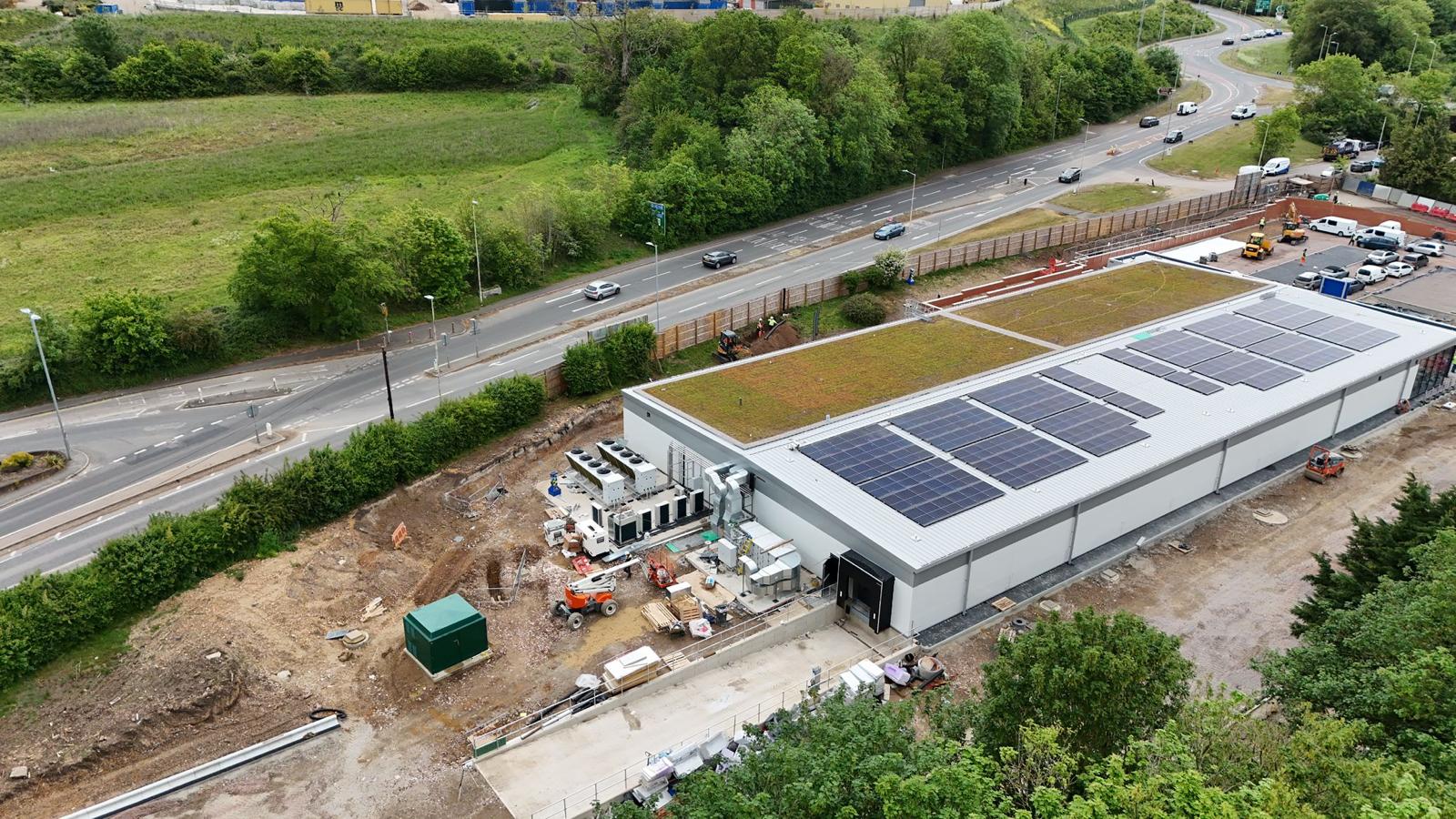
Retailers planning a refurbishment face a frustrating problem. Ask three contractors what it costs, and you will get three completely different answers, each qualified with so many caveats that the figure is almost meaningless.
The reason costs vary so much is not that contractors are being evasive. Retail refurbishment covers an enormous range of work. A coat of paint and new flooring are a refurbishment. A full structural transformation is also a refurbishment. The word means different things depending on who is using it.
This guide breaks down retail refurbishment costs honestly by scope, so you can determine which category your project falls into and what a realistic budget looks like before you speak to a contractor.
Cost by Scope: The Four Types of Retail Refurbishment
Cosmetic refresh: £25 to £50 per sq ft
New decoration, updated lighting, replacement flooring, and shopfront signage. No structural works, no significant MEP changes, no joinery. This is the minimum intervention that meaningfully updates how a store looks and feels. Suitable for stores that are structurally sound and functionally adequate but visually dated.
Partial refurbishment: £50 to £90 per sq ft
One or two departments, a new ceiling system, improved lighting, updated fixtures, and targeted MEP upgrades. This is the most common scope for retailers refreshing specific areas of their estate. A convenience store upgrading its chilled display section, a fashion retailer modernising its fitting rooms and cash desk, or a food operator updating its customer-facing counter area all fall into this category.
Full refurbishment in a live trading store: £80 to £140 per sq ft
Complete replacement of all visible finishes and fixtures, ceiling systems, lighting, flooring, joinery, and shopfront, delivered in phases around trading hours. The store remains open throughout, which adds programme length and cost compared to a closed-site refurbishment. This scope is appropriate for retailers whose trading continuity is more valuable than building speed.
Full strip-out and rebuild on a closed site: £90 to £160 per sq ft
Full demolition of the existing fit-out, structural modifications where required, and complete reinstatement to a new layout and specification. The store closes for the duration of work. This delivers the best cost-efficiency per square foot for a given specification because the programme is unrestricted. It is the right approach when the existing fit-out is so outdated that partial retention adds complication rather than saving cost.
These figures are for construction works only. They exclude VAT, professional design fees, and any fixtures or fittings procured separately by the client.
What Drives the Cost Up
Structural works
If your refurbishment involves removing or relocating walls, installing structural beams, or creating new openings, you move into a different cost category. Structural works require building control notification, structural engineering input, and significantly more site management than cosmetic or MEP-led refurbishment. They are worth doing when the existing layout genuinely cannot be made to work, but they are not a cost to take on lightly.
MEP replacement
Replacing electrical systems, upgrading HVAC, installing new data infrastructure, or adding extract ventilation in a food retail environment adds high cost. It is often unavoidable in older retail units where the existing services are at the end of life or inadequate for the retailer's equipment requirements. Old wiring, in particular, tends to surface as a cost that should have been in the budget from the start but was not.
Live trading delivery
Refurbishing a store while it is open costs more than a closed-site programme. Work happens primarily out of hours. Each section is reset to trading-ready condition every morning before the store opens. The programme is longer, and the site management requirement is higher.
Our experience delivering live trading refurbishments, including in supermarket environments where food safety compliance adds another layer of complexity, means this premium is not one we can justify. But it should be in your budget from the start. For a detailed look at how live trading refurbishments work in practice, read our guide on how to plan a retail refurbishment without closing your store.
Second-generation complications
Older retail units often have hidden issues that go unnoticed until strip-out begins. Asbestos in floor tiles, electrical systems that are below current standards, and structural modifications made without building control sign-off are all common findings. A 10-15 per cent contingency on the construction cost is not excessive for the refurbishment of a unit with no recent fit-out history.
What Landlords Contribute and How to Make the Most of It
Lease renewals are the most common trigger for retail refurbishment, and they are also the moment when landlords are most likely to offer a financial contribution to works.
Landlord contributions typically take one of two forms. The first is a rent-free period at the start of the new lease term. The second is a direct capital contribution to the fit-out works. Both are negotiable, and the amount available depends on the landlord's assessment of the tenant's value to the scheme, the state of the market, and the landlord's motivation to retain or attract a particular operator.
A few things worth knowing before you negotiate. The earlier you raise the refurbishment with your landlord, the more options you have. Raising it three months before lease expiry limits your negotiating position significantly. Raising it twelve months out gives you time to agree on the scope, agree on the contribution, and factor it properly into your budget.
Landlord contributions often come with conditions, including specific works that must be completed, a minimum lease term, or approval rights over the design and contractor. Make sure you understand those conditions before the contribution factors into your budget.
For managed retail environments, landlord approval of the design is usually required regardless of whether a contribution is being made. Building that approval process into your pre-construction programme rather than your construction programme avoids delays on site. Our retail refurbishment contractors page covers the landlord liaison process in more detail.
Sample Budget: 3,000 Sq Ft Retail Unit, Mid-Specification Refurbishment
To make these figures tangible, here is what a mid-specification full refurbishment of a 3,000 sq ft high street retail unit looks like in 2026.
Strip-out and waste disposal: £8,000 to £12,000 First fix MEP: £18,000 to £28,000 Partitioning works: £6,000 to £10,000 Suspended ceiling: £12,000 to £18,000 Second fix MEP including lighting: £16,000 to £24,000 Flooring: £12,000 to £18,000 Shopfront and entrance: £8,000 to £15,000 Bespoke joinery and fixtures: £20,000 to £40,000 Decoration and finishes: £8,000 to £12,000 Signage: £5,000 to £10,000 Preliminaries and site management: £12,000 to £18,000
Total construction cost: £125,000 to £205,000
Add 10 to 15 per cent contingency, professional fees if applicable, and VAT. A realistic all-in budget for this scope and specification is £150,000 to £250,000, depending on specification choices and any site-specific complications.
The Question Worth Asking Before You Refurbish
Not every store needs a refurbishment, and not every refurbishment delivers the return it promises. Before committing to a budget, it is worth asking honestly whether the physical environment is the reason the store is underperforming, or whether the issue is the location.
A well-executed refurbishment in a store with genuinely declining footfall and a deteriorating retail mix around it will not solve a location problem. If the store is underperforming relative to similar locations in your estate and the location itself is sound, a refurbishment is worth serious consideration. If the footfall data points to a structural location issue, it is not.
We will tell you this honestly during the consultation. We would rather help you make the right decision than win a project that will not deliver the return you are expecting.
Getting a Realistic Quote for Your Refurbishment
The starting point for an accurate cost plan is a site visit. We need to see the unit, understand your brief, and assess the existing condition before we can give you a figure that means anything.
At RCC, we provide line-by-line cost plans as standard with inclusions, exclusions, and assumptions clearly stated. If you are planning a retail refurbishment and want to understand what it will actually cost, contact our team, and we will arrange a site visit within the week.
How Much Does a Retail Fit Out Cost in the UK?
May 22, 2026
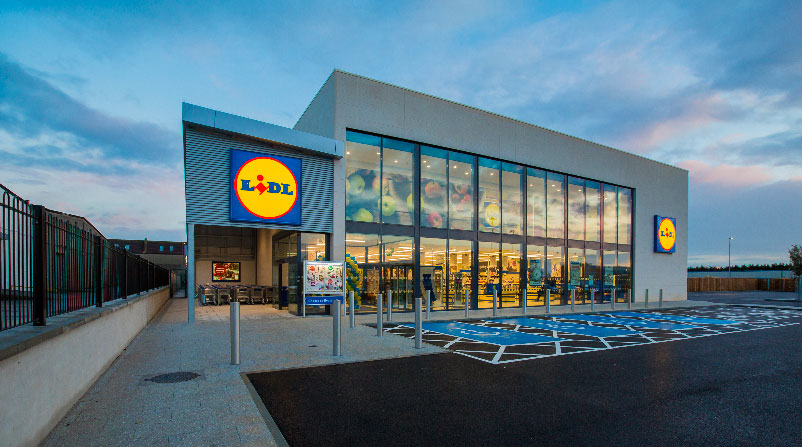
The Short Answer: Cost Per Square Foot in 2026
What These Figures Actually Include
The Five Biggest Variables That Move the Price
What You Can Save On and What You Should Not
The Cost of Getting It Wrong
A Note on London Versus the Rest of the UK
Getting an Accurate Quote
Recent Blogs
- Retail Construction in a Conservation Area: What Changes
- Planning Permission for Retail Construction: A Practical Guide for Developers
- How to Brief a Retail Contractor: What to Prepare Before You Go to Tender
- Shell and Core vs Full Fit Out: What the Difference Means for Your Budget and Programme
- CDM 2015 for Retail Clients: What Your Legal Duties Actually Are