How Retail Park Construction Actually Differs from High Street Builds
June 17, 2026
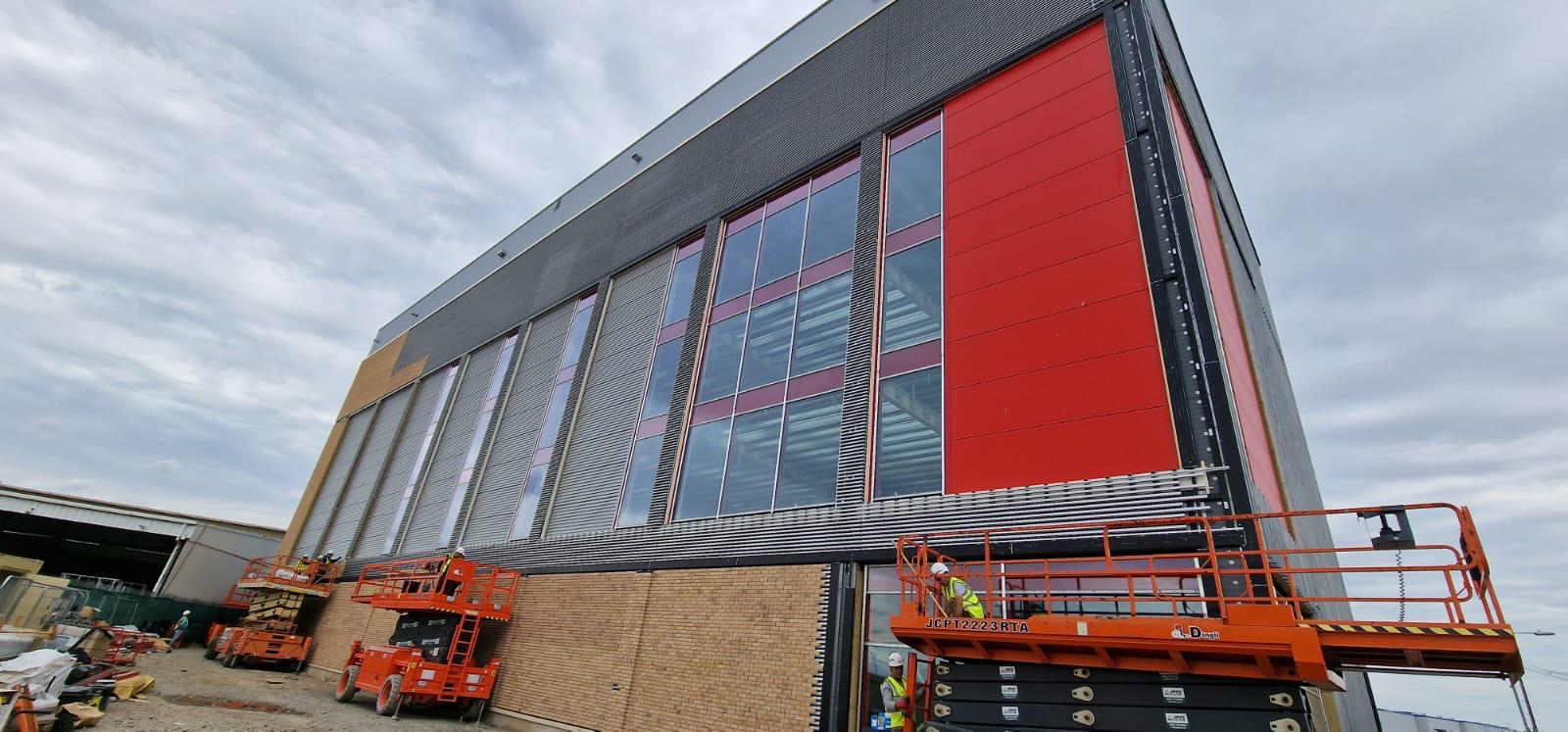
Ask most people outside construction what the difference is between building a unit on a retail park and fitting out a shop on a high street, and you will get a shrug. Retail is retail. Shopfront, till point, stockroom, done.
Ask anyone who has actually run both types of project and you get a different answer. The site is different. The route to planning permission is different. The people working around you are different. The risks that actually cause delay and cost are different. None of this shows up much in the finished shop. A customer walking in cannot tell whether the unit sits on a retail park or a high street. But everyone who delivered that unit could tell you, in detail, because the two projects were run under almost completely different rules.
If you are a developer deciding where to put your next unit, or a retailer trying to work out why two contractors quoted such different programmes for what looks like a similar job, this is worth understanding properly. Here is what actually changes, not the version that sounds tidy in a tender document.
The Site You Are Actually Building On
A retail park site is usually a cleared, serviced plot, often part of a wider development that has already been through earthworks and infrastructure as a single exercise. You arrive with room. Room for the crane, room for the site compound, room to stack materials, room for deliveries to come straight to the building without threading through anyone else's space. What you are building is mostly visible before you start, because it does not exist yet. The risk sits in the ground and in the services, not in the unknown.
A high street site is the opposite. You are almost always working inside or behind an existing building, frequently one that sits above or beside other occupied premises. There is no blank plot. There is a structure with a history you cannot fully read from the outside, and in most cases you do not find out what that history actually involves until strip out starts. A unit advertised as a straightforward shopfit can turn into something closer to a refurbishment the moment the ceiling comes down and reveals what is above it.
The Structure Itself
New retail park units are almost always steel portal frame buildings. Single storey, large clear spans, a structural grid that a contractor experienced in the format has built many times before. You are designing the geometry from a blank sheet, which means the structure can be optimised for exactly what the retailer needs rather than negotiated around what is already there.
High street units are built into whatever already exists, and what already exists is frequently decades old. Masonry or older concrete frames, party structures shared with the building next door, floor loadings that were never designed with modern retail equipment in mind, and alterations made by previous occupiers that were not always notified to building control at the time. Any structural work, even something as routine as widening an opening between two rooms, starts with a proper structural survey rather than a drawing. Treat that step as optional and you find out the hard way, usually mid programme, that the wall you wanted to remove was doing more work than anyone thought.
Getting Permission to Build It
This is where the two project types diverge most sharply, and in the opposite direction to what most people expect.
A new unit on a retail park is usually classed as an out of centre or edge of centre location for main town centre uses. National planning policy directs that kind of development through a sequential approach, meaning the local authority wants to see that no suitable town centre or edge of centre site was available first. Above a certain scale, currently 2,500 square metres of gross floorspace unless the local plan sets a lower figure, a Retail Impact Assessment is also required, examining what effect the new floorspace will have on the vitality of existing centres. The full detail of how this is applied sits in the government's planning practice guidance on town centres and retail. None of this is about whether the building itself is acceptable. It is about whether the principle of retail floorspace in that location is acceptable, and that conversation can run for months before anyone discusses bricks.
A high street unit usually sits inside Class E, the broad commercial use class introduced in 2020 that groups retail together with cafes, offices, gyms, and several other everyday uses under one planning category. Moving from one Class E use to another inside the same building, say from a clothing shop to a café, typically does not need planning permission at all. What it does need is building regulations approval for any structural, fire safety, or services work, and very often listed building consent or conservation area consent if the building or the street has either designation, since shopfront design is one of the most tightly controlled elements of any high street scheme.
Put simply, the unit that is easiest to build is often the hardest to get permission for, and the unit that is hardest to build is often the easiest to get permission for. Anyone pricing a programme without understanding which side of that line their project sits on is guessing.
Access, Logistics, and the Working Day
A retail park gives you the kind of access most contractors only get to dream about. Large vehicles can reach the unit directly. A site compound sits on site, not three streets away. Deliveries land where they are needed, when they are needed, without anyone negotiating a loading window with the council.
A high street site removes almost all of that. Streets are narrow, vehicle access is restricted, and there is rarely anywhere on site to store materials, so deliveries have to be planned to arrive just before they are needed rather than stockpiled. Scaffolding and hoarding that occupy the pavement need a licence from the local authority. Working hours are frequently restricted to protect neighbouring residents and businesses, which on a high street usually means evenings and early mornings are off limits, not just unsociable. And if your works involve anything near a shared boundary, an existing wall, or excavation close to a neighbouring building's foundations, you are very likely into Party Wall Act territory, which means a formal notice to your neighbour, a response period, and potentially a surveyor appointed on each side before you can start the work in question. None of that exists on an open retail park plot.
Who Else Is Around You
On a retail park, your site is usually exactly that, your site. One client, one boundary, one CDM picture to manage. The principal contractor coordinates trades, deliveries, and safety within a perimeter that nobody else has a reason to enter.
On a high street, you are frequently inside a multi occupancy building. Flats or offices above, shops either side, a shared means of escape that cannot be compromised at any point during the works, and fire compartmentation between your unit and everything around it that has to be maintained throughout construction, not just signed off at the end. You are also, in many cases, working a few feet from the public on an open pavement rather than behind a secured boundary, which changes how seriously pedestrian safety has to be planned and supervised. The legal duties under CDM 2015 apply equally to both project types, but the practical difficulty of discharging them is not remotely equal.
How the Programme Is Actually Built
Retail parks are frequently delivered as a parade of units, sometimes for several different retailers as part of one wider scheme, sometimes built speculatively to a shell and core specification before tenants are even confirmed. That repetition is valuable. The second and third units on a retail park benefit from everything learned building the first, and the programme becomes more predictable with every unit completed, not less.
A high street project rarely offers that benefit. It is usually one unit, for one retailer, with a building condition that is specific to that exact address. There is nothing to repeat and nothing learned on the last job that automatically transfers, because the last job was a different building with a different history. A realistic high street programme has to leave room for what strip out reveals, rather than assuming the clean run that a new build retail park unit can reasonably expect.
Where the Cost and Risk Actually Sit
On a retail park, the risk that drives cost overruns is mostly below ground and in the utilities. Ground conditions on a cleared or redeveloped plot, drainage capacity, and power supply for whichever anchor tenant is moving in. A food retail anchor or a large format DIY unit can require a substation upgrade with a long lead time, and getting that application in early is one of the most common ways a retail park programme either holds its date or loses months. Our supermarket construction work has taught us that utility capacity, not the steel frame, is usually the long pole in a retail park new build.
On a high street, the risk that drives cost overruns is almost always hidden building condition. Asbestos in an older building, electrical installations well below current standards, structural alterations made by a previous occupier without proper sign off, and the simple fact that nobody can accurately price what they cannot see. A contingency that looks generous on a retail park unit can be tight on a high street refurbishment of similar value, because the unknowns are bigger even when the floor area is smaller. Our retail refurbishment projects, including work like our store refurbishment in Kingston upon Thames, have shown the same pattern again and again. The building tells you what it actually needs once strip out starts, not before.
What This Means Before You Appoint a Contractor
If you are planning either type of project, these are the questions worth asking before you sign anything.
- Has the contractor actually delivered a new build unit on a retail park, including the utility applications and highways coordination that involves, or only ever fitted out units inside one once someone else had built the shell?
- Has the contractor managed a Party Wall Act process from notice to resolution, not just heard of one, and can they show you a project where it happened?
- For a high street project, what contingency are they pricing for hidden building condition, and is it based on the actual age and history of your specific building or a generic percentage applied to every job?
- Who is actually on site day to day, the same in house team across both project types, or a different subcontracted crew depending on which side of town the job happens to be?
- For a retail park scheme, when does the utility application go in, and is that date written into the programme or just assumed?
A contractor with real experience on both sides of this comparison answers each of these with a specific project, a specific number, and a specific person. A contractor who has only ever worked on one type tends to talk in generalities about the other.
The Honest Summary
Retail park construction and high street construction are not the same job wearing a different sign. One gives you a clean site and a hard planning route. The other gives you a difficult site and, in most cases, an easier planning route. The risks that matter most are reversed between the two, and a programme or a cost plan that does not reflect that reversal is not a realistic one.
Having delivered eleven new build stores for Lidl alongside high street refurbishment projects like our work in Kingston upon Thames, we run both kinds of build under real site conditions, not as a theoretical comparison. If you are planning a retail park unit, a high street refurbishment, or trying to work out which one actually solves your problem, get in touch with our team. We will tell you what your specific site actually involves before you commit to a programme or a budget.
Recent Blogs
- Retail Construction in a Conservation Area: What Changes
- Planning Permission for Retail Construction: A Practical Guide for Developers
- How to Brief a Retail Contractor: What to Prepare Before You Go to Tender
- Shell and Core vs Full Fit Out: What the Difference Means for Your Budget and Programme
- CDM 2015 for Retail Clients: What Your Legal Duties Actually Are