What Retail Refurbishment Actually Involves
June 3, 2026
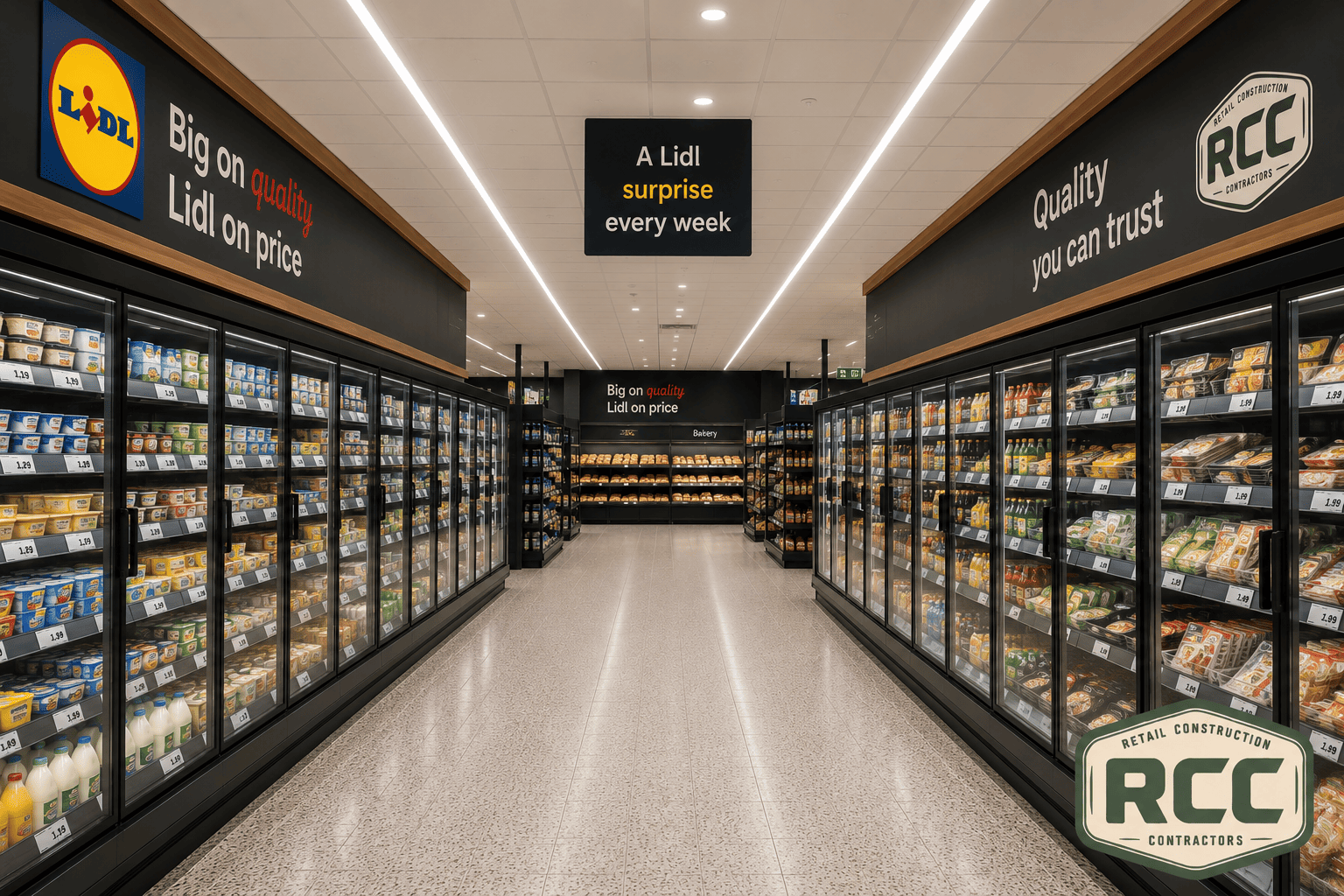
Retail refurbishment is not a single thing. It sits on a spectrum that runs from a targeted cosmetic refresh at one end to a complete structural transformation at the other, and the scope of what your project actually involves depends on three things: the current condition of your space, the standards your brand now requires, and how the store needs to perform commercially when the works are complete.
What makes retail refurbishment more complex than standard commercial construction is the layering of those requirements. Every element of the build affects the others, and decisions made early in the programme have consequences that run through every subsequent stage. Understanding what each element actually involves, not just what it is called, is what allows you to brief a contractor accurately and evaluate a cost plan honestly.
Here is what a retail refurbishment programme genuinely covers, explained in the level of detail that is useful before you appoint anyone.
Strip-Out and Preparation
Strip-out is the first physical stage of any retail refurbishment and the one that most directly determines the quality of everything that follows. It is also the stage most commonly rushed, most commonly under-resourced, and most commonly responsible for problems that emerge at later stages of the programme.
A proper strip-out involves the systematic removal of all existing elements that are being replaced or reconfigured. That means fixtures, shelving systems, counters, display units, and all associated fixings. It means removing the existing floor finish and, where required, the screed beneath it to expose a clean concrete substrate. It means taking down ceiling systems, exposing the structural soffit above, and removing all associated MEP infrastructure that is not being retained. It means stripping wall finishes back to the substrate in areas being replastered or boarded, and removing partitions where the layout is changing.
What it does not mean is pulling everything out as quickly as possible and leaving the site in a state that creates problems for the trades that follow.
The most common strip-out failures in retail refurbishment are leaving adhesive residue on floor substrates that prevents new flooring from bonding correctly, removing electrical and data infrastructure without properly documenting what served where, creating structural penetrations without understanding whether the element being removed is load-bearing, and leaving debris in ceiling voids that creates problems when new MEP infrastructure is being installed.
Our approach to strip-out treats it as a preparation exercise rather than a demolition exercise. The state in which the space is left after strip-out is the baseline against which every subsequent trade is measured. A clean, properly surveyed, and clearly documented strip-out compresses the programme for every trade that follows. A poorly executed one expands it.
Waste management is also a strip-out consideration that is frequently underestimated. In food retail environments, particularly, the disposal of refrigeration equipment requires compliance with F-gas regulations. The removal of fluorescent lighting requires proper handling of mercury-containing components. Asbestos surveys, where the building is of an age at which asbestos-containing materials may be present, need to be completed, and any identified materials removed by licensed contractors before any other strip-out work proceeds. We identify these requirements at the pre-construction stage so they are included in the programme and budget from the start, rather than being discovered on site after the works have begun.
Structural Works
Not every retail refurbishment involves structural works, but when it does, those works require a level of planning, compliance management, and technical oversight that separates them from every other element of the programme.
Structural works in retail refurbishment typically involve one or more of the following. Partition removal or relocation to reconfigure the floor plate, which is straightforward when the partition is non-load-bearing and significantly more involved when it is not. Structural openings through walls or floors for new entrances, service access, or connections between units. Mezzanine installation, where additional floor area is being created above the existing ground floor level, or mezzanine removal, where an existing structure is being taken out. Alterations to the building fabric, including works to the roof structure, the building envelope, or the foundations, where subsidence or drainage issues have been identified.
Any works that affect the structural integrity of the building require notification to building control under the Building Regulations. This is not optional and cannot be signed off retrospectively. Building control sign-off provides legal certification that the structural elements have been designed and built to the required standard, and that this certification is required for future lease transactions, the sale of the property, and insurance purposes. We manage building control notifications and inspections as part of our standard process for any project involving structural works, as the responsibility for ensuring compliance lies with the principal contractor.
CDM 2015 requires that structural works are managed by a principal contractor with appropriate competence. For projects involving structural alterations, the Construction Phase Plan needs to address the specific risks associated with those works, including temporary propping, working at height, exclusion zones, and interfacing with any other activities occurring concurrently on the site. We write specific CDM documentation for the structural element of every project that involves it, because generic health and safety paperwork does not address the specific risks of the works being carried out.
The structural survey is the other element of structural works that determines how the rest of the programme runs. Before any structural element is altered, we need to know what it is actually doing structurally. That means reviewing existing drawings where available, commissioning a structural engineer to survey and specify the works where drawings do not exist or do not reflect what was actually built, and establishing the temporary support strategy before any load-bearing element is touched. Getting this right at the planning stage costs a fraction of getting it wrong on site.
MEP: Mechanical, Electrical and Plumbing
MEP is the most technically complex element of retail refurbishment and the one where specification decisions have the longest-lasting commercial consequences. When done properly, MEP in a retail refurbishment is invisible to customers yet fundamental to how the space performs. Done poorly, it creates compliance problems, operational failures, and remediation costs that frequently exceed the original savings.
Electrical installation
A retail refurbishment typically involves a full electrical strip-out and reinstatement. The existing distribution board is assessed for its capacity and compliance with current standards. In most older retail units, the existing installation is not adequate for the electrical loads required by a modern retail environment, and the distribution board needs to be upgraded or replaced. This is one of the elements most commonly excluded from low tender prices and most commonly discovered as a variation once work has started. We survey the existing electrical installation and assess its adequacy as part of our pre-construction process, so the cost plan reflects what the installation actually needs rather than what it would cost if everything were serviceable.
New electrical circuits serve lighting, power, data, HVAC, security, and in food retail environments, refrigeration and kitchen equipment. The routing of those circuits needs to be planned before the first fix begins, because changes to circuit routing after ceilings are closed are expensive and disruptive. The lighting circuit design, in particular, deserves specific attention at the planning stage because it needs to reflect the final lighting scheme, not a generic layout that is modified on site.
Lighting specification
We treat lighting as a separate discipline within the MEP scope because its commercial impact on a retail environment is greater than any other single element of the refurbishment. The colour temperature of your retail lighting determines how products look. A warm white light at 2700 to 3000 Kelvin makes food, hospitality environments, and lifestyle products look inviting. A cooler neutral white at 3500 to 4000 Kelvin suits fashion, technology, and precision retail. The wrong colour temperature makes products look less appealing regardless of how well they are merchandised, and it is an error that cannot be corrected without replacing the fittings.
Lux levels, which are the measure of how much light falls on a surface, need to meet both the functional requirements of the retail environment (typically 500 to 1000 lux at the horizontal working plane in most retail formats) and the specific requirements of key merchandising points where product presentation is critical. Accent lighting at display positions, which typically runs at higher intensity than ambient lighting to create visual hierarchy and draw the eye to key products, needs to be planned as part of the lighting design rather than added retrospectively.
The LED specification needs to consider not just the wattage and colour temperature of the fitting but the CRI (colour rendering index), which measures how accurately the light source renders the colour of objects compared to natural light. A CRI of 80 or above is the minimum standard for retail lighting. For fashion, food, and any environment where colour accuracy is commercially important, CRI 90 or above produces measurably better product presentation.
Data and communications infrastructure
Modern retail environments require data infrastructure that supports EPOS systems, payment terminals, stock management systems, digital signage, in-store Wi-Fi, and in many cases CCTV, access control, and alarm systems. Getting the data infrastructure right at first fix stage means understanding the full technology requirement of the completed retail environment and routing containment, cable, and termination points accordingly before any ceiling or wall finish closes those routes.
Retrofitting data cabling after ceilings are closed is possible but disproportionately expensive and disruptive relative to doing it correctly at first fix. We review the technology requirements of the completed store at the pre-construction stage and design the data infrastructure to serve them, rather than installing a generic data layout and hoping it covers everything the client needs.
HVAC and ventilation
Heating, ventilation, and air conditioning in retail environments need to maintain customer comfort across the full range of seasonal conditions while managing the additional heat load generated by lighting, refrigeration, and occupancy. The existing HVAC system in an older retail unit is often inadequate for a modernised environment, particularly when the lighting specification has changed (LEDs generate less heat than fluorescent fittings, which alters the cooling calculation) or when the store layout has been reconfigured.
In food retail environments, kitchen extraction ventilation is a separate and significantly more complex discipline. Commercial kitchen extraction systems need to be sized for the full equipment load, routed to a termination point that meets planning conditions on odour and noise, and maintained to the standard required by Environmental Health. We coordinate extraction design with the operator's equipment specification during pre-construction to ensure the system is sized and routed correctly before any structural element is fixed.
Plumbing and drainage
Most retail refurbishments involve some plumbing works, ranging from welfare facility upgrades to the full drainage installations required in food retail and hospitality environments. Where drainage routes need to change, the floor slab needs to be broken out and reinstated, which is a significant programme and cost item that needs to be identified at survey stage and included in the cost plan from the start. In food retail environments, drainage in food preparation and wash-up areas needs to meet the gradient and access requirements of Environmental Health, which are more demanding than standard commercial drainage specifications.
Flooring
Retail flooring is one of the highest-impact and fastest-return elements of a refurbishment, and one of the areas where the technical requirements are most commonly underestimated in budget discussions.
The commercial impact of flooring on the retail environment is significant. Flooring is the element customers process most quickly and most subconsciously when they enter a store. Damaged, discoloured, or visually inappropriate flooring communicates something about the quality of the products sold in the space and about the operator's attention to the customer experience. New flooring transforms how a space feels before any other element of the refurbishment is considered.
But the quality and longevity of any retail floor installation are determined less by the specified material and more by the substrate preparation beneath it. This is the area where most retail flooring problems originate and where most cost-cutting decisions in refurbishment programmes create problems that are far more expensive to resolve than the original saving.
Retail floor substrates take significant wear and tear over the life of the existing fit-out. Fixing holes from previous shelving and fixture installations compromises the substrate integrity. Adhesive residue from previous floor finishes creates bonding problems for new materials. Localised damage from water ingress, heavy loads, or impact creates surface irregularities that telegraph through most thin-section floor finishes. Dampness in the substrate, which is common in older retail units, particularly at ground-floor level, causes adhesive failure in most flooring materials.
Our approach to substrate preparation treats it as the most important stage of the flooring installation rather than a cost line to be minimised. The substrate is surveyed before any flooring material is specified. Damp levels are tested using an appropriate methodology. All adhesive residue is mechanically removed. Hollow spots, cracks, and surface irregularities are made good using appropriate floor levelling compounds to the tolerances required by the flooring manufacturer. Where the substrate is not capable of supporting the specified floor finish without risk of failure, we advise on remediation or alternative specification before work begins.
Material selection needs to balance four considerations. Aesthetics must align with the brand environment and the customer experience the retailer is trying to create. Durability must be appropriate to the footfall intensity of the specific location, bearing in mind that a destination retail environment with weekend peak traffic places different demands on a floor finish than a high street convenience store operating seven days a week for extended hours. Slip resistance must meet the requirements of the Health and Safety at Work Act and the specific guidance applicable to the retail environment, particularly at entrances and in wet areas. Maintenance requirements need to be appropriate for the operator's cleaning regime and budget, because a flooring material that requires specialist maintenance to remain presentable will deteriorate quickly in an environment where that maintenance is not consistently delivered.
Common flooring materials in retail refurbishment each have specific performance characteristics worth understanding. Porcelain tile is highly durable and visually versatile, but it requires proper substrate preparation and grout selection. The hardness that makes it durable also makes it unforgiving to staff who stand on it for extended periods. LVT (luxury vinyl tile or plank) is increasingly popular in retail environments for its combination of aesthetics, resilience, and maintenance characteristics, but adhesive-down LVT is highly sensitive to the quality of substrate preparation and will fail quickly on inadequate or damp substrates. Polished concrete and resin floors provide a seamless appearance suited to premium and design-led retail environments, but require skilled application and appropriate substrate preparation to achieve a consistent finish. Commercial carpet tiles are appropriate for some retail formats and offer excellent acoustic performance but require a carefully managed seaming and laying pattern to avoid joins that deteriorate under rolling traffic.
Ceiling Systems
The ceiling plane is one of the most visible and commercially significant elements of a retail environment, and one of the most frequently treated as a cost-saving opportunity in refurbishment budgets. The decisions made about ceiling specification affect not just aesthetics but acoustic performance, lighting integration, MEP access, fire safety compliance, and ultimately how the whole space feels to the customer.
Standard grid and tile suspended ceiling systems remain the most commonly specified ceiling type in retail refurbishment because they provide reliable performance, relatively straightforward installation, and accessible void space for MEP above. The quality of the specification within that category varies significantly. Budget grid and tile installations use lightweight components that show movement and deflection over time, produce visible joint lines that deteriorate with humidity and temperature cycling, and provide limited acoustic performance. A mid-specification grid and tile ceiling with appropriate tile density and properly designed junction details produces a flat, consistent ceiling plane that performs well acoustically and provides a clean backdrop for the lighting scheme above it.
Exposed structure ceilings, where the ceiling grid is removed and the structural soffit and MEP services above are left visible, have become increasingly common in retail refurbishment. Done properly, they create a distinctive, often compelling retail environment. Done without sufficient thought to what is being exposed and how it will look, they reveal a structural soffit in poor condition with services running in directions that were never intended to be seen, producing an environment that looks unfinished rather than considered. The decision to specify an exposed structure ceiling needs to be made with a clear understanding of what the structural soffit actually looks like and what remediation work is required to make it presentable.
Bespoke ceiling features, including coffered ceilings, curved sections, feature bulkheads, and integrated lighting troughs, are used to create visual hierarchy in the retail environment, drawing customer attention to specific zones or creating a sense of scale and arrival at key points in the customer journey. These elements require careful design coordination between the ceiling designer, the lighting designer, and the MEP engineer to ensure that what is designed is physically achievable within the structural void available and integrates correctly with the services running above.
Acoustic performance is the ceiling characteristic most frequently overlooked in retail refurbishment budgets. A retail environment that generates significant noise from customer activity, HVAC systems, and music creates a customer experience that drives people toward the exit rather than encouraging them to linger. The acoustic performance of a suspended ceiling is primarily determined by the tile specification (specifically its absorption coefficient and the frequency range across which it performs) and the proportion of the ceiling area that is solid versus perforated or open. Where acoustic performance is a priority, which it should be in most retail formats, tile selection should be based on actual acoustic performance data rather than visual specification alone.
Fire safety compliance for ceiling systems in retail environments requires that the void above the suspended ceiling is properly fire-stopped to prevent fire and smoke spread through the ceiling void. This is a building regulation requirement, not an optional upgrade. Fire stopping around all service penetrations through the ceiling plane, at compartment boundaries, and at the junction with structural walls needs to be installed correctly and inspected during the installation rather than retrospectively. Our site team manages fire stopping as a live inspection activity throughout the ceiling installation, maintaining records that are included in the handover documentation.
Shopfront and Facade
The shopfront is the first element of a retail environment that a customer encounters and the one that determines whether they come in. It is the physical expression of the brand at street level and the first decision a customer makes about whether what is inside is relevant to them.
A shopfront refurbishment can range from a direct replacement of the existing glazing system and signage within the same structural opening to a complete reconfiguration of the entrance arrangement, including changes to the structural lintel, the glazing system, the entrance canopy, external lighting, and security shutters or barriers.
In managed retail environments, including shopping centres and retail parks, shopfront works require design approval from the landlord or the centre management team before works can begin. The approval process is not a formality. Shopping centres have design guides that specify the materials, finishes, proportions, and signage parameters that are acceptable within the scheme, and departures from those parameters require specific negotiation. We prepare and submit shopfront design packages to landlords and centre management teams as part of our pre-construction process, managing the approval correspondence and responding to any queries before the construction programme starts. Discovering that a shopfront design requires significant modification after the construction programme has been built around it is an avoidable programme and cost risk.
The glazing system specification has both commercial and regulatory dimensions. Thermally broken aluminium framing is the current standard for retail shopfronts because it meets energy performance requirements and provides adequate structural rigidity for the spans typical of most retail entrance configurations. The glazing specification needs to meet current Part L Building Regulations requirements for energy performance where the shopfront work triggers a notifiable change. Security glazing specification needs to be appropriate for the retail environment and location, with laminated safety glass as the minimum standard for any glazing that could be subject to impact or forced entry.
External signage design and installation in retail refurbishment is frequently managed separately from the construction programme, with the brand's preferred signage contractor carrying out the sign installation within the building contractor's programme. Where this is the case, the coordination between the main contractor and the signage contractor needs to be explicitly managed. Electrical provisions for illuminated signage need to be included in the main contractor's MEP scope, sign fixing points need to be structurally adequate for the sign weight and wind load, and the sign installation needs to be sequenced correctly within the overall shopfront programme. Poor coordination between the main contractor and the signage contractor is one of the most common causes of delays in the shopfront programme.
Fixtures, Fittings, and Joinery
The fixtures, fittings, and joinery within a retail environment drive the store's commercial performance in a way that the background elements of the refurbishment do not. They are the elements that customers interact with directly. They determine how products are presented, how the brand's visual identity is expressed in three dimensions, and how the space functions for the staff who work in it.
There is a significant difference between standard retail shelving and fixture systems, which are procured from specialist retail equipment suppliers and configured to the store layout, and bespoke joinery, which is designed and manufactured specifically for the store and delivers a level of brand expression that standard systems cannot achieve. Most retail refurbishments involve a combination of both.
Bespoke joinery elements in retail refurbishment typically include the main service counter and cash desk, which is the primary operational and brand focal point in most retail formats. Display plinths, feature shelving, and the primary display units in key product zones are frequently bespoke where the brand specification requires a specific aesthetic that standard systems cannot deliver. Fitting rooms in fashion retail, consultation rooms in pharmacy or optician formats, and barista equipment surrounds in food and beverage formats are also commonly bespoke elements.
The procurement and programme implications of bespoke joinery need to be understood before the construction programme is fixed. Bespoke joinery is manufactured to order, and the manufacturing lead time from confirmed design drawings to on-site delivery is typically eight to twelve weeks. The design drawings cannot be finalised until the structural dimensions of the space are confirmed, which is typically available only after the structural works are complete. This creates a sequence dependency that needs to be managed in the programme: structural works complete, dimensions confirmed, joinery drawings finalised, joinery ordered, joinery manufactured, joinery delivered and installed. Compressing any stage of that sequence creates risk. We identify the joinery programme requirements at the pre-construction stage and place joinery orders with sufficient lead time to prevent the final stage of the programme from being held up by manufacturing delays.
In food retail environments, the joinery scope extends to refrigeration display units, chilled counter configurations, and all associated infrastructure. Refrigeration display units are specialist items that need to be coordinated with the refrigeration contractor responsible for the pipework and plant. The interface between the main contractor's joinery installation and the refrigeration specialist's pipework installation is one of the highest-risk coordination points in food retail construction. We manage this interface explicitly in the programme, establishing the sequence and coordination protocol with the refrigeration specialist before work begins. For more detail on how we approach food retail construction specifically, our food retail construction page covers the refrigeration coordination challenge in full.
Decoration and Brand Finishes
Decoration and brand finishes are the point in the programme where the character of the retail environment first becomes visible, and where the distinction between a well-executed refurbishment and an ordinary one becomes apparent.
In a retail environment, decoration is not the same as painting in the domestic sense. It is the systematic application of brand-specified colours, finishes, and materials to the walls, columns, soffits, and any other surfaces within the customer environment, to a standard that produces a consistent, high-quality result throughout the space.
Preparation is the element of decoration most frequently compromised when programmes are under pressure. Plasterwork needs to be fully dry before decoration begins. Substrate imperfections need to be filled, sanded, and sealed before any finish coat is applied. New plasterboard joints need to be taped, filled, sanded, and primed before the top coat is applied, or the joints will be visible through the finished surface. Taking shortcuts at the preparation stage produces a result that looks acceptable on the day but deteriorates quickly and requires remediation long before the next planned refurbishment.
Most national retail brands have colour specifications that reference specific RAL, BS, or proprietary paint manufacturer codes. Meeting those specifications requires using the correct paint type (not just the correct colour), applied by the correct method (brush, roller, or spray) to achieve the correct sheen level and texture, in the correct number of coats on a correctly prepared substrate. Our decorating team works to brand specifications as standard and does not substitute alternative products without specific client approval, because the customer-facing result of getting the colour or finish wrong is visible to every person who enters the store.
Graphic installations form an increasingly significant element of the decoration scope in brand-aligned retail refurbishments. Large-format vinyl graphics, fabric-tensioned lightbox panels, and printed wall coverings require that both the surface to which they are applied and the installation be carried out by someone experienced in the specific medium. Bubbles, wrinkles, or alignment errors in large-format graphics are immediately visible at retail scale and cannot be corrected without reprinting and reinstalling the affected panels.
Signage and Wayfinding
Signage in a retail environment serves two distinct functions that are sometimes treated as one and suffer when they are.
External signage functions as brand identification, marketing communication, and customer orientation. It tells people outside the store who you are, what you sell, and where the entrance is. The specification, placement, and illumination of external signage need to be designed around the sightlines available from the directions customers approach, not just the elevation that looks best on an architectural drawing.
Internal wayfinding and departmental signage function as a navigation system within the store. It reduces the cognitive effort customers need to expend to find what they are looking for, which reduces friction and increases the time available for browsing and purchasing rather than searching. Poorly designed or inadequately maintained internal wayfinding increases customer frustration and reduces conversion. In large format retail, food retail, and multi-department environments, the internal signage system needs to be designed as a coherent wayfinding hierarchy, not applied store by store as an afterthought.
Point-of-sale infrastructure, including the mounting, cabling, and power provisions for POS terminals, digital screens, and promotional display elements, needs to be coordinated with the MEP scope at first fix stage. The most common POS infrastructure problem in retail refurbishment is discovering at the fit-out stage that the electrical provisions for digital display elements are in the wrong positions or at the wrong capacity. Addressing this after ceilings and walls are closed is disproportionately expensive compared to coordinating it correctly at first fix.
Digital display provision is increasingly standard in retail refurbishment across most formats. Large-format screens, digital price display, interactive product information, and queue management systems all require power, data, and in some cases structural fixing that needs to be designed into the works programme rather than added afterwards. We review the digital display requirements of the completed retail environment during pre-construction and include all necessary provisions in the MEP scope.
A note on reading this section:
Not every element listed above applies to every refurbishment. A cosmetic refresh does not require structural works. A flooring and lighting upgrade does not require bespoke joinery. The scope of any specific refurbishment is determined during the site consultation stage based on the space's needs, its current condition, and the client's brand standards.
What this section is designed to do is give you enough understanding of each element to have a properly informed conversation about your project before you commit to any scope or budget. A detailed, line-by-line cost plan for your specific brief is what comes next.
If you are planning a retail refurbishment and want to understand what your specific project involves and what it will cost, get in touch with our team. We will visit the site, assess every element, and provide a cost plan that shows exactly what you are paying for.
Recent Blogs
- Retail Construction in a Conservation Area: What Changes
- Planning Permission for Retail Construction: A Practical Guide for Developers
- How to Brief a Retail Contractor: What to Prepare Before You Go to Tender
- Shell and Core vs Full Fit Out: What the Difference Means for Your Budget and Programme
- CDM 2015 for Retail Clients: What Your Legal Duties Actually Are