Mixed-use development is reshaping the UK built environment. Town centres are being repositioned. Former retail-only sites are gaining residential, office, and hospitality components above and around them. New urban regeneration schemes routinely combine ground-floor retail with apartments above, office space alongside food and beverage, or leisure facilities integrated into schemes that also include supermarkets and convenience retail.
Retail construction in a mixed-use scheme is more complex than on a standalone site. The constraints of working within or adjacent to a building that also contains residential, office, or hospitality uses create specific requirements that a contractor without mixed-use retail experience is unlikely to have encountered before.
Ground floor retail within residential-led schemes
The most common retail component in UK mixed-use development is ground-floor retail units beneath residential apartments. These might be A1 retail units, A3 food and beverage units, convenience stores, or a mix of uses forming an active street frontage.
The construction challenge is that the retail shell must be delivered to a standard that meets future retail tenants' requirements while the residential structure above is being completed. In many schemes, the retail shell and the residential superstructure are built concurrently, so the retail programme is directly affected by decisions and delays in the residential programme.
The retail units also need to be designed and built to accommodate the MEP, acoustic separation, and structural requirements that come from having habitable residential space directly above. Vibration transmission, impact noise, airborne sound, and service zone coordination between retail and residential MEP are all technical challenges that need to be resolved correctly during design and built during construction. Getting any of these wrong creates problems that are expensive and disruptive to rectify once the scheme is occupied.
Supermarkets and food retail within mixed-use schemes
Major food retail operators increasingly take anchor positions within urban mixed-use schemes. A ground-floor or basement supermarket beneath a mixed-use tower has specific construction requirements that go well beyond standard retail. Refrigeration plant, kitchen extraction, heavy goods vehicle access and servicing, kept entirely separate from the residential entrance, and structural provisions for the weight of the refrigeration plant and storage racking all need to be designed and constructed correctly.
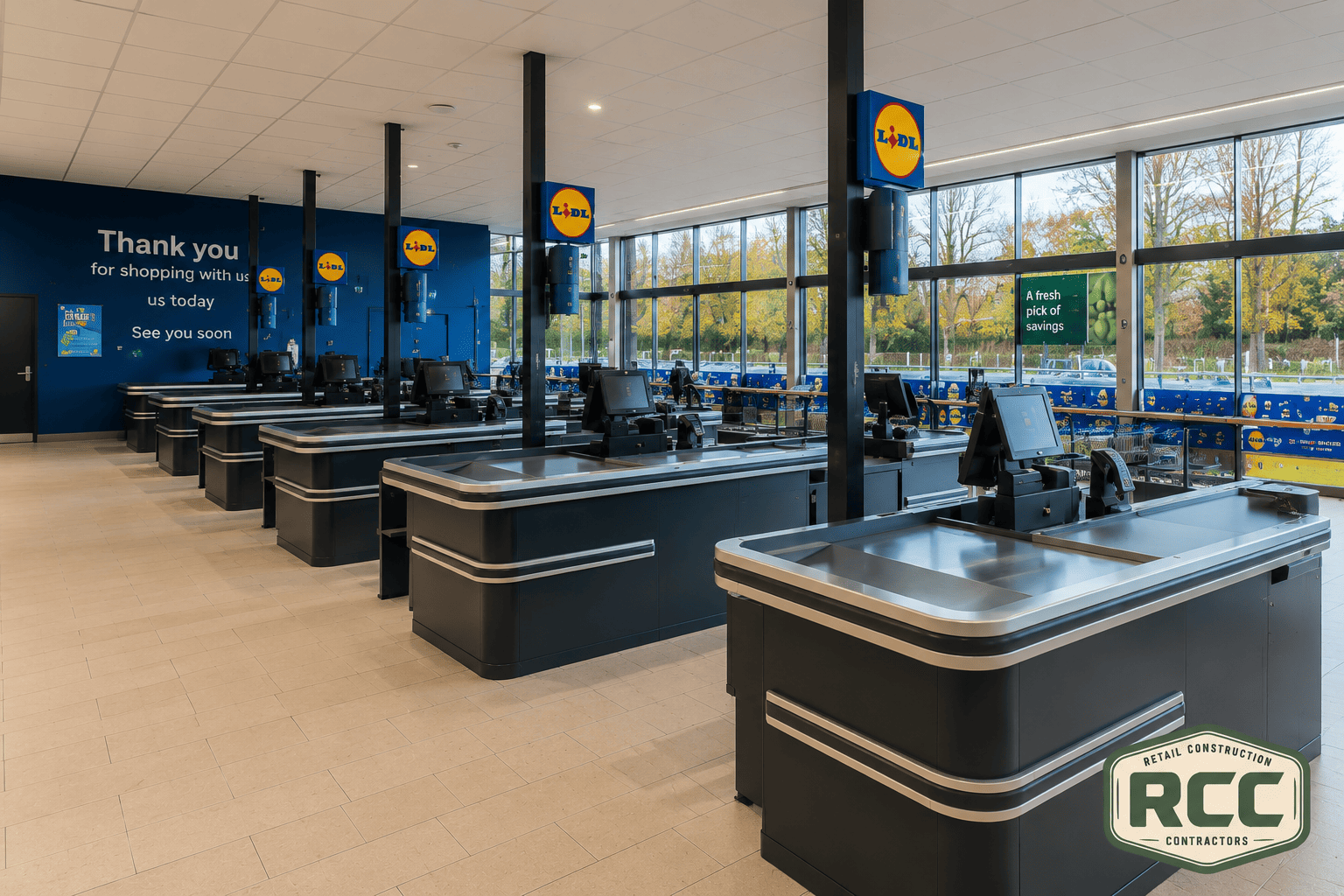
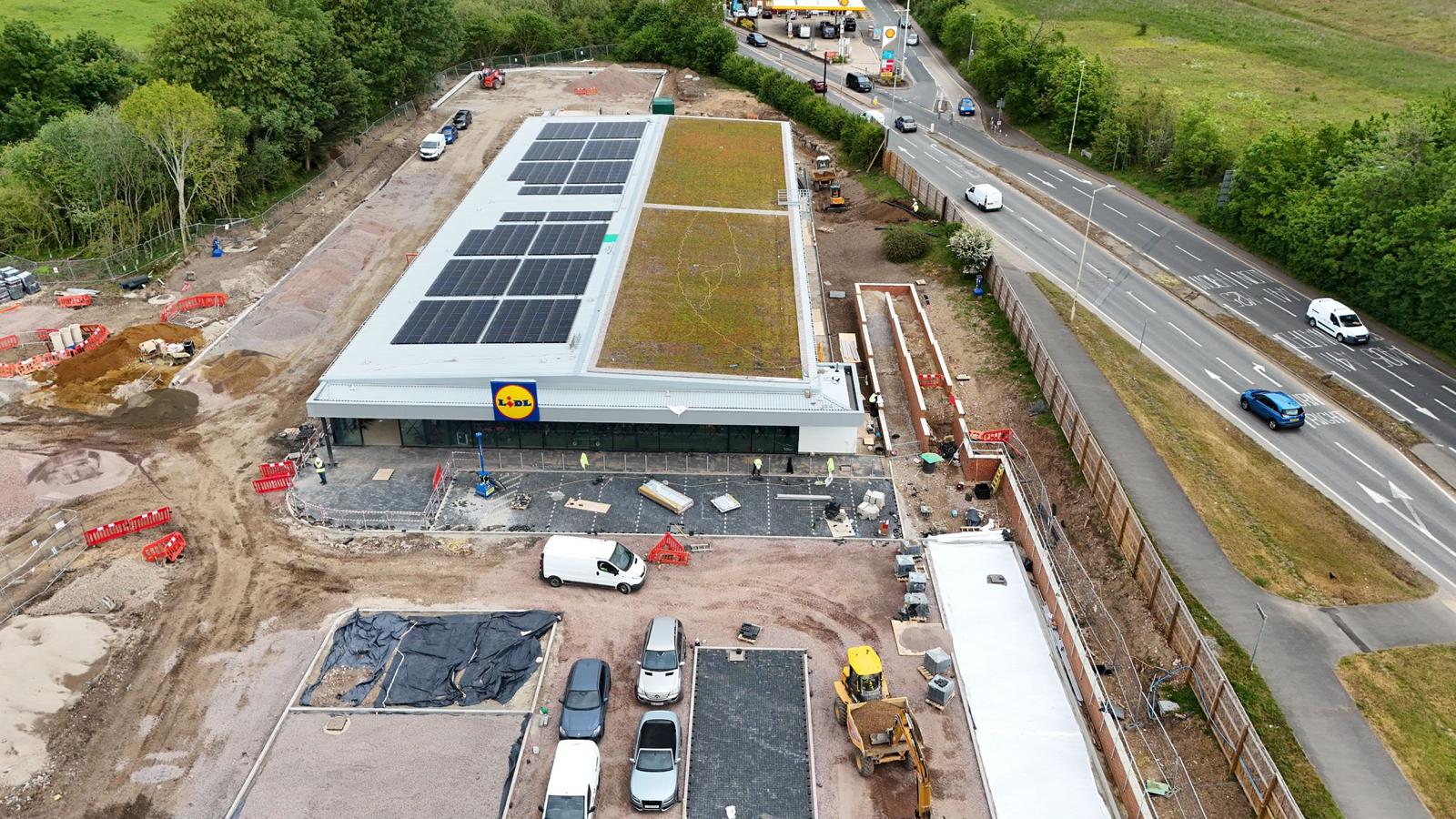
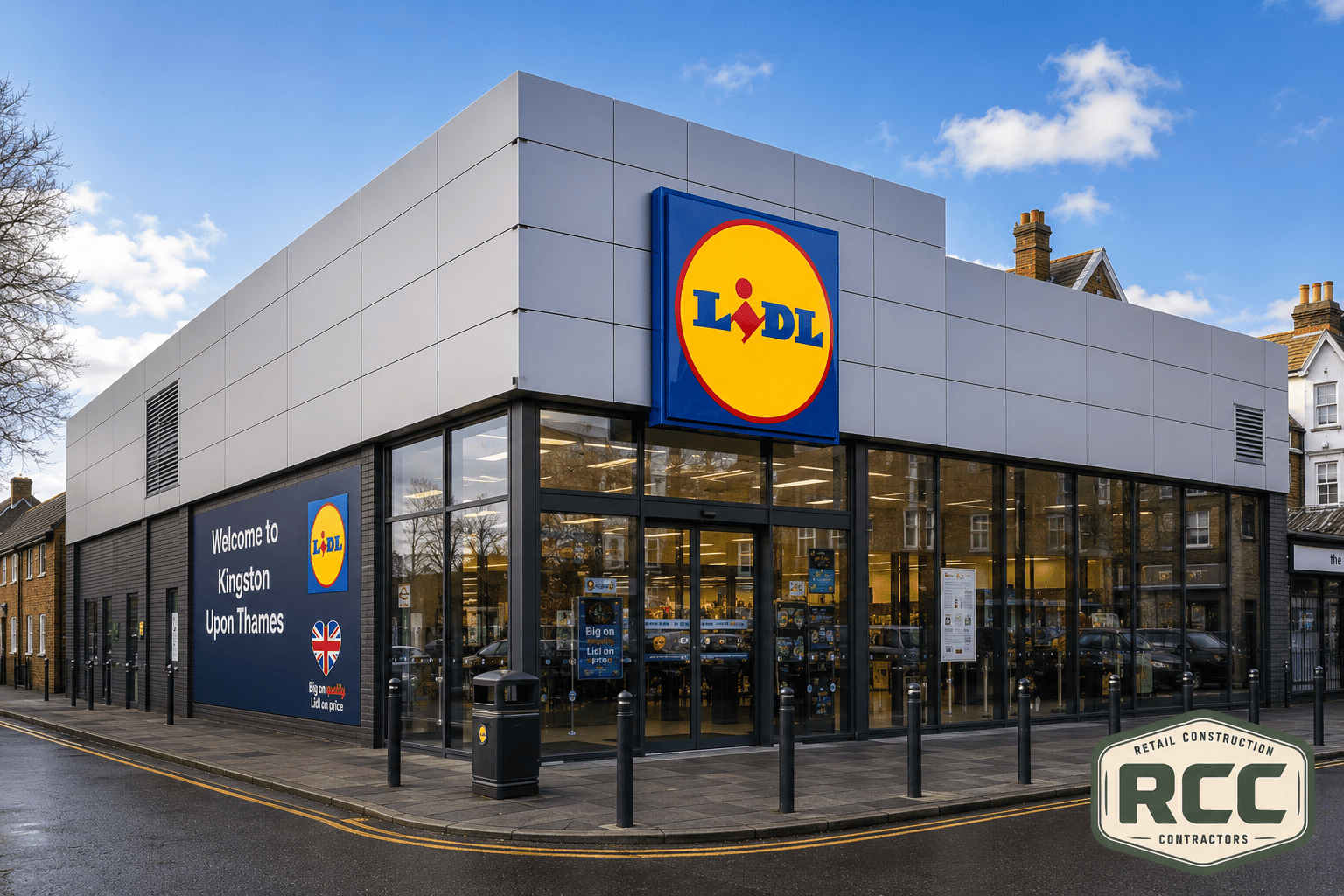
Our experience across 11 Lidl sites and multiple food retail construction projects means we understand these requirements in detail. For more on our food retail construction approach, our food retail construction page covers this in depth.
Food and beverage units
Restaurants, cafes, bars, and food-to-go units are common components of mixed-use schemes, particularly in urban regeneration and transit-oriented developments. Food and beverage construction in a mixed-use environment introduces challenges around kitchen extraction routing, which often needs to pass through the building to reach the roof level above multiple residential floors, and acoustic separation, which must prevent kitchen noise from disturbing residents above.
These are not problems that general mixed-use contractors specifically consider. There are problems that retail and food-retail construction specialists understand, as they encounter them on every food and beverage project.
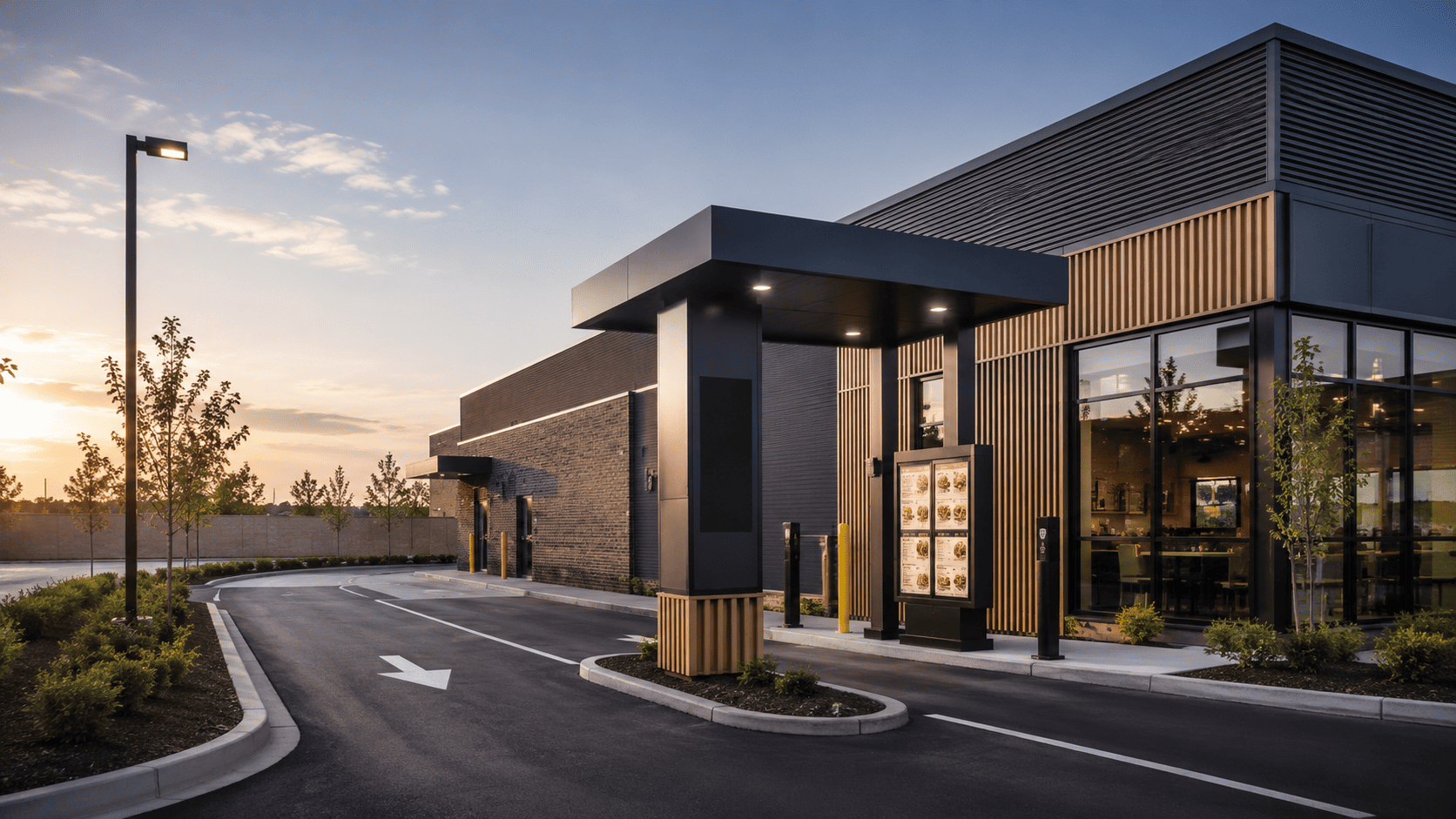
Drive-thru and roadside food within mixed-use retail parks
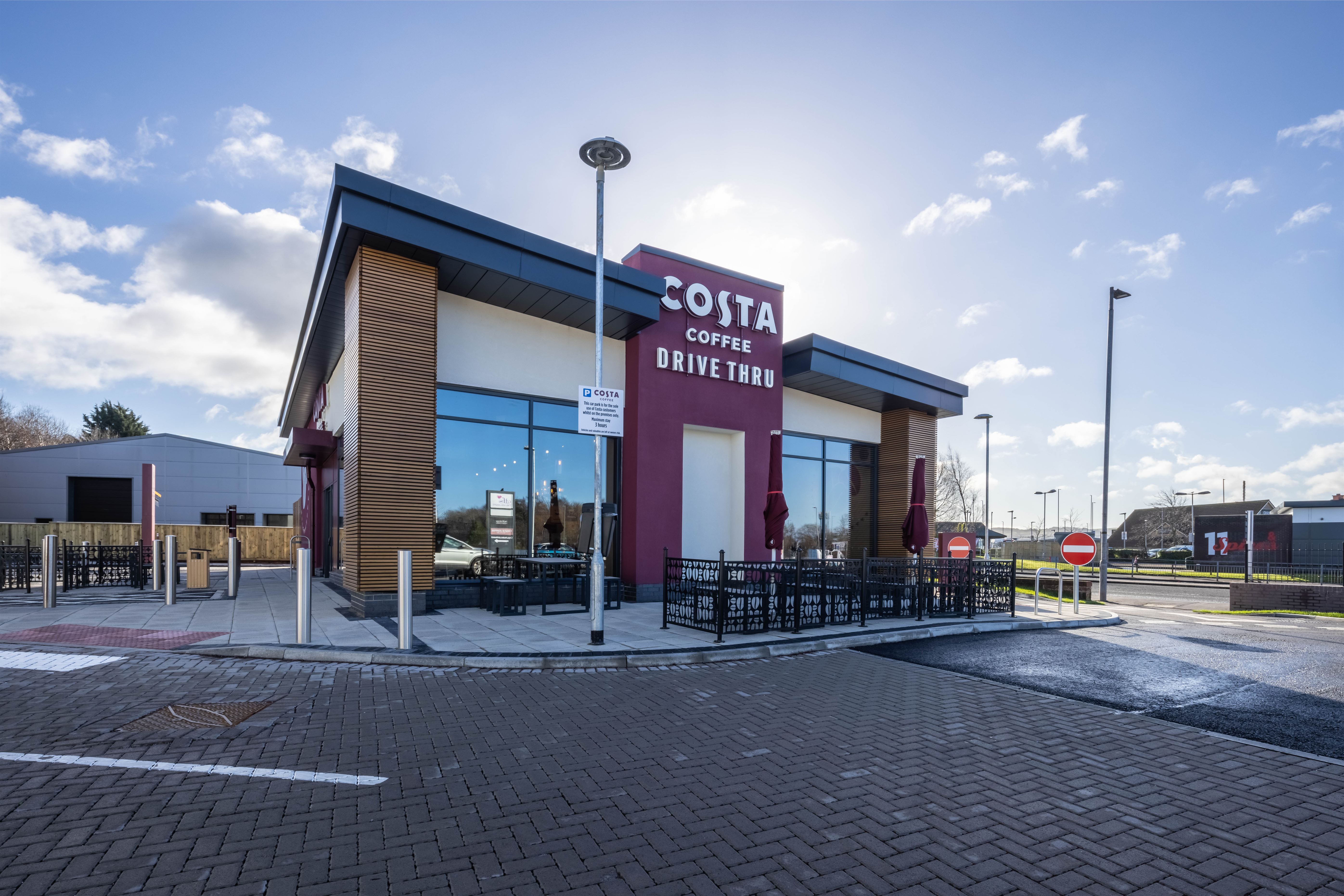
Mixed-use retail parks, combining large format retail with food, beverage, and drive-thru units, often on sites that also include a petrol forecourt, hotel, or leisure facility, represent one of the most complex mixed-use retail construction programmes in the sector. The coordination among different uses, operators, and construction programmes requires a contractor who specifically understands the retail environment.
Our drive-thru and retail park construction pages cover these specific delivery types in detail.
Leisure and entertainment retail
Gym operators, cinema units, entertainment venues, and experiential retail within mixed-use schemes have construction requirements that standard retail contractors are often unprepared for. Structural loading from gym equipment, acoustic separation requirements for entertainment venues, and MEP demands that are significantly higher than standard retail all need to be addressed correctly at the design and construction stage.
Mixed-use sites must now balance the very different risks associated with residential living, retail activity, offices, hospitality, and entertainment spaces within the same structure. Fire compartmentation standards have become stricter, especially between residential units and commercial areas such as restaurants or leisure venues. Acoustic separation requirements are also becoming more demanding in projects where people live directly above busy public spaces. Beyond these regulatory challenges, there are practical construction challenges that shape how the retail component needs to be managed on a mixed-use scheme.
The interface between retail and residential structures
In a vertical mixed-use scheme, the retail contractor is working within a structure that may also have residential trades working above. Coordinating access, deliveries, hoisting, and shared structural elements requires a clear interface protocol between the retail contractor and the main scheme contractor. Without this, conflicts arise on site that cost programme time and damage relationships between the different contractor teams.
We manage this interface proactively from the start of the project. Before any works begin, we agree a formal interface protocol with the main scheme contractor covering access routes, delivery arrangements, noise restrictions, shared hoist or goods lift usage, and the precise demarcation of our scope within the wider scheme. This removes ambiguity from the outset.
Acoustic and vibration separation
Building regulations require specific performance standards for sound and vibration transmission between commercial uses and habitable residential spaces. In mixed-use schemes, these requirements are typically more demanding than in purely commercial buildings, and they are subject to pre-completion acoustic testing that must demonstrate compliance before the building can be occupied.
Getting acoustic separation right requires the right specification in place before construction begins and the right installation standards maintained throughout. Floating floors, acoustic ceiling systems, and the isolation of building services that might otherwise transmit vibration are all elements that must be installed correctly. They cannot be meaningfully rectified after the structure is complete.
Fire compartmentation
Fire compartmentation standards between residential units and commercial areas such as restaurants and leisure venues have become considerably stricter following changes to UK building regulations.
The practical implication for retail construction within mixed-use schemes is that the passive fire protection within the retail element, fire stopping around penetrations, compartment wall and ceiling specifications, and the interface with the sprinkler and smoke detection systems in the wider building, needs to be specified correctly and installed to the required standard. Building control sign-off on these elements is not negotiable. A retail unit that cannot demonstrate passive fire protection compliance cannot be signed off for occupation.
Retail MEP within a mixed-use building services strategy
Most mixed-use schemes have a building services strategy that governs the distribution of mechanical, electrical, and plumbing systems throughout the building. The retail MEP, including electrical supplies, data, HVAC, and drainage, needs to integrate with that strategy rather than conflict with it.
In practice, this means coordinating the retail MEP design with the overall building services engineer before the retail construction programme begins. Changes to MEP routing or capacity discovered during construction rather than design are expensive to resolve and often require access to parts of the building that are already complete.
We review the building services strategy as part of our pre-construction process on every mixed-use project and identify any conflicts before they become on-site problems.
Delivery and servicing in an occupied or partially occupied scheme
Mixed-use schemes are frequently phased, meaning that residential or office elements may be occupied before the retail component is complete. Construction deliveries, waste removal, noisy works, and the general activity of an active construction site need to be managed so they do not create problems for existing occupants.
This is exactly the same discipline required for live trading retail refurbishment, and we manage it with the same rigour. Works are planned around occupancy. Delivery windows are agreed and adhered to. Noisy activities are scheduled for the least disruptive periods. Daily resets of shared areas ensure that residents and office occupants are not affected by construction activity in ways not agreed in advance.
Ground Floor Retail Shell and Fit Out
Retail unit shell construction and interior fit out within residential or commercial-led mixed-use developments. We deliver both the shell to landlord specification and, where required, the full tenant fit out within a single contract. Our scope integrates with the main scheme contractor's programme and building services strategy without creating conflicts that delay the wider development.
Food Retail Within Mixed-Use Schemes
Supermarkets, convenience stores, and food-to-go units forming part of a larger mixed-use development. We bring the specialist food retail construction knowledge that general mixed-use contractors do not have, covering refrigeration infrastructure, kitchen extraction routing, food safety-compliant finishes, and the acoustic and structural requirements of food retail beneath residential or office space.
Food and Beverage Unit Construction
Restaurants, cafes, bars, and quick service restaurants within mixed-use town centre or transport-oriented developments. We manage the kitchen extraction routing through the building structure, the acoustic separation from uses above, and the MEP coordination with the wider building services strategy.
Mixed-Use Retail Park Construction
New-build mixed-use retail parks combining large-format retail, food and beverage, drive-thru units, and, in some schemes, petrol forecourt, hotel, or leisure provision. We deliver the retail and food elements within these schemes under a principal contractor contract, coordinating with other contractors on sites with multiple contract packages.
Retail Refurbishment Within Occupied Mixed-Use Buildings
Refurbishing or reconfiguring the retail element of an existing mixed-use building while residential, office, or other commercial elements remain occupied above. This requires the same approach as live trading retail refurbishment but with an additional layer of consideration for the occupied residents and workers above the construction zone. Our retail refurbishment page details our approach to live-environment delivery in detail.
Leisure and Entertainment Retail Construction
Gyms, cinemas, entertainment venues, and experience-led retail within mixed-use schemes. We deliver these spaces with an understanding of the specific structural, acoustic, and MEP requirements that distinguish leisure and entertainment uses from standard retail fit out.
Property Developers
You are bringing a mixed-use scheme to market and need a specialist retail contractor for the commercial ground floor, rather than relying on your main residential or commercial contractor to deliver a use type outside their core expertise.
The retail component of a mixed-use scheme affects your commercial performance, your planning obligations, and your relationships with retail tenants who have their own specification requirements and opening date commitments. Appointing a retail specialist for the retail element removes the risk posed by a residential contractor trying to deliver a food retail or restaurant unit without understanding what those environments require.
We work as a specialist retail contractor within your wider scheme programme, interfacing with your main contractor and building services consultants in a structured way that keeps the retail programme coherent with the overall scheme.
Main Scheme Contractors
If you are the principal contractor on a mixed-use scheme and the retail element is outside your core competence, we work as a specialist subcontractor delivering the retail scope under your management. We bring retail-specific expertise and our own in-house trades, so the retail element is delivered to the standard retail tenants expect rather than to a standard that creates problems at handover.
Retail Tenants and Operators
If you have taken a unit within a mixed-use development and need a contractor to deliver your fit out within the landlord's shell, we understand the interface between mixed-use schemes and tenant fit out. We know how to manage deliveries and access in buildings with other tenants and residents, and we know what the landlord's main contractor requires of us to keep our works coordinated with the wider scheme.
For more on our approach to individual retail tenant fit outs, our retail fit out page covers this in detail.
Mixed-use retail construction involves more coordination points than standard retail construction. The interfaces with the main scheme contractor, the building services engineer, the acoustic consultant, the fire safety specialists, and individual retail tenants all create coordination demands that are not present in a standalone retail project.
When all of our trades work for us directly, the coordination within our scope is managed in real time on-site. The decisions that would take days in a subcontracted model take minutes when the people doing the work all work for the same team. That internal coordination discipline is what allows us to manage the external coordination with the wider scheme without creating conflicts that affect the main programme.
We also bring a discipline around documentation that mixed-use schemes specifically require. Interface protocols, acoustic testing records, fire-stopping inspection records, building control sign-off documentation, and the O and M manuals required by the building services strategy must all be maintained and provided upon completion. Our site team manages this as a live activity throughout the programme rather than assembling it retrospectively at handover.
Scheme Review and Pre-Construction
Before anything else, we review the full scheme documentation including the planning consent and conditions, the building services strategy, the structural drawings, the acoustic specification, and any tenant fit out guides that the developer has produced. We identify every interface between our retail scope and the wider scheme, every constraint that affects our programme, and every technical requirement that affects our design and construction approach.
You receive a cost plan that reflects this review. Not a figure produced from a schedule without understanding the scheme context, but a number built on a genuine understanding of what delivery within this particular mixed-use environment requires.
Interface Management
We agree a formal interface protocol with the main scheme contractor and the building services consultant before works begin. This covers how deliveries are managed, how shared access is coordinated, how noise and vibration constraints are applied, how MEP is coordinated, and how building control sign-off is achieved for the retail scope within the wider building sign-off programme.
Construction Delivery
A named site manager is responsible for the retail programme and for maintaining the interface with the wider scheme. They attend the main contractor's progress meetings, represent our scope clearly, and escalate any issues that affect our programme before they become problems that affect the wider scheme. Weekly written updates cover programme progress and any emerging decisions.
Handover
Practical completion of the retail scope is documented with all building control sign-off, acoustic test results, passive fire protection inspection records, and commissioning certificates in place. Where the retail scope forms part of the wider building sign-off, we provide all required documentation to the main contractor in the format their building control application requires.
Whether you are a developer bringing a mixed-use scheme to market, a main contractor seeking a specialist retail subcontractor, or a retail operator taking a unit in a mixed-use development, we are worth talking to before you appoint anyone.
We will review your scheme documentation, understand the interface constraints, and provide an honest assessment of the retail construction scope and its cost. No obligation, no sales pressure.
Yes. We regularly work as a specialist retail contractor within wider mixed-use schemes managed by a separate principal contractor. We manage the interface with the main scheme contractor through a formal protocol agreed before works begin, and we maintain our own building control compliance for our scope within the wider scheme sign-off process.
We review the acoustic specification for the scheme during pre-construction and ensure our design and construction approach meets the required performance standards. We maintain inspection records throughout the build and commission independent acoustic testing at completion where required by the building regulations or the acoustic consultant's specification.
Yes. Extraction routing through a mixed-use building requires coordination with the structural engineer, the building services engineer, and, in some cases, the acoustic consultant. We manage this coordination during pre-construction and ensure the extraction route, capacity, and termination point are all agreed before any structural elements are fixed.
We agree a delivery protocol with the main contractor and the building management team before works begin. Deliveries are planned within agreed windows, access routes are maintained for building users, and the interface between our construction activity and the occupied areas is managed as a formal site management activity throughout the programme.
We deliver all retail and food and beverage uses within mixed-use schemes. This includes standard A1 retail units, A3 food and beverage, convenience and food retail including supermarkets, quick service restaurants, gyms and leisure, and where the mixed-use scheme includes a retail park element, drive-thru construction and large format retail units. Our supermarket construction, food retail construction, retail fit out, and drive-thru construction pages cover our approach to each specific use type.
We are London-based and deliver retail construction within mixed-use schemes across England and Wales. Our established regional supply chain means we can resource projects outside London without compromising the quality of our site management team.
Would you like to learn more about how we can help you with your next residential or commercial project, fill in your details and a member of our team will be in touch.
Most retailers and developers get a programme from their contractor that looks clean on paper. Ten weeks, maybe twelve. Logical sequence. Everything falls into place. Then the job starts. ..
Read Full Story »
Ask most people outside construction what the difference is between building a unit on a retail park and fitting out a shop on a high street, and you will get a shrug. Retail is retail. Shopfront, till point, stockroom, done. ..
Read Full Story »